June 15–21: "The Battle Is the Lord's" (1 Samuel 17–18; 24–26; 2 Samuel 5–7)
When the whole army froze, one shepherd stepped forward — not because he was the biggest, but because he remembered who was fighting with him. This week your family will learn the battle belongs to the Lord, true friends are a gift from God, and the importance of asking the Lord.
Set the Stage: One Kid, One Question
The entire Israelite army is camped on one hill. The Philistines are camped on another. And every single morning for forty days, a nine-foot giant named Goliath walks into the valley between them and shouts the same dare: send someone to fight me. Whoever wins takes everything. The soldiers hear it. King Saul hears it. And every single morning, nobody moves. Then a teenager shows up to deliver lunch to his brothers and hears the dare for the first time. He doesn't freeze. He doesn't calculate the odds. He asks one question — who is this uncircumcised Philistine that he should defy the armies of the living God? David isn't reckless. He's remembering. He's remembering the lion. The bear. Every time God showed up before. And that memory turns into the most lopsided upset in military history — not because David was exceptional, but because his faith was. The sling, the stone, the giant falling — it's all just the visible part of something invisible that was already decided.
The Big Idea: The Battle Was Never Yours to Win Alone
Here's the thing about Goliath-sized problems: they're designed to make you feel small. That's the whole strategy. Goliath didn't just want to win a fight — he wanted Israel to believe the fight was already over before it started. And it almost worked. On every single person except the one who had been quietly building a track record with God out in the fields where nobody was watching. Slay the Giant captures that moment perfectly — 'I fought a lion and I fought a bear, God was with me then, and He's with me there.' David's courage in the valley wasn't born in the valley. It was built in the quiet, ordinary moments of faithfulness that came before it.
That's the word for your family this week. The challenges your kids are facing right now — the social ones, the academic ones, the ones they haven't told you about yet — those are their valleys. And the question isn't whether God is big enough to handle them. The question is whether they've been building that track record with Him in the small moments. Every prayer, every time they chose right when it was hard, every time they trusted Him with something little — that's the sling practice. That's what makes the stone fly straight.
This week's songs don't just tell David's story. They hand it to your kids and say: this is yours too. Slay the Giant gives them the battle cry. Like His Own Soul reminds them they don't have to fight alone — God sends Jonathans. And I'm Gonna Inquire gives them the habit that makes all of it possible: stop, ask, then move. That's not weakness. That's how kings operate.

Scripture Bridge
Lyric Highlight
I've got five smooth stones and a heart full of faith
I'm staring fear right in the face.
Yeah, the battle is the Lord's, and the victory is mine!
Reflect: What's the 'Goliath' your family is staring down right now — and what does it look like to hand that battle to the Lord instead of trying to muscle through it alone?
Family Activity
Try This: Grab a soft ball or rolled-up sock — that's your 'stone.' One person is Goliath and stands in the middle of the room. Everyone else is David. Goliath calls out a fear or challenge (something like 'bad day at school' or 'feeling left out') and the Davids have to run past without getting tagged. If you get tagged, you freeze — but you can be unfrozen if another player runs by and shouts 'The battle is the Lord's!' Play until everyone has had a turn being Goliath. Keep it fast and loud.
Reflect: When you were frozen, what did it feel like to wait for someone to free you? How is that like trusting God when you're stuck in a hard situation?
1 Samuel 17:47
Watch & Listen
Slay the Giant
Then a teenager named David arrived with a cheese delivery and changed everything. David wasn't in the army — he was running an errand for his dad. But when he heard Goliath's taunts, he asked a question nobody else was asking: 'Who is this uncircumcised Philistine, that he should defy the armies of the living God?' (1 Samuel 17:26). While every trained soldier was calculating how impossible the fight was, David was offended on God's behalf. That's a completely different starting point. King Saul offered David his own royal armor — helmet, coat of mail, the works. David tried it on, said it didn't fit, took it off, and walked to the nearest brook to pick up five smooth stones instead. He went to meet a giant with a sling and a theological conviction: 'The battle is the Lord's.'
Slay the Giant gets inside that conviction and makes it feel like what it actually was — not reckless bravado, but deep, evidence-based trust. David had fought a lion. He had fought a bear. He had a track record with God, and that track record gave him a present-tense boldness that no armor could manufacture. The song captures his voice perfectly: confident without being cocky, young without being naive, and absolutely clear that the credit belongs somewhere other than his own right arm.
Your kids face giants too — maybe not nine feet tall, but loud enough to freeze them in place. This song hands them David's question instead of Saul's fear, and that's worth more than any helmet.
Lyric–Scripture Blueprint (Preview)
Did you know these lyrics come straight from the scriptures?
Explore the full Lyric–Scripture Blueprints and deeper activities in the Joy Tier.
 Shout for Joy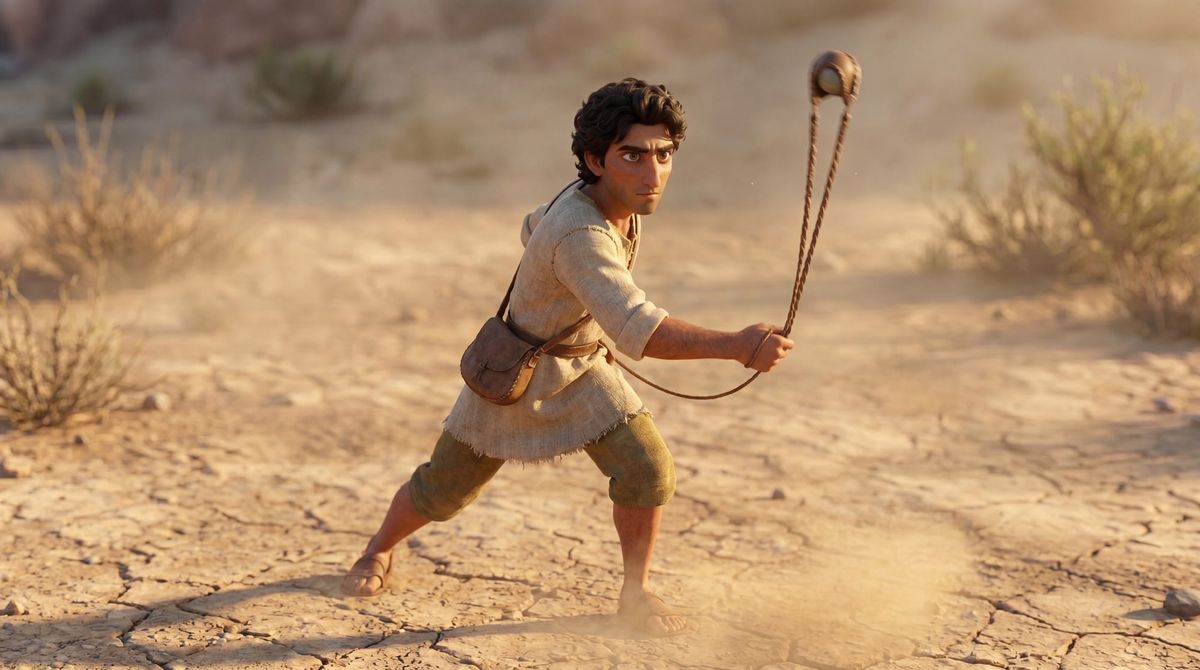
Like His Own Soul
He chose covenant. First Samuel 18 tells us that Jonathan's soul was 'knit' with David's — a word that implies something woven together, not just glued. He stripped off his royal robe, his armor, his sword, and handed it all to David. This wasn't symbolic gift-giving. This was Jonathan saying, in the clearest possible language: your calling matters more to me than my crown. He then spent years protecting David from his own father's murderous jealousy, warning him at personal risk, and cheering for a destiny that wasn't his.
Like His Own Soul takes that story and turns it into something kids can carry into the lunchroom on Monday. The song doesn't just celebrate David's victory — it zooms in on the guy standing off to the side, smiling, handing over his robe. Because that guy is the one doing the harder, quieter, more Christlike thing. The bridge — 'Be a Jonathan today, give your armor away' — is the whole sermon in one line.
Every family has a Jonathan moment waiting to happen this week. Someone's sibling just got the lead in the play. Someone's friend made the team they both tried out for. This song gives kids a name for what to do next: cheer like it's your own win, because covenant love doesn't keep score.
 Shout for Joy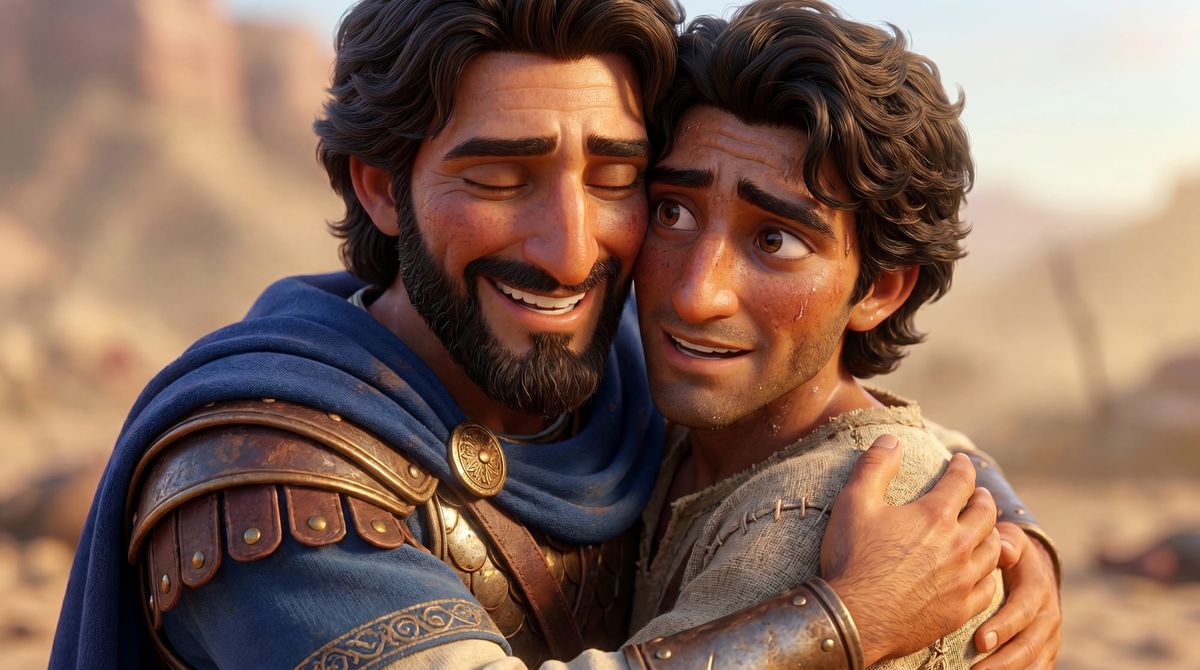
I'm Gonna Inquire
That's the scene from 2 Samuel 5 that this song is built on. The Philistines came, David inquired of the Lord, God said go — and David went and won. Then, just a few verses later, the Philistines came back. Same valley. Same enemy. And David, who had every reason to assume the same play would work twice, went back and asked again. This time God gave him a completely different strategy: wait for the sound of wind moving through the mulberry trees, then move. David obeyed both times. Two victories. Two separate inquiries. Zero assumptions.
I'm Gonna Inquire takes that double-inquiry moment and turns it into a full-on anthem for kids who are learning that prayer isn't a last resort — it's the first move. The chorus puts the posture right in the body: fold your arms, ask before you step, ask before you light the fire. The song doesn't let David coast on his first win, and it doesn't let your kids coast on yesterday's answer either.
Every family has its own Valley of Rephaim moments — decisions that look familiar but might need a fresh answer. This song gives kids a framework they'll actually remember when those moments arrive.
 Shout for Joy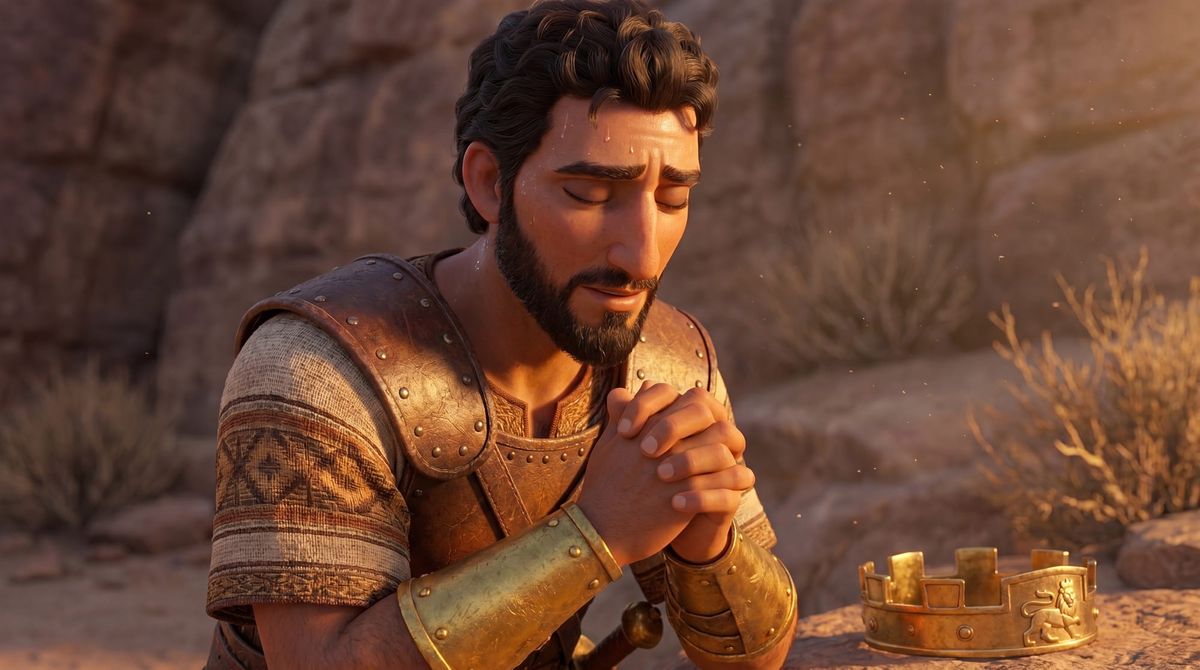
Miss last week?
Every lesson stands on its own — but together, they tell one continuous story.
 Shout for Joy
Don’t Stop the Music
The Joy Tier starts right here. Go deeper into this week’s scripture story and explore the meaning behind the songs.
Inside Joy you’ll find:
- A weekly Fireside Moment overview of the Come, Follow Me lesson
- Expanded Set the Stage teaching guides for every song
- Choose Your Adventure family activities and simple weekly habits
- Lyric–Scripture Blueprints, printable coloring pages, and lyric sheets
- Cinematic reflection videos designed for quiet viewing and discussion
Access Joy below to turn this week’s song into a weeklong experience of scripture, music, and family conversation.