June 8–14: “The Lord Looketh on the Heart” (1 Samuel 8–10; 13; 15–16)
Israel wanted a king they could see — God was looking for a heart He could trust. This week's songs walk the full arc from Samuel's door to David's anointing, asking one question that hits close to home: who — or what — is actually sitting on the throne of your life?
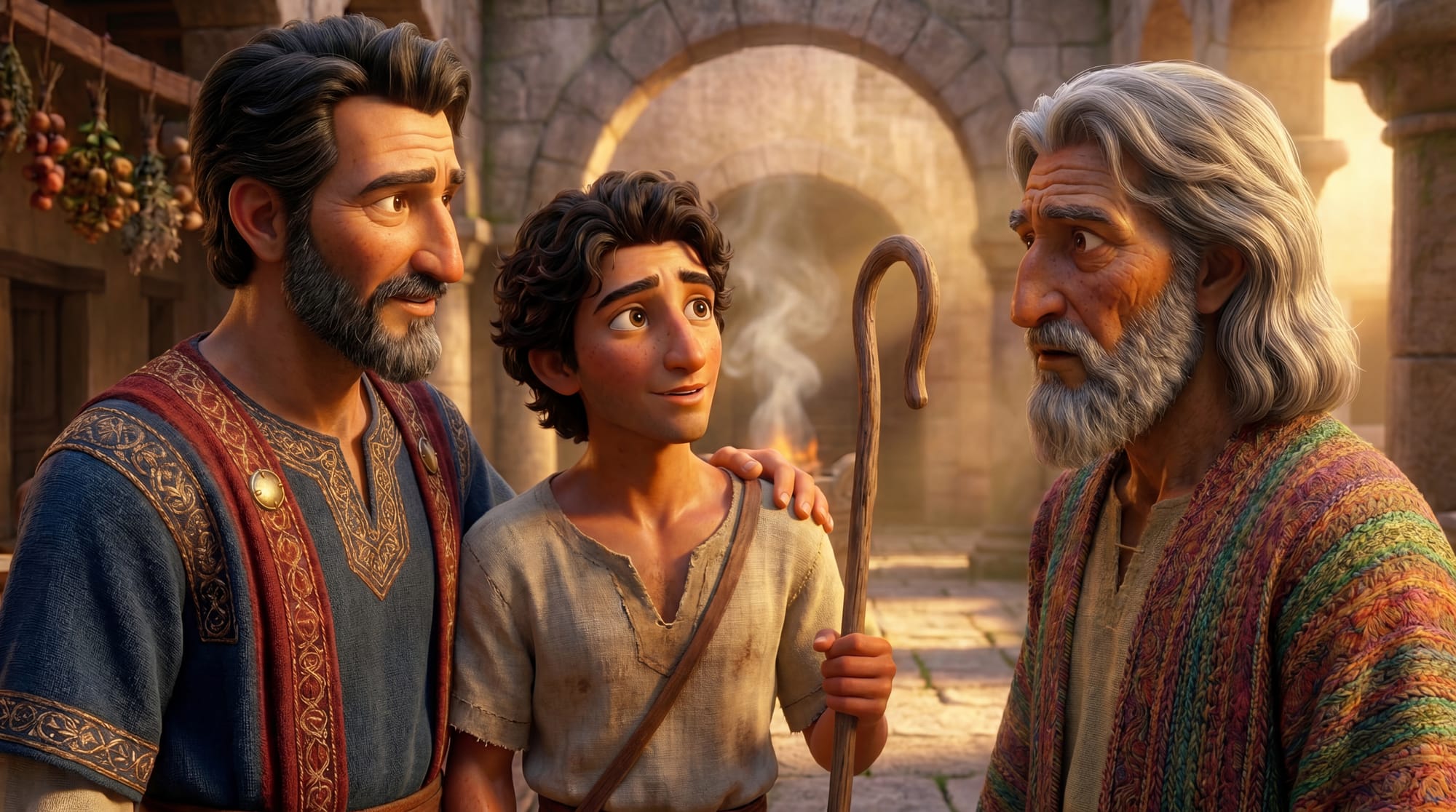
From Crowns of Gold to Fields of Faith
"The Lord tells Samuel, 'Don't take it to your heart.
They aren't rejecting you, they're tearing us apart.'"
Israel wanted an impressive king they could see, but the Lord was looking for a humble heart He could trust.
Set the Stage: Who Do You Follow?
Picture this: a nation that has walked with God — literally, a pillar of fire leading them through the desert — and they show up at Samuel's door asking for a king. Why? Because the neighbors have one. That's it. That's the whole reason. It would almost be funny if it weren't so heartbreakingly familiar. God warns them through Samuel: a king will take your sons, your daughters, your fields, your freedom. They say, 'Sounds great, where do we sign?' So God gives them Saul — tall, handsome, humble at first, then proud, then gone. And then He sends Samuel on a quiet errand to a shepherd family in Bethlehem, where the least likely kid in the room gets anointed king of Israel. This week's story is about who we trust to lead us, what obedience actually costs, and why God keeps choosing people the world would overlook. It's ancient history that feels like it was written about last week.
The Big Idea: God Sees What Nobody Else Can
Israel wanted a king they could see — someone tall, impressive, someone who looked the part. And honestly? We get it. We do the same thing every day. We judge books by covers, people by profiles, and ourselves by the mirror. But this week's scripture drops a truth that cuts right through all of that: 'The Lord looketh on the heart.' Not your resume. Not your highlight reel. Your heart. That changes everything about how we see ourselves and how we treat the people around us.
The three songs this week walk the whole arc of the story. We Already Have a King opens with the crowd at Samuel's door — restless, comparing, wanting what everyone else has — and reminds us that we already belong to the greatest King there is. 'Better Than Sacrifice' follows Saul's slow drift from humble servant to self-justifying rule-bender, and lands on one of the most practical truths in all of scripture: obedience beats a good excuse every single time. And 'The Lord Looketh on the Heart' brings it home with David stepping out of the sheep pasture and into destiny — not because he looked the part, but because God saw something in him nobody else bothered to look for.
For your family this week, the invitation is simple but not easy: try to see people the way God sees them. Start with the person in your own house. Start with the face in the mirror. Ask what's actually in the heart — yours and theirs — and let that be what matters most.

Scripture Bridge
Lyric Highlight
But we already have a King! (Hey!)
The Maker of the everything! (Hey!)
You don't need a man sitting on a heavy throne
When the God of all creation is calling you His own!
Reflect: What's one area of your life where you've been looking to something — or someone — other than the Lord for security or direction, and what would it look like to let Him be King of that space?
Family Activity
Try This: One person is the 'Earthly King' and stands in the middle of the room. Everyone else lines up on one wall. The King calls out a category — 'anyone wearing blue,' 'anyone who had cereal for breakfast,' 'anyone who sometimes worries what others think of them' — and those people have to run to the other wall without getting tagged. If you get tagged, you become part of the King's 'army' and help tag others. But here's the twist: every few rounds, pause and ask the group, 'What does THIS king keep taking from you?' (your freedom to move, your teammates, your safe wall). Keep playing until almost everyone is caught, then gather and talk about how fast it happened.
Reflect: The Israelites thought having a king like everyone else would make them safer and stronger. How did that work out? Samuel warned them the king would take their fields, their animals, and their kids — and he was right. What's something the world tells you that you NEED to have or be like, that might actually cost you more than it gives you? How is following Jesus Christ different from following any earthly leader or trend?
Watch & Listen
We Already Have a King
Here's the setup: Samuel is aging. His sons, who were supposed to carry on his work, had gone corrupt. The elders of Israel saw an opening and marched to Samuel's door with a demand: give us a king, like all the other nations have. They wanted the pageantry, the military muscle, the sense of normalcy that came with having a human ruler in a crown. Samuel was grieved. He prayed. And the Lord's response is one of the most quietly devastating lines in all of scripture — 'They have not rejected thee, but they have rejected me.' God then told Samuel to warn them exactly what a human king would cost: their sons drafted into armies, their daughters taken for palace service, their fields and flocks taxed and seized. Samuel delivered every word of that warning. The people said, essentially, 'Sounds fine, we still want the king.' So God gave them Saul — tall, handsome, and ultimately a cautionary tale about what happens when outward appearance substitutes for inward covenant.
We Already Have a King takes that whole saga and turns it into a declaration your kids will be singing in the car for weeks. The song doesn't just tell the story — it asks the modern question underneath it: what are you letting sit on the throne of your life? Because the invitation of the Restoration is the same one Israel had and fumbled: a direct, living covenant relationship with the God of the universe. That's not a consolation prize. That's the whole point.
Want the full story? Read the complete Fireside Moment or explore the Lyric-Scripture Blueprint in our Joy Tier Deep Dive.
Lyric–Scripture Blueprint (Preview)
Did you know these lyrics come straight from the scriptures?
Explore the full Lyric–Scripture Blueprints and deeper activities in the Joy Tier.
 Shout for Joy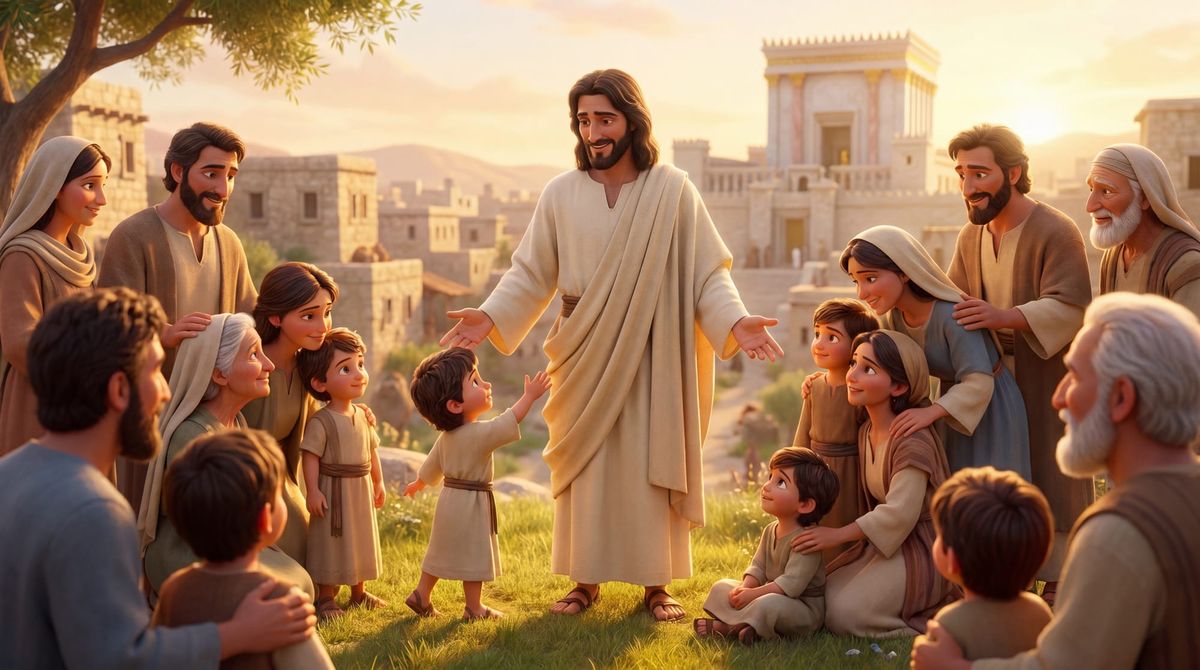
Better Than Sacrifice
Here's what actually happened: God commanded King Saul through the prophet Samuel to completely destroy the Amalekites and everything they owned — livestock included. It was a total, unambiguous instruction. But when the battle was won, Saul and his army kept the best of the animals. The king's explanation? They were saving them for a sacrifice to God. It sounded almost noble. It was dressed in the right vocabulary. But Samuel wasn't fooled, and neither was the Lord. 'To obey is better than sacrifice,' Samuel told him, 'and to hearken than the fat of rams' (1 Samuel 15:22). Saul had let the approval of the crowd — and his own reasoning — override a direct word from God. And that choice cost him the kingdom.
'Better Than Sacrifice' takes that ancient moment and makes it impossible to ignore. The song walks through Saul's story with just enough humor to keep kids leaning in — Samuel asking why he can hear bleating sheep, Saul trying to spin his way out of it — and then the chorus lands the timeless truth with the kind of clarity that sticks: when the Lord gives a word, just follow it through. No overthinking. No rolling the dice. Just a willing heart and moving feet.
The modern bridge writes itself. Every family has a version of this story — the prompting we negotiated, the counsel we adjusted, the commandment we kept mostly. This song is a gentle, catchy, completely non-preachy invitation to close the gap.
Want the full story? Read the complete Fireside Moment or explore the Lyric-Scripture Blueprint in our Joy Tier Deep Dive.
 Shout for Joy
The Lord Looketh on the Heart
That's the moment 1 Samuel 16 turns into something extraordinary. David walks in from the fields — young, ruddy, probably smelling like sheep — and the Spirit of the Lord says, essentially, 'That's the one.' Not because of what David looked like. Because of what God had already seen in him: a heart that worshipped in the wilderness, that fought lions for a flock, that would one day write psalms that still move people to tears three thousand years later.
The Lord Looketh on the Heart takes this scene and sets it to a beat that makes it impossible to forget. The song walks through the lineup of brothers with a grin, names the trap we all fall into — judging by the frame, the face, the first impression — and then drops the chorus like a verdict: God doesn't operate that way. He reads hearts, not highlight reels.
For your family, this song is more than a Bible story retold. It's a weekly recalibration. In a world that is relentlessly focused on appearance, performance, and social proof, your kids are being handed a different measuring stick — the one God actually uses.
Want the full story? Read the complete Fireside Moment or explore the Lyric-Scripture Blueprint in our Joy Tier Deep Dive.
 Shout for Joy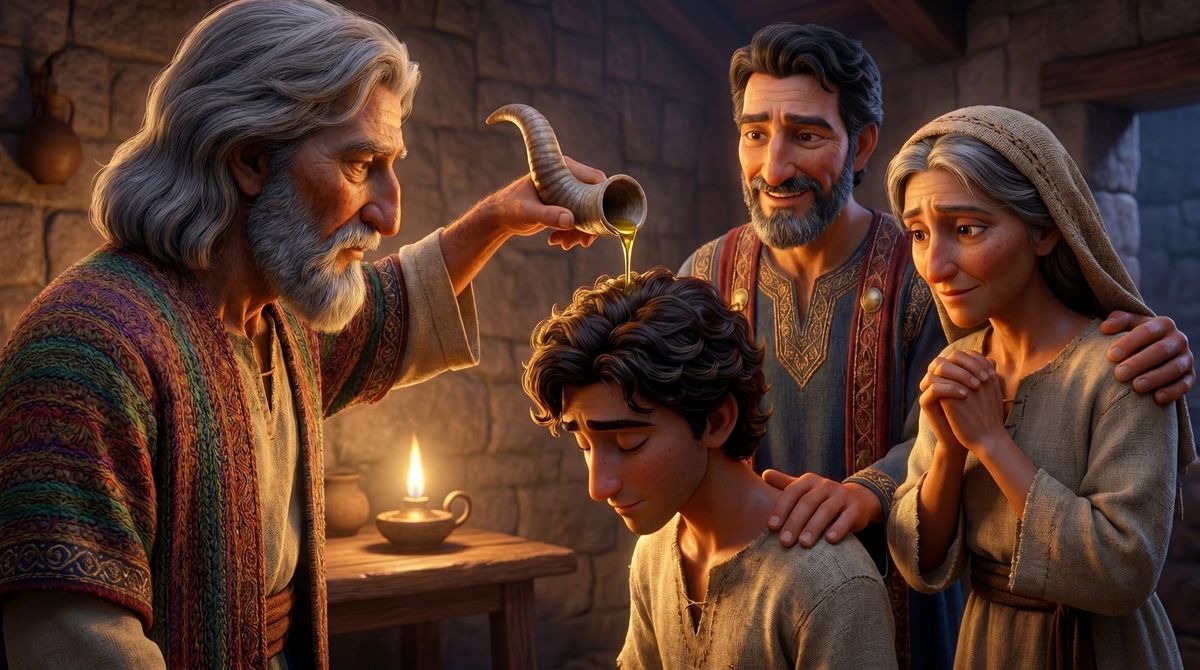
Miss last week?
Every lesson stands on its own — but together, they tell a bigger story.
 Shout for Joy
Don’t Stop the Music
The Joy Tier starts right here. Go deeper into this week’s scripture story and explore the meaning behind the songs.
Inside Joy you’ll find:
- A weekly Fireside Moment overview of the Come, Follow Me lesson
- Expanded Set the Stage teaching guides for every song
- Choose Your Adventure family activities and simple weekly habits
- Lyric–Scripture Blueprints, printable coloring pages, and lyric sheets
- Cinematic reflection videos designed for quiet viewing and discussion
Access Joy below to turn this week’s song into a weeklong experience of scripture, music, and family conversation.