The Simple Things

Naaman wanted a miracle worthy of a general — the Lord gave him a river and a choice.

The Simple Things

The Simple Things

It's the simple things! Just wash and be clean!
When the Lord gives a word, don't walk away—
Just humble your heart and do it today!

Naaman wanted a miracle worthy of a general — the Lord gave him a river and a choice.

Set the Stage: The General Who Couldn't Take Simple Advice

Naaman was not a nobody. He was the commander of the Syrian army — decorated, powerful, the kind of man kings listened to. When he showed up at Elisha's door, he came with horses, chariots, silver, gold, and a letter from the king of Syria himself. He had leprosy, yes, but he also had resources, status, and a very clear expectation of how this healing was going to go down.

Here's what he expected: the prophet would come out, make a dramatic gesture, call on the name of his God, wave his hand over the diseased skin, and — boom — miracle. Grand. Cinematic. Worthy of a man of his stature.

Here's what happened instead: Elisha didn't even come to the door. He sent a messenger with a seven-word prescription. Go wash in the Jordan River seven times.

Naaman was furious. The Jordan? That muddy little river? The rivers back home in Syria were better than that. If it was just about washing in a river, why couldn't he have stayed home? He turned around and started heading back — pride fully intact, leprosy fully intact.

It took his servants — people with far less status than him — to talk him down. 'If the prophet had asked you to do something hard, you would have done it. Why not something easy?' That question cracked something open. Naaman went. He dipped. Seven times. And on the seventh time, his skin came back like a child's.

The miracle wasn't in the river. The miracle was in the obedience. And the obedience required him to let go of the one thing that was harder to shed than the leprosy itself: his pride.

Need more backstory? Check out our Fireside Moment here.
The Big Idea: The Hardest Part Isn't the River — It's the Walk to the Bank
There's a reason Naaman's story has survived thousands of years of retelling. It's not because leprosy is relatable. It's because pride is. We all have a version of the moment where the Lord's instruction feels too small, too ordinary, too beneath what we were expecting. Read your scriptures. Say your prayers. Go to church. Serve your neighbor. These aren't dramatic. They don't feel proportional to the size of the problem we're carrying. And that gap — between the grandness of our need and the simplicity of the answer — is exactly where pride likes to set up camp.

'The Simple Things' names that gap out loud and refuses to let it be comfortable. The song doesn't mock Naaman — it gets him. Of course he wanted something bigger. Of course he felt like the prescription didn't match the diagnosis. But the song also holds the line: when the Lord gives a word, don't walk away. Alma 37:6 puts it plainly — 'by small and simple things are great things brought to pass.' The Jordan River was small. The dipping was simple. The healing was great. That's not a coincidence; that's a pattern.

For Latter-day Saints, this story lands with particular weight because we have living prophets giving us small, simple counsel all the time. President Nelson has called us to 'seek and expect miracles' — but the miracles he points to are often downstream of ordinary covenant faithfulness. Daily scripture study. Weekly sacrament. Regular temple attendance. These are our Jordan Rivers. The question Naaman's servants asked him is the question worth sitting with today: if the Lord had asked you to do something hard, wouldn't you have done it? So why not this?

Thoughtful Question

Is there a simple, repeated invitation from the Lord or His prophets that you've been quietly dismissing because it doesn't feel big enough for the problem you're carrying?

Lyric Scripture Blueprint

Lyric Highlight Scripture Bridge Why It Matters
"(Yeah!) / (Don't overthink it!)" Alma 37:6
"Now ye may suppose that this is foolishness in me; but behold I say unto you, that by small and simple things are great things brought to pass."

D&C 58:26
"For behold, it is not meet that I should command in all things; for he that is compelled in all things, the same is a slothful and not a wise servant."
Small and Simple Obedience: The intro's two-word sermon — Don't overthink it — is actually ancient doctrine. Alma 37:6 is the Book of Mormon's definitive statement that God works through small and simple means, not grand spectacles. D&C 58 adds that the Lord expects us to act without needing elaborate instructions every time. For families: before the song even starts, it's already asking the question — are we making discipleship more complicated than God intended?
"Naaman was a captain, tough and strong / But he had a sickness going on too long. / He rode up to Elisha looking for a cure / Expected a show that was grand and pure." 2 Kings 5:1
"Now Naaman, captain of the host of the king of Syria, was a great man with his master, and honourable, because by him the Lord had given deliverance unto Syria: he was also a mighty man in valour, but he was a leper."

2 Kings 5:9
"So Naaman came with his horses and with his chariot, and stood at the door of the house of Elisha."

Ether 12:27
"And if men come unto me I will show unto them their weakness. I give unto men weakness that they might be humble."
Pride Before the Cure: Naaman's profile is painted in one verse — great, honourable, mighty, and leprous. The contrast is the whole point. His status and strength could not fix his deepest problem. Ether 12:27 frames this perfectly in Restoration theology: God allows weakness to exist precisely so that the proud have somewhere to go — down, toward humility. For families: ask your kids if they've ever expected God to answer a prayer in a big dramatic way, and what happened when He answered quietly instead.
"But the prophet didn't even come out the door! / Said, 'Wash in the Jordan, nothing more.' / Naaman got mad, said, 'I'm going back!' / But his servant said, 'Captain, get back on track!'" 2 Kings 5:10–12
"And Elisha sent a messenger unto him, saying, Go and wash in Jordan seven times, and thy flesh shall come again to thee, and thou shalt be clean. But Naaman was wroth, and went away, and said, Behold, I thought, He will surely come out to me, and stand, and call on the name of the Lord his God, and strike his hand over the place, and recover the leper."

2 Kings 5:13
"And his servants came near, and spake unto him, and said, My father, if the prophet had bid thee do some great thing, wouldest thou not have done it? how much rather then, when he saith to thee, Wash, and be clean?"

1 Peter 5:5
"Yea, all of you be subject one to another, and be clothed with humility: for God resisteth the proud, and giveth grace to the humble."
The Offense of Simple Instructions: Naaman's anger is one of scripture's most relatable moments — he had a plan for how God should work, and God didn't follow it. The servant's question in verse 13 is the theological pivot of the whole story: if it were hard, wouldn't you do it? Then why not when it's easy? Peter's letter confirms that pride is the specific barrier God resists. For families: the servant in this story is a hero — sometimes the most important thing we can do is gently redirect someone we love back toward the prophet's counsel.
"It's the simple things! Just wash and be clean! / You don't need a massive, heavy machine! / When the Lord gives a word, don't walk away / Just humble your heart and do it today!" 2 Kings 5:13–14
"And his servants came near, and spake unto him... Wash, and be clean. Then went he down, and dipped himself seven times in Jordan, according to the saying of the man of God: and his flesh came again like unto the flesh of a little child, and he was clean."

Alma 37:6–7
"By small and simple things are great things brought to pass; and small means in many instances doth confound the wise. And the Lord God doth work by means to bring about his great and eternal purposes."

D&C 1:37–38
"Search these commandments, for they are true and faithful, and the prophecies and promises which are in them shall all be fulfilled. What I the Lord have spoken, I have spoken, and I excuse not myself; and though the heavens and the earth pass away, my word shall not pass away, but shall all be fulfilled."
Covenant Obedience Over Spectacle: The chorus is a direct doctrinal statement about how God operates. Naaman's healing came not through fire from heaven but through seven quiet dips in a muddy river. Alma 37 is the Book of Mormon's theological backbone for this principle — God uses small means on purpose. D&C 1:38 adds the prophetic dimension: when the Lord speaks through His servants, those words carry divine authority and will be fulfilled. For families: the chorus is a great family motto — when the Lord gives a word, don't walk away. Post it somewhere visible this week.
"You don't need the lightning, you don't need the flash / Just jump in the water and make a little splash! / If you wanna find healing and earn your wings... / You gotta obey the simple things!" 1 Kings 19:11–12
"And, behold, the Lord passed by, and a great and strong wind rent the mountains, and brake in pieces the rocks before the Lord; but the Lord was not in the wind: and after the wind an earthquake; but the Lord was not in the earthquake: and after the earthquake a fire; but the Lord was not in the fire: and after the fire a still small voice."

Moroni 7:33
"And Christ hath said: If ye will have faith in me ye shall have power to do whatsoever thing is expedient in me."

L. Whitney Clayton, 'Whatsoever He Saith unto You, Do It,' Ensign, May 2017
"Simple, consistent, daily actions — these are the things that build the faith that heals."
The Still Small Voice Principle: The lyric's contrast between lightning and a little splash echoes one of the Old Testament's most famous moments — Elijah at Horeb in 1 Kings 19, where God was not in the earthquake or the fire but in the still small voice. The pattern is consistent across both testaments: God works quietly. Moroni 7:33 frames obedience as the mechanism of faith-powered healing. For families: ask your children what simple gospel habits feel too ordinary to matter — and then remind them that Naaman's healing came on dip number seven, not dip number one.
"We might not have to wash in a river or a stream / But the Lord is still working to build up the dream. / Reading our scriptures and saying a prayer / Showing the people around us we care." 2 Nephi 32:3
"Angels speak by the power of the Holy Ghost; wherefore, they speak the words of Christ. Feast upon the words of Christ; for behold, the words of Christ will tell you all things what ye should do."

Alma 34:27
"Yea, and when you do not cry unto the Lord, let your hearts be full, drawn out in prayer unto him continually for your welfare, and also for the welfare of those who are around you."

Moroni 7:45
"And charity suffereth long, and is kind, and envieth not, and is not puffed up, seeketh not her own, is not easily provoked, thinketh no evil, and rejoiceth not in iniquity but rejoiceth in the truth."
Modern Jordan Rivers: Verse 2 makes the interpretive leap that every good scripture teacher hopes students will make — the Jordan River is a symbol, not just a location. Our daily Jordan Rivers are scripture study, prayer, and service. The Book of Mormon is emphatic on all three: 2 Nephi 32 on feasting on the words of Christ, Alma 34 on continuous prayer, and Moroni 7 on charity as the animating spirit behind caring for others. For families: this verse is a great conversation starter — what is your Jordan River this week? What simple thing is the Lord asking you to do that you've been putting off?
"It might not seem big, it might not seem grand / But that's how the Father is healing the land!" Alma 37:7
"And the Lord God doth work by means to bring about his great and eternal purposes; and by very small means the Lord doth confound the wise and bringeth about the salvation of many souls."

2 Nephi 26:13
"And that he manifesteth himself unto all those who believe in him, by the power of the Holy Ghost; yea, unto every nation, kindred, tongue, and people, working mighty miracles, signs, and wonders, among the children of men according to their faith."

D&C 64:33
"Wherefore, be not weary in well-doing, for ye are laying the foundation of a great work. And out of small things proceedeth that which is great."
Cumulative Covenant Power: These two lines are the theological summary of the entire verse — and of the Restoration's understanding of how God builds His kingdom. D&C 64:33 is the definitive statement: out of small things proceedeth that which is great. Alma 37 confirms that God deliberately chooses small means to confound the wise. 2 Nephi 26 adds that miracles still happen according to faith — the healing of the land is ongoing, not finished. For families: remind your children that their daily scripture reading and prayers are not small in God's eyes — they are the foundation of something great.
"Let the pride go. (Let it go!) / Wash and be clean. (Wash and be clean!) / Let go of the ego and the heavy routine. / Just trust in the prophet, trust in the word / It's the greatest advice that you've ever heard!" 2 Kings 5:14
"Then went he down, and dipped himself seven times in Jordan, according to the saying of the man of God: and his flesh came again like unto the flesh of a little child, and he was clean."

1 Peter 5:6
"Humble yourselves therefore under the mighty hand of God, that he may exalt you in due time."

D&C 1:38
"What I the Lord have spoken, I have spoken, and I excuse not myself; and though the heavens and the earth pass away, my word shall not pass away, but shall all be fulfilled, whether by mine own voice or by the voice of my servants, it is the same."

3 Nephi 29:6
"Wo unto him that shall deny the revelations of the Lord, and that shall say the Lord no longer worketh by revelation, or by prophecy, or by gifts, or by tongues, or by healings, or by the power of the Holy Ghost!"
Prophetic Trust as the Antidote to Pride: The bridge strips the song down to its core command — let the pride go, trust the prophet. This is not just good advice; it is covenant doctrine. D&C 1:38 establishes that the voice of the Lord's servants is the voice of the Lord Himself. 3 Nephi 29 warns against dismissing ongoing revelation. Naaman's healing in 2 Kings 5:14 is the proof of concept — the moment he let go of his ego and obeyed, his flesh became like a little child's. For families: the bridge is a great moment to talk about what it means to trust living prophets today — not just ancient ones — and what specific counsel from President Nelson your family is acting on.
"(Just wash and be clean.) / Keep it simple." 2 Kings 5:13
"Wash, and be clean."

Alma 37:6
"By small and simple things are great things brought to pass."

Moroni 7:33
"And Christ hath said: If ye will have faith in me ye shall have power to do whatsoever thing is expedient in me."
The Covenant Distilled: The outro does what great outros do — it reduces the entire song to its irreducible core. Wash and be clean is the exact command from 2 Kings 5:13, and Keep it simple is its modern translation. Alma 37:6 is the Book of Mormon's eternal echo of that same principle. Moroni 7:33 closes the loop by grounding simplicity in faith — the power is not in the complexity of the act but in the faith behind it. For families: end your family discussion this week with this question — what is one simple thing the Lord is asking our family to do? Write it down, do it, and report back next week.

Family Activity: Choose Your Adventure

Option A: Seven Splashes Obstacle Course

Try This: Build a quick seven-station obstacle course around your home or yard — one station for each time Naaman dipped in the Jordan River (2 Kings 5:14). Each station gets a simple physical challenge: bear crawl to the couch, five jumping jacks, spin twice, army crawl under a table, balance on one foot for five seconds, do a silly walk to the door, and finish with a big jump and shout 'Clean!' Time each family member and cheer them through all seven stations. Remind everyone that Naaman had to do it all seven times — not just once — before the miracle came. Persistence plus obedience equals the blessing.

Reflect: Did any station feel pointless or too easy? How does that connect to why Naaman almost turned around and went home before his healing came?

2 Kings 5:14
Option B: My Simple Thing Letter

Try This: Give everyone a piece of paper — or just gather around and talk if writing feels like too much tonight. Each person thinks of one 'simple thing' a prophet or parent or the scriptures has been nudging them to do that they've been putting off or overthinking. Maybe it's saying a real prayer instead of a rushed one. Maybe it's being kinder to a sibling. Maybe it's actually reading those few verses before bed. Write it down (or say it out loud if your family is comfortable). Then write or share one reason you think you've been hesitating — is it pride, like Naaman? Does it feel too small to matter? Fold the paper up and keep it somewhere you'll see it this week as a personal reminder.

Reflect: Read Alma 37:6 together — 'by small and simple things are great things brought to pass.' What great thing might the Lord be trying to bring to pass in your life through the small thing you identified tonight?

Alma 37:6

Walk With Me: Reinforce the Week with a Daily Habit

Walk to the River

Try This: Each morning this week, before you check your phone, do one small covenant act — read one verse, say one sincere prayer, or write one thing you're grateful for. Keep it genuinely small. That's the point.

Why: Naaman's healing didn't come from a grand gesture — it came from repeated, humble obedience to a simple word. Alma 37:6 teaches that small and simple things are the very mechanism God uses to bring about great things. Training yourself to show up in the small moments is how you build the kind of faith that moves mountains — one dip at a time.

Behind the Music

The Cadence: The verse melody was written to feel like a story being told at a slightly breathless pace — because Naaman's story moves fast. He arrives, he's insulted, he storms off, he's talked down, he obeys. We wanted the rhythm to carry that momentum so kids feel the tension before the chorus releases it.

The Humor: 'Nayman got mad, said, I'm going back!' is a deliberate comedic beat. Naaman's reaction is genuinely funny when you step back — this decorated general throwing a tantrum because the prophet didn't put on enough of a show. Leaning into that humor makes the pride more visible and more relatable, not less. Kids laugh, and then they recognize themselves.

The Bridge as the Turning Point: The bridge — 'Let the pride go / Wash and be clean' — is structured to mirror the moment Naaman's servants intervene. It's the emotional hinge of the song. We kept it call-and-response so families can sing it together, because that servant dynamic — someone in your life helping you get back on track — is worth embodying, not just hearing.

The Verse 2 Pivot: The second verse is where the song does its most important theological work. It explicitly connects Naaman's river to modern covenant practices — scripture study, prayer, serving others. That pivot is intentional. We didn't want kids to walk away thinking this was just a cool Old Testament story. We wanted them to hear: your Jordan River is real, and you walk past it every day.

Distraction-Free Lyric Video

Safe, distraction-free viewing for families.

Distraction-Free Cinematic Video

A lyric-free visual reflection designed for quiet viewing and discussion.

Continue the Journey

Back to the Fireside Moment

Revisit this week's scripture overview and big idea.

July 6–12: “There Is a Prophet in Israel” (2 Kings 2–7)
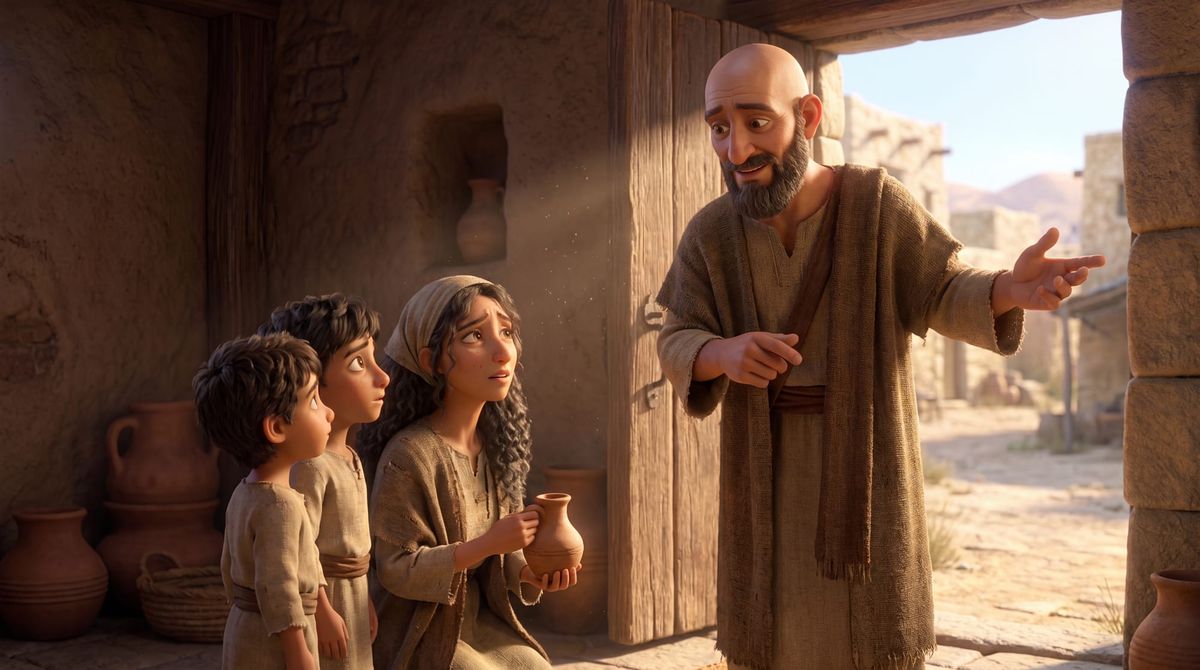
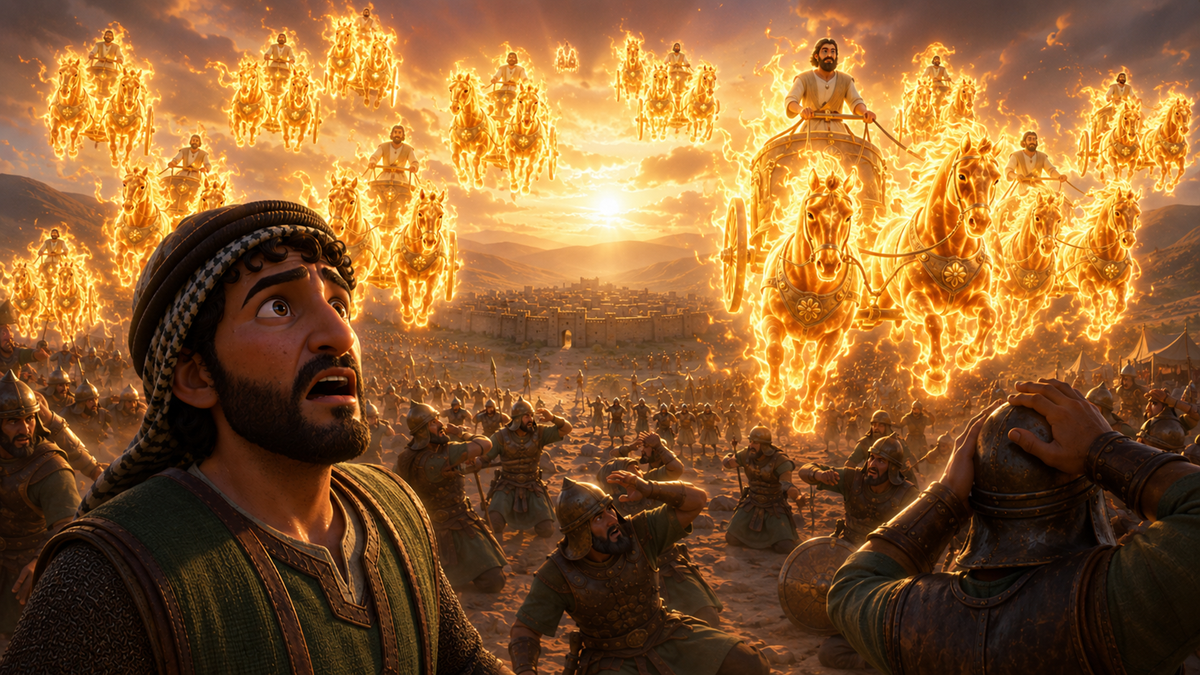
A widow with one jar of oil, a general too proud to wash in a river, and a servant who couldn’t see the army standing right behind him — this week in 2 Kings 2–7, Elisha’s miracles reveal a God who specializes in doing the impossible with whatever small, scared, faithful thing you bring Him.

Explore Another Song

Pour It Out
A widow, a jar of oil, and a God who fills every empty thing you’re brave enough to gather.
Chariots of Fire
When the mountain looks full of enemies, this song prays your eyes open to see what’s already there.