September 7–13: "He Shall Direct Thy Paths" (Proverbs 1–4; 15–16; 22; 31; Ecclesiastes 1–3; 11–12)
Proverbs says trust God and life goes well. Ecclesiastes says life is still complicated. Together they land on the same stubborn truth — the only understanding worth leaning on isn't yours.
Your Game Plan for This Week
There's a moment most of us know well — the one where we've already decided what we're going to do, we've already mapped the route in our heads, and we're just sort of hoping the Spirit agrees. Proverbs 3:5–7 has a name for that: leaning on your own understanding. And the song 'Lean Not' puts it in terms your kids will actually remember — you can lean on a pencil, or you can lean on a wall. One of those is a load-bearing structure. The other one rolls away.
The beautiful tension of this week's scripture is that Ecclesiastes doesn't contradict Proverbs — it completes it. Yes, life is uncertain. Yes, even wisdom can leave you with grief and vexation. But the conclusion of the whole matter, as Ecclesiastes 12:13 puts it, is still 'fear God and keep his commandments.' The path doesn't get easier just because you're smart. It gets navigable because you're trusting the One who built it.
For families, this week is a chance to talk honestly about the moments when we've trusted our own map and ended up lost — and the moments when we handed the wheel over and found ourselves somewhere better than we planned. 'A Soft Answer' picks up that same thread in our relationships: the strongest move in any heated moment isn't the loudest one. Both songs this week are asking the same question in different rooms of the house — are you leaning on something that holds?
15-Minute Family Home Evening
Monday night — your launch for the week.
-
Ask this to open. Take 2–3 responses, then move on.2 minOpening QuestionHas anyone ever stayed up late trying to solve a problem by just thinking harder and harder about it — and the more you thought, the more stuck you felt?
-
Read this together:2 minSet the StageSolomon was the wisest king Israel ever had — and he sat down and wrote an urgent letter to his children. Not a lecture. A plea. He had watched people — smart people, capable people — grab a pencil and start drawing their own map the moment life got complicated. They calculated, they strategized, they filtered out any advice that didn't fit what they already believed. And they kept ending up lost. Solomon had done it himself. He had chased wisdom, wealth, and achievement to their absolute limits and found that outside of God, every road eventually dead-ends. So he wrote it down, plain as he could: the smartest thing you will ever do is stop trusting your own understanding.Proverbs 3:5-6Trust in the Lord with all thine heart; and lean not unto thine own understanding. In all thy ways acknowledge him, and he shall direct thy paths.
-
Press play — watch together:3 min

🎵 Trust in the Lord with all thine heart! That's where the direction's gonna start! Lean not unto thine own understanding, He's taking the wheel and He's landing!
Dive Deeper: Lean Not -
Read the Big Idea together:2 minBig Idea The Wisest Move Is Letting Go
Real wisdom isn't about being the smartest person in the room — it's about being humble enough to trust Someone who can see the whole road when you can barely see your next step. Proverbs makes a direct promise: when we stop leaning on our own calculations and start acknowledging God in every part of our lives, He actively works to straighten the path ahead of us. This week, the invitation is practical — find one place where you've been drawing your own map, and hand it to Him. -
Ask your family:3 minReflect TogetherIs there something in your life right now where you've been drawing your own map — trying to figure it all out yourself — that you could try handing over to the Lord this week?
-
Do this activity together:5 min
Lean or Stand?
Try This: One person stands in the middle of the room and slowly leans — arms out, body tilting — like they're about to fall. Everyone else calls out something they might 'lean on' instead of the Lord: their own ideas, what's popular at school, what a friend said, etc. Each wrong answer and the leaner tilts a little further. When someone shouts 'Trust in the Lord!' the leaner snaps back upright. Take turns being the leaner. See who can hold the most dramatic lean before someone saves them!
Reflect: What does it actually feel like when you're leaning on your own understanding and things start to wobble? What's one area of your life right now where you could let the Lord 'take the wheel' a little more?
-
Close together: Say a family prayer. Then enjoy a special treat as a family.2 min
20-Minute Primary / Sunday School
Lead with A Soft Answer.
-
Ask this to open. Take 2–3 responses, then move on.3 minOpening QuestionHas anyone ever been in an argument where someone said something really loud and harsh — and instead of calming things down, it just made everything ten times worse?
-
Read this together:2 minSet the StageThe book of Proverbs wasn't written for people living quiet, uncomplicated lives. It was written for merchants, parents, rulers, and teenagers — real people navigating real friction with real people who sometimes said real unkind things. And right in the middle of all that practical wisdom, the ancient writer drops one of the most counterintuitive lines in all of scripture: a soft answer turns away wrath. Not a clever comeback. Not a louder argument. Not a perfectly constructed rebuttal. A soft answer. Anger, the proverb understands, is a force looking for a surface to bounce off of. It feeds on equal and opposite reaction. The moment you refuse to be that wall — the moment you lower the current instead of raising it — the whole structure loses its foundation.Proverbs 15:1A soft answer turneth away wrath: but grievous words stir up anger.
-
Press play — watch together:3 min
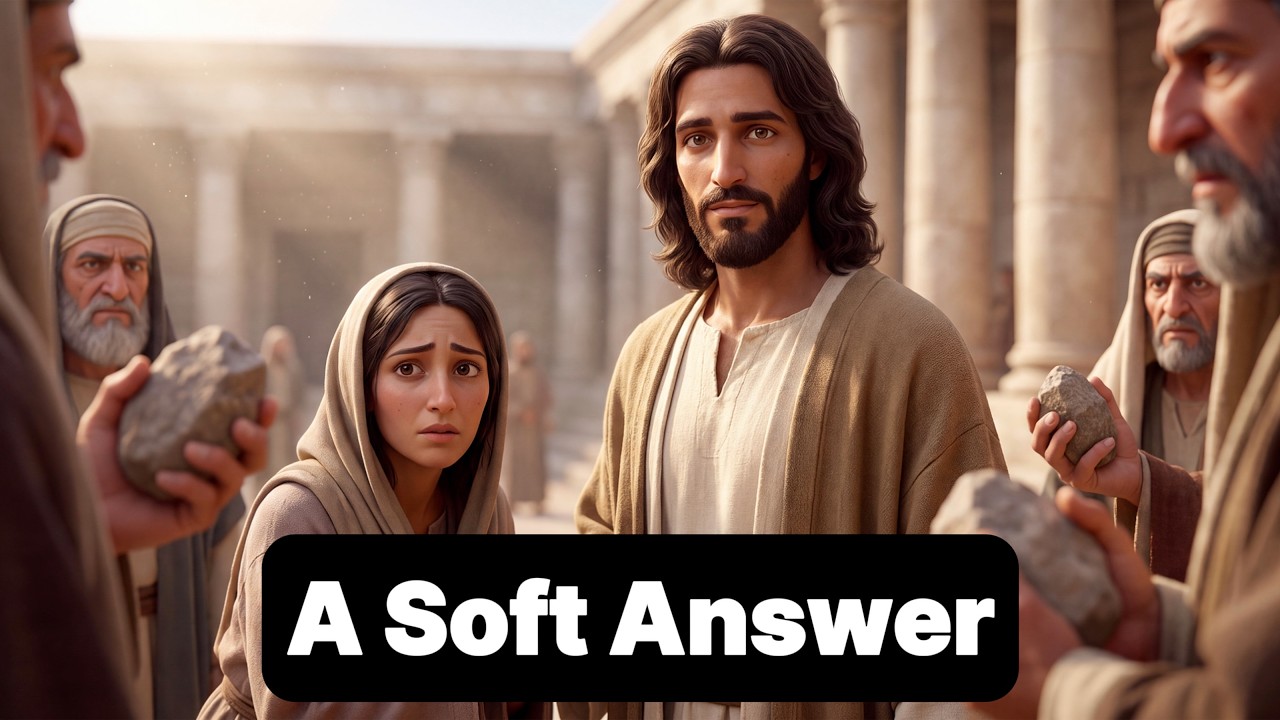
🎵 A soft answer turneth away wrath! Breaks the momentum, redirects the path! Like cool water falling on a burning wire, Gentle persuasion putting out the fire!
Dive Deeper: A Soft Answer -
Ask this. Give the class a moment to think before taking responses.3 minPivot QuestionWhy do you think the ancient wisdom writer said a soft answer was more powerful than a strong argument or a louder voice?
-
Keep going:4 minFollow-UpWhen someone says something that stings or feels unfair, what makes it so hard to respond softly — and what do you think it would take to actually do it in that moment?
-
Liken it unto yourself. Hand each student a slip of paper. Give 2 minutes to write, then 2–3 share with the class.5 minLiken Unto YourselfThink of a recent moment when you felt the pull to match someone's anger or frustration — what would it have looked like to lower the current instead of raising it, and what do you think that choice would have cost you?
-
2 minClose With ThisThe strongest person in any room is not the one who wins the argument — it's the one who had the power to escalate and chose not to. That is not weakness. That is the kind of self-mastery the Lord has been teaching His people since the days of Solomon.
-
Optional Activity — use if you have extra time or a younger class:5 min
Soft Answer Showdown
Try This: One person is the 'Shouter' and dramatically delivers a grumpy complaint (nothing mean — think 'You ate the last cookie!' or 'You never let me pick the show!'). The next person has exactly five seconds to fire back with the softest, kindest, most creative response they can muster. The family votes thumbs up or thumbs down — did it actually defuse the situation? Rotate until everyone has been both the Shouter and the Soft Answerer. Bonus round: try the same complaint twice — once with a harsh comeback, once with a soft answer — and feel the difference in the room.
Reflect: Which soft answer surprised you the most? Why does a gentle response feel harder in the moment but better afterward?
Week Schedule
You don't have to do all seven — pick what fits. Monday launches, Sunday caps. Tap any day to expand or collapse.
This Week's Fireside Moment
The full story behind the songs — in one sitting.
Watch & Listen
Lean Not
That is the exact moment Proverbs 3 was written for. Solomon — a man who had more wisdom, wealth, and resources than almost anyone in recorded history — sat down and wrote a letter to his children that essentially said: the smartest thing you will ever do is stop trusting your own understanding and start trusting God's. "Trust in the Lord with all thine heart," he wrote, "and lean not unto thine own understanding. In all thy ways acknowledge him, and he shall direct thy paths" (Proverbs 3:5–6). The book of Ecclesiastes, written in a similar spirit, adds the sobering counterpoint: everything you chase outside of God — meaning, pleasure, achievement, wisdom for its own sake — eventually dissolves into "vanity of vanities, chasing after wind."
"Lean Not" takes both of those ancient voices and turns them into a song your kids will be humming at breakfast. The narrator is not a villain — just a regular person leaning on pencils and walls, drawing mental maps, filtering reality through their own assumptions. The song's genius is that it makes the surrender feel like relief rather than defeat. The chorus does not scold. It celebrates: He's taking the wheel and He's landing. The bridge slows everything down to a single, practical instruction — ponder the path of your feet, don't veer left or right, just walk with the Savior.
For your family this week, "Lean Not" is a permission slip to stop white-knuckling the map and hand it to Someone who can actually see the road.
Want the full story? Read the complete Fireside Moment or explore the Lyric-Scripture Blueprint in our Joy Tier Deep Dive.
Lyric–Scripture Blueprint (Preview)
Did you know these lyrics come straight from the scriptures?
Explore the full Lyric–Scripture Blueprints and deeper activities in the Joy Tier.

A Soft Answer
Proverbs 15:1 is one of the most compact pieces of wisdom in all of scripture: 'A soft answer turneth away wrath: but grievous words stir up anger.' The ancient writer understood something about human conflict that modern neuroscience is still catching up to — that anger is a force that needs resistance to sustain itself. It's an echo looking for a wall. The moment you refuse to be that wall, the whole dynamic shifts. This is not a passive move. It is, as Proverbs 16:32 makes clear, the move of someone who has done the harder work of ruling their own spirit first.
A Soft Answer takes that ancient wisdom and builds it into something your kids will actually remember. The song maps the physics of conflict — how grievous words feed the flame, how a shout buys battles that cost more than they're worth — and then offers the counterintuitive alternative: lower the current. Redirect the path. Let gentle persuasion do what volume never could.
The lyric 'Breaks the momentum, redirects the path' finds its most vivid New Testament illustration in Mark 12:13–17. The Pharisees and Herodians came to Jesus with a question engineered to destroy Him — answer one way and He offends Rome, answer the other and He offends Israel. It was a trap with no exit. And Jesus didn't match their adversarial energy. He didn't raise His voice, didn't argue the premise, didn't take the bait. He asked for a coin, named what was already obvious, and redirected the entire frame of the question with a single, perfectly calibrated answer. 'Render to Caesar the things that are Caesar's, and to God the things that are God's.' The momentum broke. The room went quiet. That is the soft answer in action — not weakness, not evasion, but the disciplined refusal to fight on the enemy's terms.
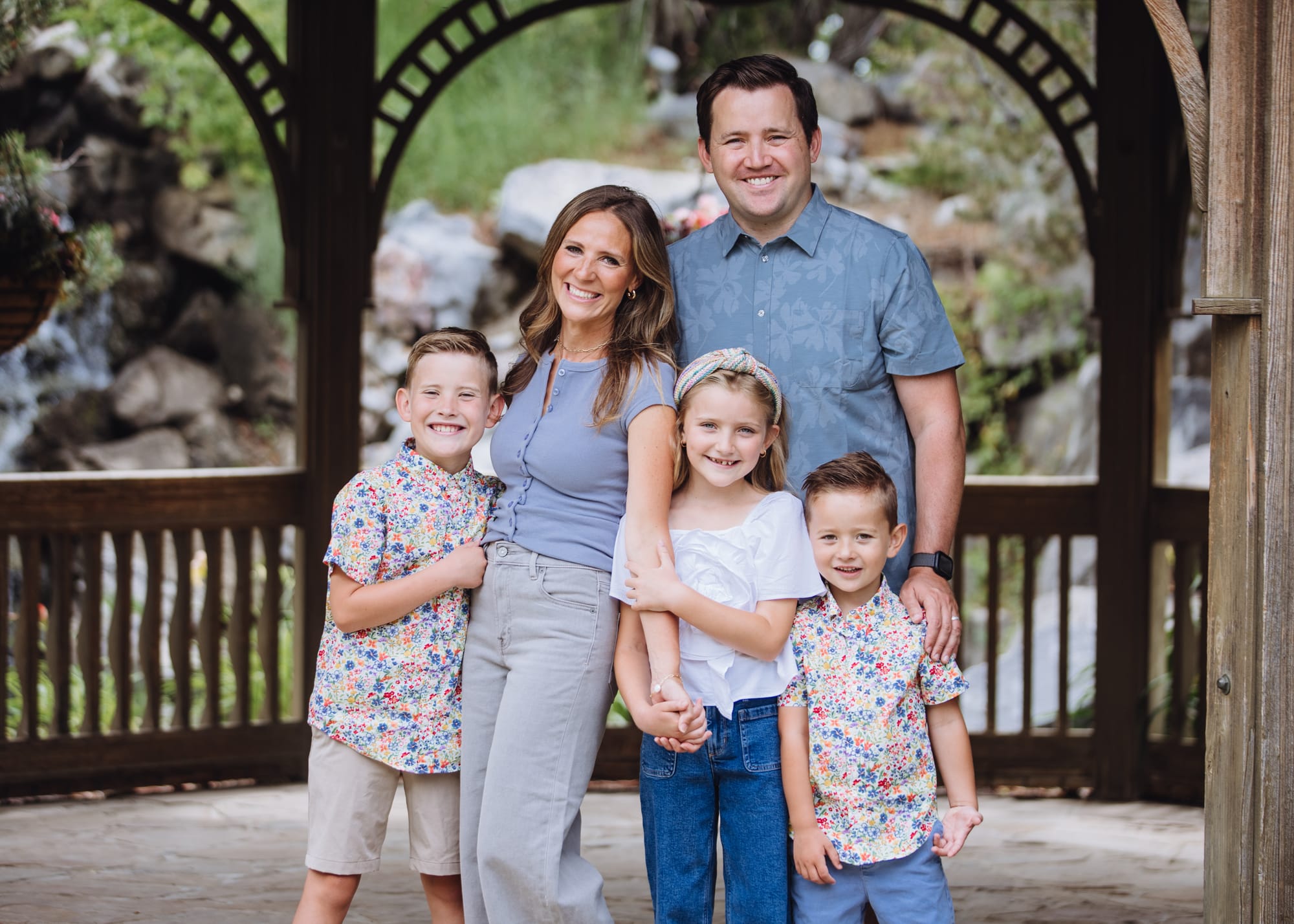
The lyric 'the strongest spirit in the room doesn't cast a stone' draws from the same well. In John 8:1–11, Jesus faced another crowd primed for confrontation, and again He refused to be the wall that anger needed. He redirected, He disarmed, He left every accuser to reckon with their own conscience. Two scenes, same principle: the soft answer doesn't just end the argument — it changes what the argument was ever about.
In a world that rewards whoever is loudest, this song is a quiet act of resistance — and a very practical one. The soft answer your child practices at home this week is the same skill they'll need in every hard conversation for the rest of their life.
Want the full story? Read the complete Fireside Moment or explore the Lyric-Scripture Blueprint in our Joy Tier Deep Dive.
Listen Everywhere


Miss last week?
Every lesson stands on its own — but together, they tell one continuous story.
 Bob LeBaron
Don’t Stop the Music
The Joy Tier starts right here. Go deeper into this week’s scripture story and explore the meaning behind the songs.
Inside Joy you’ll find:
- A weekly Fireside Moment overview of the Come, Follow Me lesson
- Expanded Set the Stage teaching guides for every song
- Choose Your Adventure family activities and simple weekly habits
- Lyric–Scripture Blueprints, printable coloring pages, and lyric sheets
- Cinematic reflection videos designed for quiet viewing and discussion
Access Joy below to turn this week’s song into a weeklong experience of scripture, music, and family conversation.