July 27–August 2: "I Am Doing a Great Work" (Ezra 1; 3–7; Nehemiah 2; 4–6; 8)
Nehemiah's enemies wanted him off the wall and into a meeting. He had four words for them. This week your family discovers what it means to have a mind to work — and why the Lord's great work always faces opposition before it finds its shout.
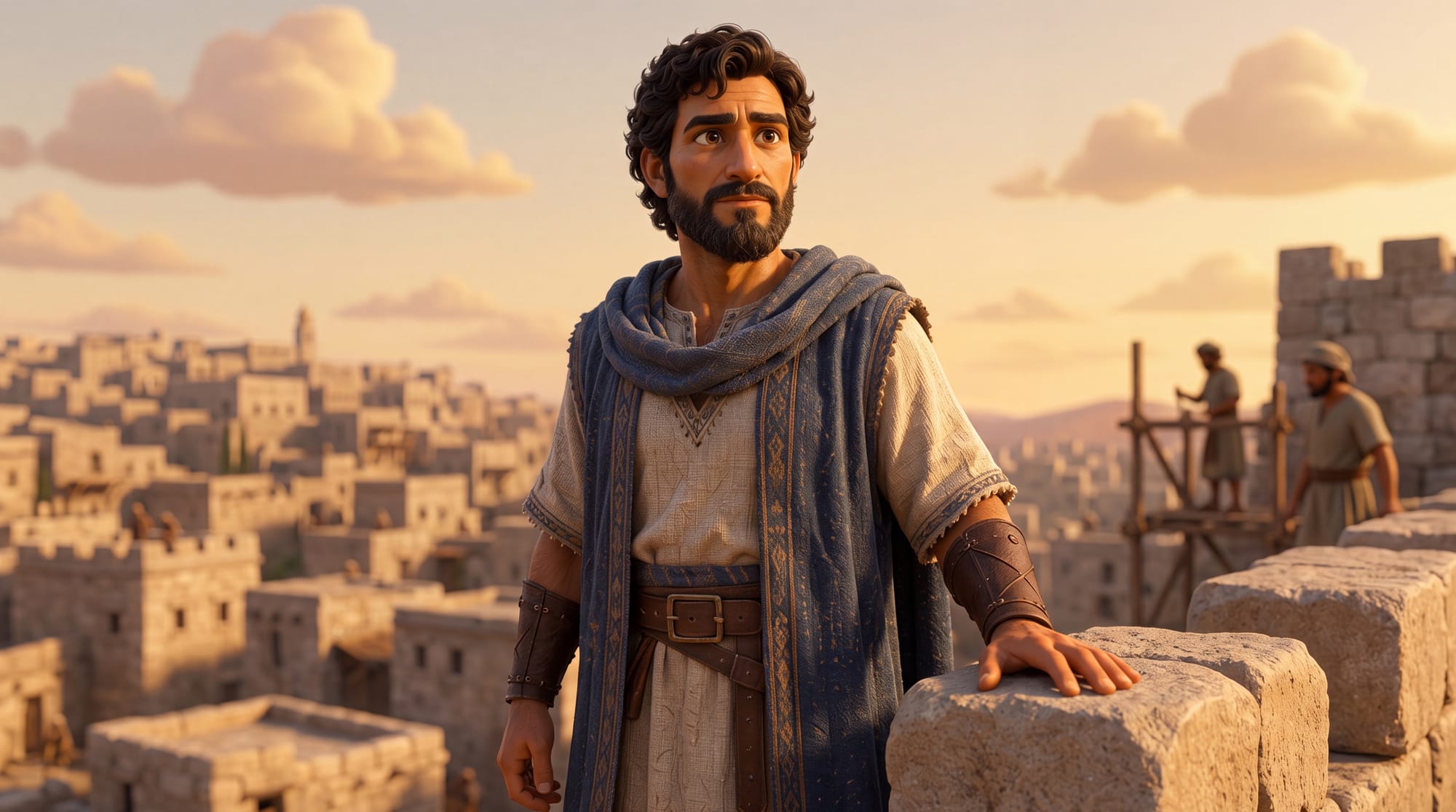
Stay on the Wall
I am doing a great work and I cannot come down!
I'm building up the walls of this holy town!
Got a mind to work and a heart to stay
I'm doing a great work every single day!
Nehemiah's enemies wanted him off that wall and into a conversation that would never end. He had one answer: no. This week's songs ask your family the same question his enemies asked him — and dare you to give the same answer.
Set the Stage: Nobody Comes Down
Nehemiah is fifty feet off the ground, trowel in hand, when the message arrives. Again. His enemies want a meeting. They frame it as reasonable, even friendly — just come down to the valley, let's talk this through. But Nehemiah has been around long enough to know a distraction when he sees one. The wall is half-built. Jerusalem is still exposed. And every hour he spends in that valley is an hour the work stops. So he sends back four words that have echoed across twenty-five centuries: I cannot come down.
Before Nehemiah ever picked up a trowel, Zerubbabel, a descendant of King David, had already led the first wave of exiles home from Babylon — seventy years of captivity, and now a Persian king, of all people, is funding the temple rebuild. Then Ezra arrives with the law of Moses and reads it aloud in the square until the people weep and then celebrate. Three leaders. One mission. Rebuild the house, restore the law, protect the city. The opposition was real. The work was harder. They stayed on the wall anyway.
The Big Idea: You Are Already Doing the Great Work
Here is the thing about Nehemiah's famous line — he did not say it once. He said it four times. Four separate invitations to quit, and four times he looked back down at the stones and kept laying them. The song 'I Am Doing a Great Work' captures exactly that energy: the critics are in the valley, the phone is buzzing, the voices are loud, and the answer is still the same. I cannot come down. That is not stubbornness. That is covenant clarity.
The ancient work was literal — walls, stones, mortar, gates. But Ezra's contribution reminds us that the real construction project was always internal. When he read the law of Moses aloud in the square and the people wept, something was being rebuilt that no enemy could tear down: a people who remembered who they were. 'We're Gonna Shout for Joy' lives in that moment — the foundation is back in the ground, the corner stone is set, and the sound mixing in the desert air is grief and gratitude at the same time. Both are holy.
For your family this week, the great work looks like showing up to scripture study when you are tired, choosing the covenant path when the crowd is heading somewhere easier, and building a life and a soul — as the song puts it — one brick at a time. The Lord raised up Cyrus, a Persian king who did not even worship Him, to fund the temple. He is not short on resources. He is looking for people with a mind to work.

Scripture Bridge
Lyric Highlight
They want me to stop, they want me to pause
But I'm moving forward for a holy cause.
Got a mind to work and a heart to stay
I'm doing a great work every single day!
Reflect: What is one thing in your life right now that feels like the enemy calling you down from the wall — and what would it look like to send back Nehemiah's answer?
Family Activity
Try This: Pick one person to be Nehemiah. Everyone else is a 'distractor' trying to tag them and pull them to a designated 'valley' spot across the room. Nehemiah has a mission — carry a small pillow or stuffed animal (the stone) from one wall to the other without being tagged. If tagged, Nehemiah freezes and shouts 'I cannot come down!' — a teammate can unfreeze them by high-fiving them. Switch roles every round so everyone gets a turn being Nehemiah. Play 3-4 rounds and see how many stones make it across.
Reflect: What made it hard to stay focused on your mission? What helped? When does real life feel like everyone is trying to pull you to the valley?
Nehemiah 6:3
Watch & Listen
I Am Doing a Great Work
The backstory matters here. Jerusalem's walls had been rubble for over a century — a symbol of national shame and spiritual vulnerability. When Nehemiah heard about it, he was living comfortably in Persia as the king's cupbearer. He had no obligation to go. But he wept, fasted, prayed, and then asked the king for permission to fix it. The king said yes. God's hand was already moving. What followed was 52 days of organized, armed, prayerful construction — families building the section of wall closest to their own homes, tools in one hand and weapons in the other, refusing to stop even when the opposition got loud and personal.
This song drops your family right into that moment — not the victory lap, but the middle of the build, when the stones are heavy and the critics are calling from below. The chorus isn't a highlight reel. It's a decision being made in real time. When your kids sing 'I cannot come down,' they're rehearsing Nehemiah's answer as their own.
That's the modern bridge: the valley still calls. It just uses different tools now.
Want the full story? Read the complete Fireside Moment or explore the Lyric-Scripture Blueprint in our Joy Tier Deep Dive.
Lyric–Scripture Blueprint (Preview)
Did you know these lyrics come straight from the scriptures?
Explore the full Lyric–Scripture Blueprints and deeper activities in the Joy Tier.
 Bob LeBaron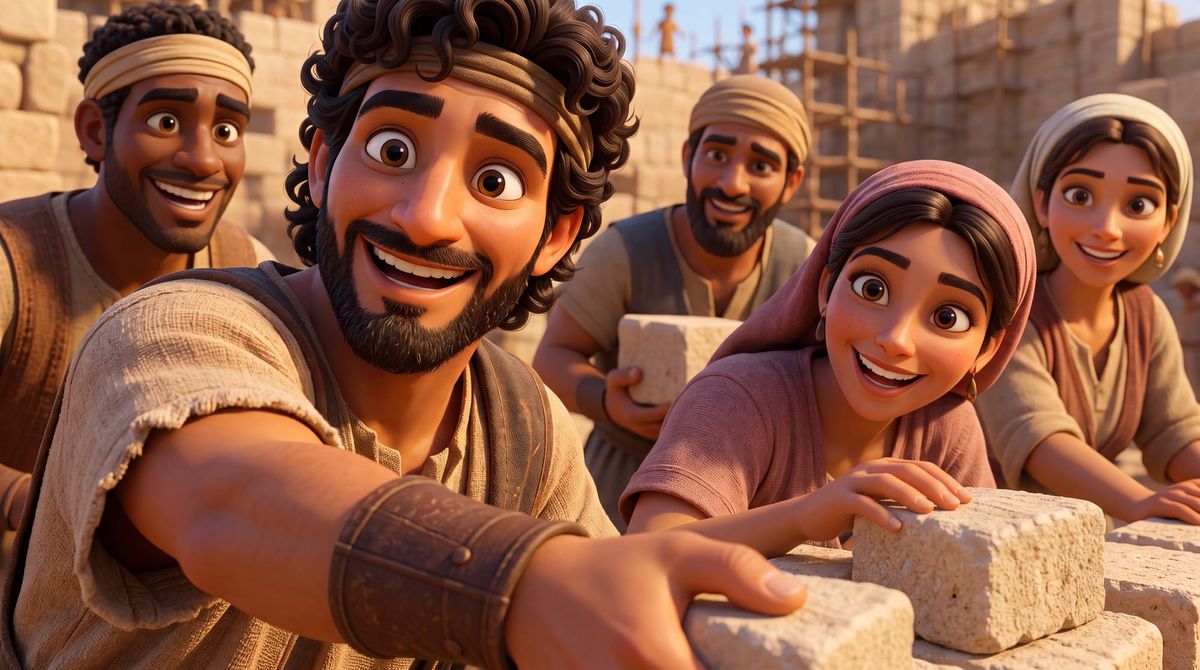
We're Gonna Shout for Joy
Here's the backstory your kids need: Babylon had destroyed Solomon's temple — one of the ancient world's most breathtaking structures — and carried the Jewish people into captivity for roughly 70 years. Then Persia conquered Babylon, and the Persian king Cyrus (who didn't even worship Israel's God) issued a decree letting the Jews go home and rebuild. Ezra 1:1 says the Lord 'stirred up the spirit' of Cyrus to do it. God working through an unlikely source to keep a very old promise — that's the setup for everything that follows.
What the exiles found when they got back to Jerusalem was rubble. What they did with it was remarkable. They cleared the debris, set the cornerstone, and then they shouted. We're Gonna Shout for Joy captures that exact moment — the mixed crowd, the mixed emotions, the foundation rising out of the ruins. It doesn't skip the grief to get to the celebration. It holds both, just like Ezra 3 does.
For your family right now, in a season when temples are being announced and dedicated at a historic pace, this song is a way to feel the weight and the wonder of what the house of the Lord actually means — and why it's always worth shouting about.
Want the full story? Read the complete Fireside Moment or explore the Lyric-Scripture Blueprint in our Joy Tier Deep Dive.
 Bob LeBaron
Miss last week?
Every lesson stands on its own — but together, they tell one continuous story.
 Bob LeBaron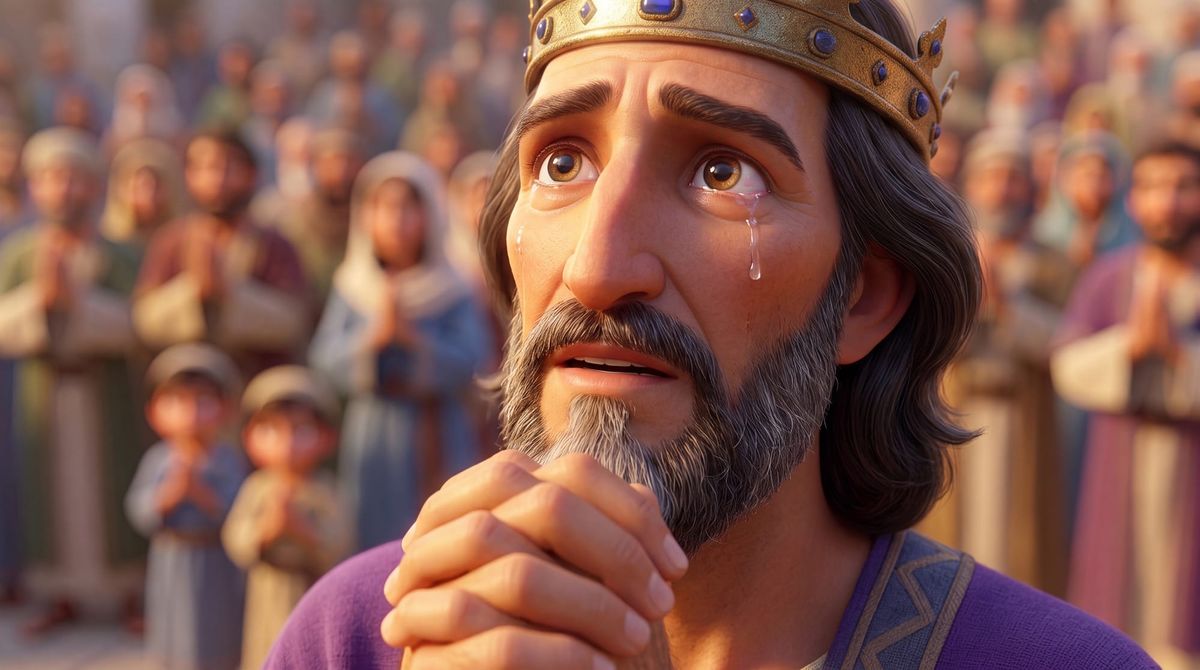
Don’t Stop the Music
The Joy Tier starts right here. Go deeper into this week’s scripture story and explore the meaning behind the songs.
Inside Joy you’ll find:
- A weekly Fireside Moment overview of the Come, Follow Me lesson
- Expanded Set the Stage teaching guides for every song
- Choose Your Adventure family activities and simple weekly habits
- Lyric–Scripture Blueprints, printable coloring pages, and lyric sheets
- Cinematic reflection videos designed for quiet viewing and discussion
Access Joy below to turn this week’s song into a weeklong experience of scripture, music, and family conversation.