July 20–26: "Our Eyes Are upon Thee" (2 Chronicles 14–20; 26; 30)
When three armies surrounded Jerusalem, King Jehoshaphat's only strategy was an honest prayer — and it was enough. This week's songs and scriptures ask your family the same question: what does it look like to keep your eyes on God when the problem is bigger than your plan?
When All You Have Is Eyes
Lord, we have no power, we don't know what to do -
But we're standing here together, and our eyes are on You.
The battle ain't mine, it's the battle that You do -
I keep my eyes on You.
Three armies. One king. Zero options — except the one that actually works. Jehoshaphat's prayer wasn't a last resort; it was the whole strategy.
Set the Stage: Three Armies, One Prayer
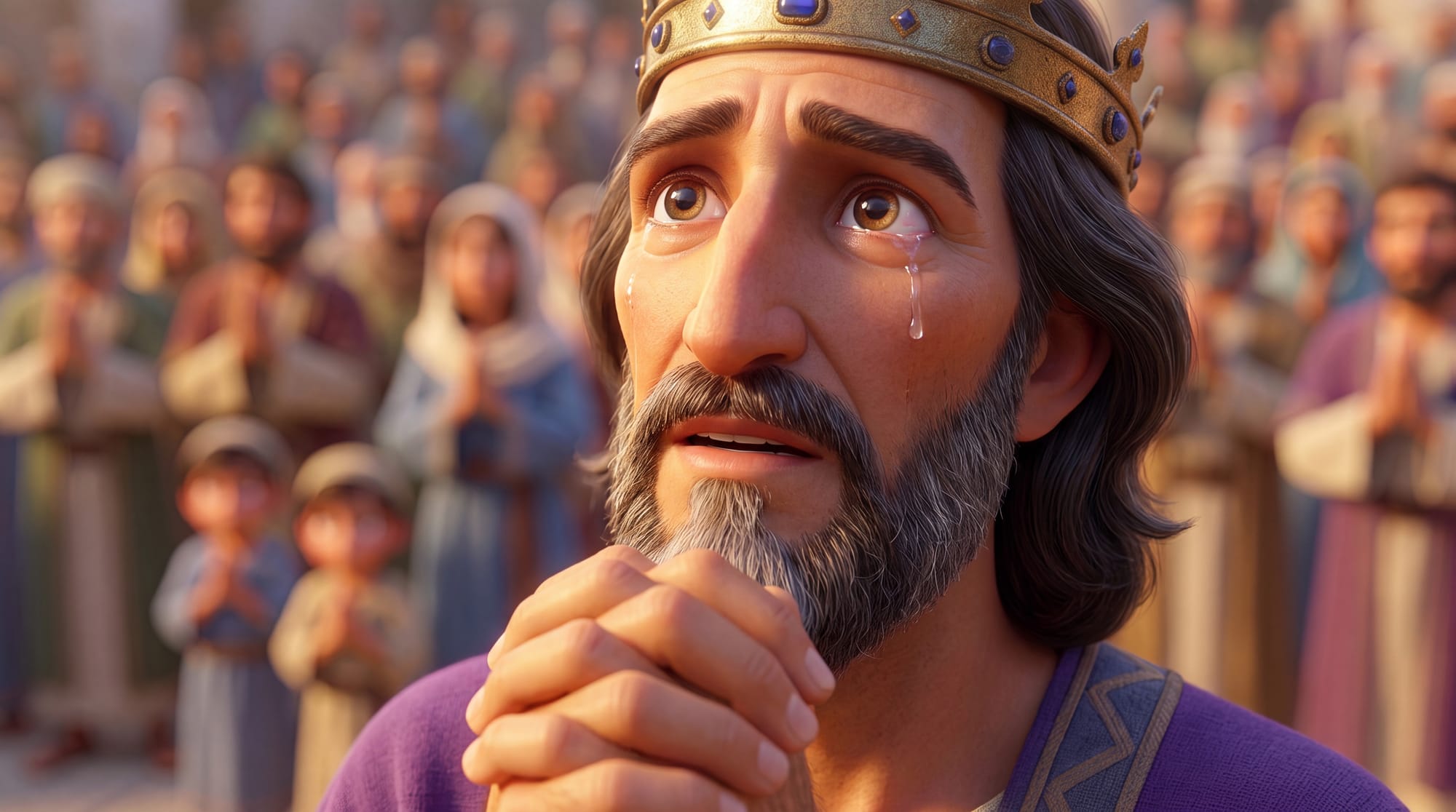
Three nations. One city. And a king who had no military answer for any of it. When Jehoshaphat looked out from Jerusalem and saw the dust clouds of three advancing armies, he didn't call an emergency war council. He called a fast. He gathered his people at the temple and prayed one of the most honest prayers in all of scripture — not a polished speech, not a list of his own credentials, just the raw truth: 'We have no might. We don't know what to do. But our eyes are on Thee.' That's it. That was the whole plan. And here's the wild part — it worked. Not because Jehoshaphat was the strongest king in Judah's history, but because he knew exactly who was. The Lord's answer came through a prophet standing in the congregation: 'The battle is not yours, but God's.' The next morning, Jehoshaphat sent singers out ahead of the army — not soldiers, singers — praising God before a single sword was drawn. By the time they arrived, the enemy had already destroyed itself.
The Big Idea: Eyes Up Changes Everything
There's a moment most of us know — when the problem in front of you is genuinely bigger than anything you can solve on your own. The job loss, the diagnosis, the relationship that's fracturing, the kid who's drifting. You've run the numbers and the numbers don't work. That's exactly where Jehoshaphat stood, and his response is the whole lesson this week: stop trying to out-strategize the impossible and start fixing your eyes on the One who isn't limited by it. 'Eyes on You' captures that moment with a kind of raw honesty that feels less like a worship song and more like a dispatch from the front lines — 'I ain't got a sword that can match what they're gonna bring.' That's not defeat talking. That's faith clearing its throat.
The Book of Mormon echoes this same pattern. Nephi didn't know beforehand how he'd get the brass plates — he just went, trusting the Lord would prepare a way (1 Nephi 4:6). Captain Moroni's armies were outnumbered repeatedly, but the record is clear: their strength came from their faith, not their numbers (Alma 58:10–11). And Doctrine and Covenants 21:4–6 makes it plain for our day — when we follow the Lord's prophet and act on his words, the gates of hell will not prevail. The battle really isn't ours.
For families, this week is an invitation to build a shared vocabulary around surrender — the good kind. Not giving up, but giving over. When your household faces something hard, what does it look like to gather, pray honestly, and then move forward in faith before you can see the outcome? Jehoshaphat sent the singers first. That's the move. Praise before the victory is the posture that invites it.

Scripture Bridge
Lyric Highlight
We don't gotta be the strongest in the fight,
We don't gotta have the answer in the night.
We just gotta keep our eyes lifted up and high.
Reflect: When was the last time you told God the honest truth — that you didn't know what to do — and what happened next?
Family Activity
Try This: Play a quick round of freeze tag in your living room or backyard — but with a twist. Whoever is 'it' can only unfreeze frozen players by making eye contact and saying 'Eyes on You!' Frozen players must keep their eyes lifted upward (toward the ceiling or sky) until someone comes to free them. Play for 5 minutes, then gather everyone together.
Reflect: When you were frozen and waiting, what did it feel like to keep your eyes up instead of looking around in a panic? Jehoshaphat's whole army was 'frozen' by fear — surrounded with no plan. What changed when they stopped looking at the problem and started looking at God instead?
2 Chronicles 20:12
Watch & Listen
Eyes on You
Not one enemy. Three. The Moabites, the Ammonites, and the Edomites (songs of Mount Seir) had formed a coalition, and they were already marching. King Jehoshaphat received the intelligence report and, by his own admission, was afraid. He had no military strategy that could answer this. So he did something that looked, from the outside, like giving up — he called the entire nation to fast, gathered them at the temple, and prayed in front of everyone. His prayer didn't project confidence. It said the quiet part out loud: 'We have no might against this great company that cometh against us; neither know we what to do: but our eyes are upon thee' (2 Chronicles 20:12).
What happened next is one of the strangest military victories in the Old Testament. God answered through a Levite singer — not a general — and the message was: the battle is not yours, it's Mine. Show up tomorrow. The next morning, Jehoshaphat sent the choir out ahead of the army. Singers first, soldiers second. When they arrived at the valley, the three enemy armies had turned on each other in the night. There was no one left to fight. It took three days just to gather the spoils.
Eyes on You plants your family right inside that story — the fear, the honesty, the decision to look up anyway, and the discovery that God doesn't lose battles when His people learn to pray. The song doesn't skip the hard part. It starts with the army on the hill and the admission that you don't have what it takes. That honesty is the whole point.
When your kids feel outmatched — by a hard friendship, a scary diagnosis in the family, a world that feels too big — this song gives them a vocabulary for the only move that actually works: eyes up.
Want the full story? Read the complete Fireside Moment or explore the Lyric-Scripture Blueprint in our Joy Tier Deep Dive.
Lyric–Scripture Blueprint (Preview)
Did you know these lyrics come straight from the scriptures?
Explore the full Lyric–Scripture Blueprints and deeper activities in the Joy Tier.
 Bob LeBaron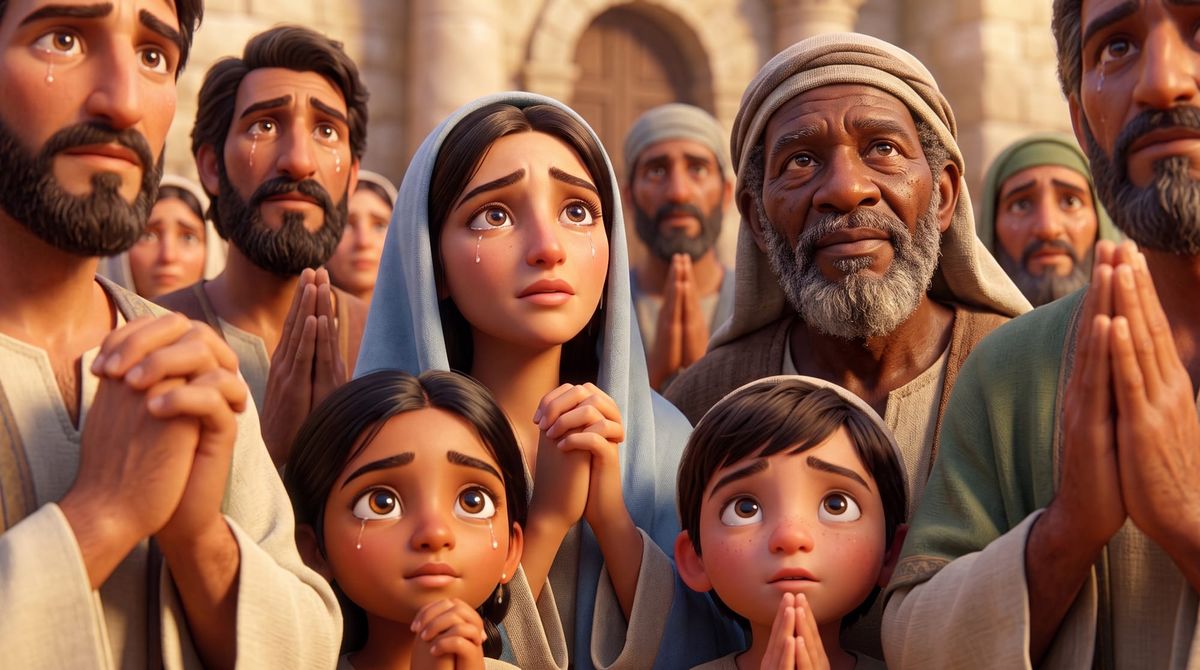
All Me
That's where the story turns. Uzziah walked into the temple and tried to burn incense on the altar — a role that belonged only to the consecrated priests. When they confronted him, he didn't back down. He got angry. And in that moment, leprosy broke out on his forehead. He spent the rest of his life in a separate house, cut off from the temple, cut off from his people, cut off from the God he had once genuinely sought. The victories were real. The gifts were real. He just stopped crediting the One who gave them.
All Me gives Uzziah a voice — a first-person confession from the edge of the land, looking back at a crown he forgot to hold humbly. The song captures the slow drift from gratitude to self-congratulation with a line that hits every time: 'Forgot to say a name that I should've put on every page.' It's not a lecture. It's a lament.
Most of us will never burn incense in a temple. But most of us know what it feels like to quietly take credit for something God built. That's why this song exists.
Want the full story? Read the complete Fireside Moment or explore the Lyric-Scripture Blueprint in our Joy Tier Deep Dive.
 Bob LeBaron
Miss last week?
Every lesson stands on its own — but together, they tell one continuous story.
 Bob LeBaron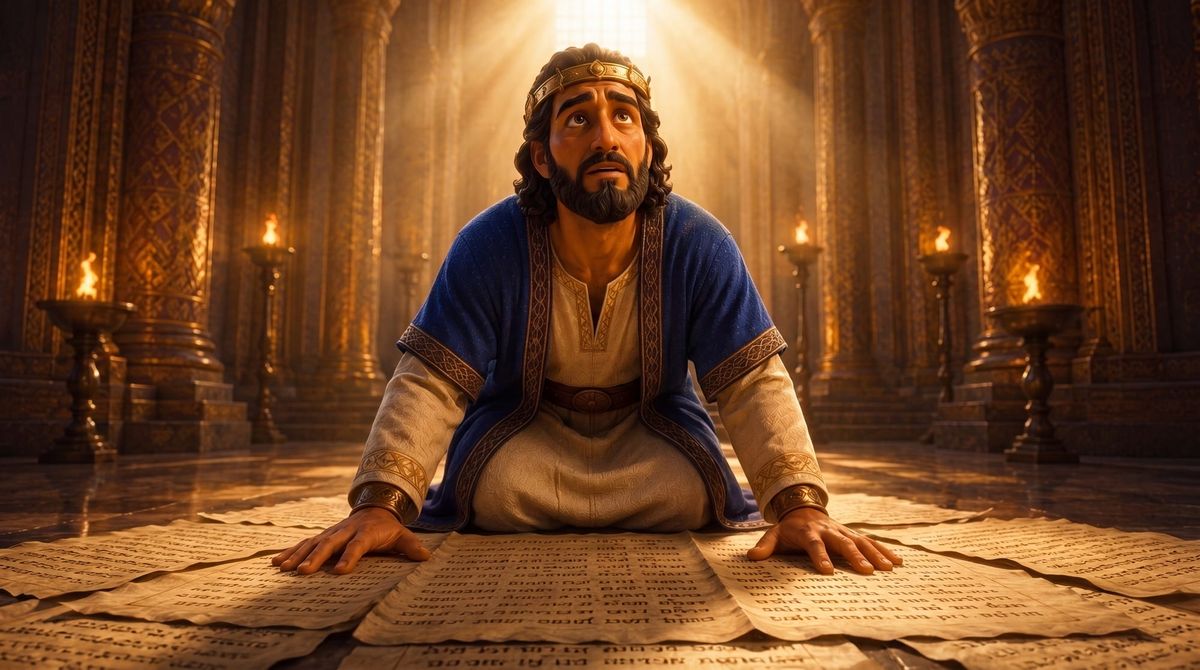
Don’t Stop the Music
The Joy Tier starts right here. Go deeper into this week’s scripture story and explore the meaning behind the songs.
Inside Joy you’ll find:
- A weekly Fireside Moment overview of the Come, Follow Me lesson
- Expanded Set the Stage teaching guides for every song
- Choose Your Adventure family activities and simple weekly habits
- Lyric–Scripture Blueprints, printable coloring pages, and lyric sheets
- Cinematic reflection videos designed for quiet viewing and discussion
Access Joy below to turn this week’s song into a weeklong experience of scripture, music, and family conversation.