April 6–12: “Remember This Day, in Which Ye Came Out from Egypt” (Exodus 7–13)
Plague after plague afflicted Egypt, but Pharaoh’s heart remained hard. From the Nile turning to blood to the first Passover, we learn that the Lord has power to deliver us from any captivity.
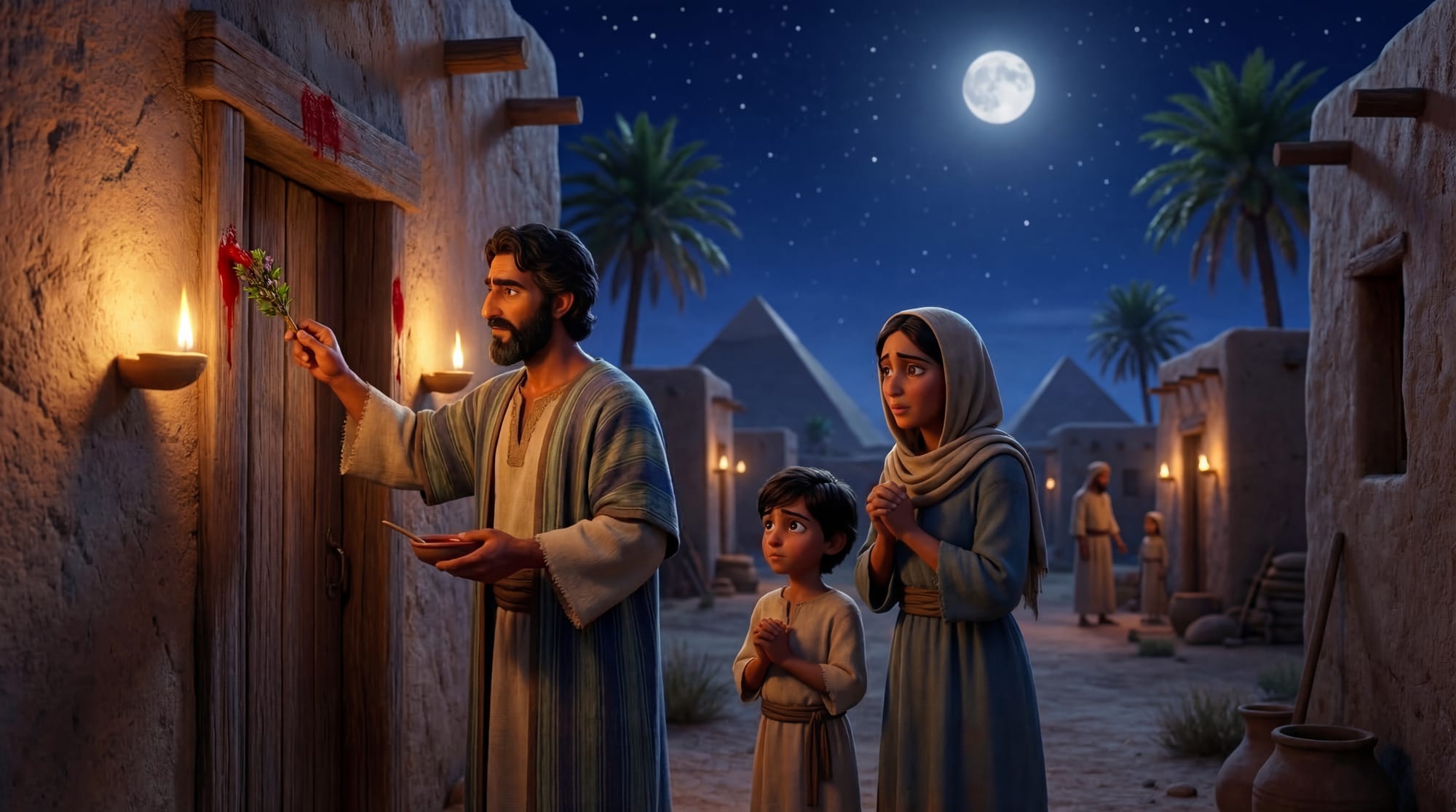
The Token of the Covenant
"When I see the blood, I will pass over you.
The judgment is coming, but the mercy is true."
The tenth plague wasn't just a display of power; it was a profound lesson in identity. By painting their doorposts with the blood of a lamb, the Israelites were claiming their place in God's family. Today, we don't paint doors, but we do participate in the Sacrament to remember that same Mercy that covers our mistakes and brings us safely home.
Set the Stage: The Line in the Sand
For weeks, Egypt had been rocked by wonders—rivers of blood, swarms of locusts, and a darkness so thick it could be felt. Yet, through every plague, the Lord provided a "division" between His people and the land of captivity. Finally, the Lord gave Moses a specific set of instructions for a night that would be remembered forever. It wasn't enough to just be an Israelite; they had to actively choose to follow the prophet’s word, sacrifice a lamb, and mark their homes as places of faith.
The Big Idea: The Blood on the Door
Why did God use blood on a doorpost to save them? In the ancient world, a "token" was a physical sign of a legal agreement. By painting the door, a family was saying, "We belong to the Lord." The blood didn't just tell the "destroyer" to pass over; it told the world that the people inside were covered. Today, we don't use hyssop branches and paint, but we do use the Sacrament. The white cloth on the table is our modern "token." It reminds us that because of Jesus Christ, the "Destroyer" (spiritual death and sin) has no permanent power over us. We are safe because we are His.
Scripture Bridge
Lyric Highlight
"A lamb without blemish, a price to be paid
Safe in the covenant the Lord has made.
...You can hear the wind, you can hear the cry
But the destroyer has to pass me by."
Reflect: The Israelites had to stay inside their homes and trust that the blood on the door would work, even while the world outside was in chaos. What are some "worldly storms" (like unkindness or fear) that try to get into your home? How does focusing on the Savior’s love help keep those things from "destroying" your peace?
Family Activity
Try This: Cut out a simple paper "doorframe" or use a piece of red ribbon/paper. On the paper, have everyone write one way that Jesus Christ makes them feel "safe and sure" (e.g., "He helps me forgive," "He gives me hope"). Tape it to the top of a doorway in your house for the week.
Reflect: Read Exodus 12:13. Every time you walk under that door today, remember that because of the Savior's Atonement, the "Destroyer" has no permanent power over you. How does it feel to know you are "covered" by His mercy?
Watch & Listen
Let My People Go
The Ten Plagues of Egypt:
1. Water to Blood: Moses turned the mighty Nile River into blood and all the fish in the water died and made Egypt stink!
2. Frogs: The land was covered with jumping frogs. Then all the frogs died and made Egypt stink again!
3. Lice: All the dust in the land became biting lice. Fun fact: lice were a HUGE problem in Egypt which is why many Egyptians would shave their heads and wear wigs.
4. Flies: Flies infested the houses of the Egyptians (not the Israelites)
5. Pestilence of Livestock: Livestock were infected, killing horses, donkeys, camels, cattle, sheep, and goats
6. Painful Boils: Humans and animals had painful blistering boils
7. Hail: A terrible storm rained down hail and fire (e.g., lightning), destroying crops, trees, animals, and even people
8. Locusts: Swarms of buzzing locusts came to eat the crops
9. Three Days of Darkness: This plunged the entire kingdom into a thick, suffocating darkness.
10: Death of the Firstborn: Every firstborn in Egypt died except for homes marked with the Blood of the Lamb.
With every single plague, Pharaoh was given a chance to yield, but he stubbornly refused until the bitter end. This song captures that dramatic, high-stakes showdown between a prideful king and a prophet armed with nothing but a shepherd's rod and the word of God. It's a high-energy reminder that no matter how powerful the world thinks it is, God is always in control and will stop at nothing to deliver His people.
Want the full story? Read the complete Fireside Moment or explore the Lyric-Scripture Blueprint in our Joy Tier Deep Dive.
 Shout for Joy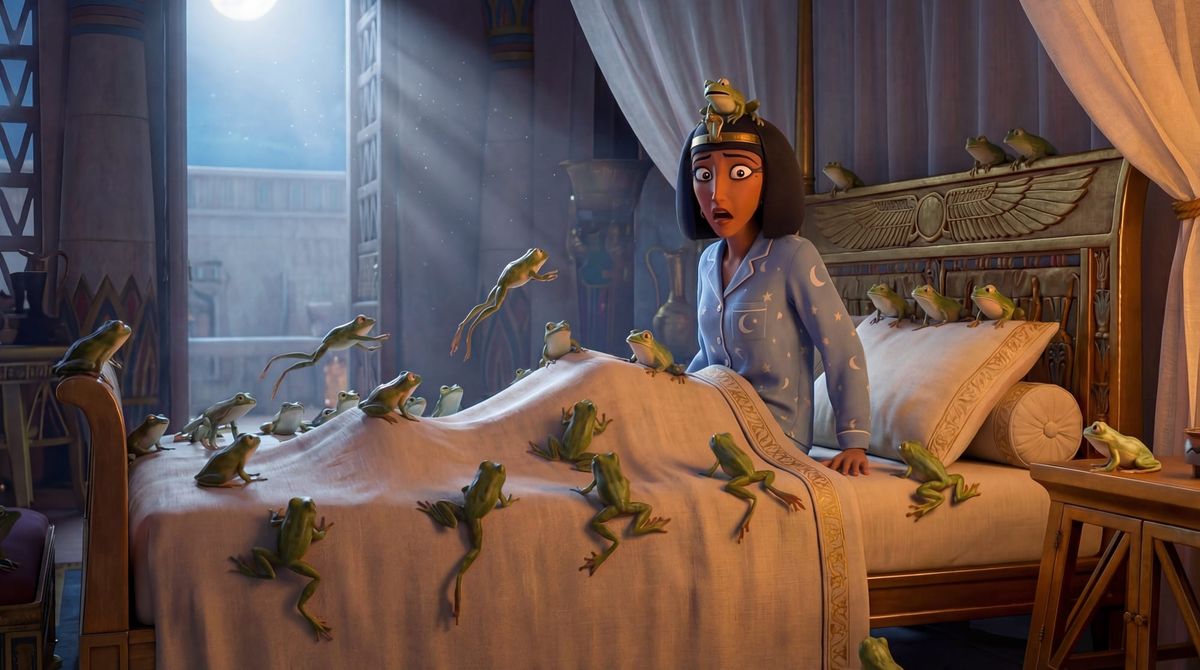
Soft Heart
The Lord doesn't want us to be rocks; He wants us to be sponges. When we have a "soft heart," we are willing to listen, obey, and let God's love soak into us, even when it requires us to change or apologize. This upbeat song is a playful but powerful reminder that we get to choose our attitude every single day. If we put off our stubbornness and choose to be humble, we can absorb all the incredible blessings Heavenly Father is trying to pour out on us.
Want the full story? Read the complete Fireside Moment or explore the Lyric-Scripture Blueprint in our Joy Tier Deep Dive.
Shout for Joy
Passover
That ancient Passover wasn't just about escaping Egypt; it was a symbol pointing directly to Jesus Christ. He is the ultimate, perfect "Lamb of God" whose sacrifice covers us and saves us from spiritual death. Today, we don't paint our doors with blood, but we do partake of the Sacrament every Sunday to remember Him. This song bridges the gap between the Old Testament and our modern worship, reminding us that because of the Savior's ultimate sacrifice, we are safe, clean, and entirely free.
Want the full story? Read the complete Fireside Moment or explore the Lyric-Scripture Blueprint in our Joy Tier Deep Dive.
Lyric–Scripture Blueprint (Preview)
Did you know these lyrics come straight from the scriptures?
Explore the full Lyric–Scripture Blueprints and deeper activities in the Joy Tier.
| Lyric Highlight | Scripture Bridge | Why It Matters |
|---|---|---|
| "My father took the hyssop and he took the wood / Painted the doorposts just like he should." |
Exodus 12:22 "And ye shall take a bunch of hyssop, and dip it in the blood that is in the basin, and strike the lintel and the two side posts with the blood that is in the basin; and none of you shall go out at the door of his house until the morning." Genesis 22:6 "And Abraham took the wood of the burnt offering, and laid it upon Isaac his son..." |
Active Faith: The hyssop was a humble weed used as a paintbrush; God requires our action to apply His mercy.
Shadow of the Cross: By painting the top beam (lintel) and the two side posts, the father traced the shape of a cross. Just as Isaac carried the wood for his own sacrifice, the "wood" here points us to Calvary. |
| "A lamb without blemish, a price to be paid..." |
Exodus 12:5 "Your lamb shall be without blemish, a male of the first year..." 1 Peter 1:19 "...with the precious blood of Christ, as of a lamb without blemish and without spot." |
The Perfect Sacrifice: The lamb had to be perfect because it was a direct prophecy of Jesus Christ. Only a sinless Savior could pay the infinite price to redeem a fallen world. |
| "When I see the blood, I will pass over you. / The judgment is coming, but the mercy is true." | Exodus 12:13 "And when I see the blood, I will pass over you, and the plague shall not be upon you to destroy you..." |
Justice and Mercy: The "Destroyer" represents the demands of justice. Because the Lamb was sacrificed, Mercy can step in. When we are "covered" by our covenants, the Lord's mercy claims us. |
| "There’s a white cloth covering the bread and water / A covenant kept for every son and daughter." | Moroni 4:3 "...that they may eat in remembrance of the body of thy Son, and witness unto thee, O God, the Eternal Father..." |
Modern Deliverance: The white cloth on the Sacrament table is our "token" of the blood on the door. It signals that we are still a people who find safety in the Savior's sacrifice. |
| "The lamb is the Lion..." |
Revelation 5:5-6 "Behold, the Lion of the tribe of Juda... and, lo... stood a Lamb as it had been slain." |
The Conquering Sacrifice: Jesus is both the gentle, sacrificed Lamb and the all-powerful, reigning Lion. He submitted to death so He could conquer it for all of us. |
| "...the bread is the life / Cutting the cord of the shadow and strife." | John 6:35 "And Jesus said unto them, I am the bread of life: he that cometh to me shall never hunger..." |
Eternal Sustenance: The bread of the Passover sustained Israel for their journey. Jesus is the true Bread who sustains our souls for our journey back to our Heavenly home. |
| "If you want the life, you gotta come to the tree..." |
1 Peter 2:24 "Who his own self bare our sins in his own body on the tree..." Acts 5:30 "The God of our fathers raised up Jesus, whom ye slew and hanged on a tree." 1 Nephi 11:21-22 "Knowest thou the meaning of the tree... It is the love of God, which sheddeth itself abroad in the hearts of the children of men." |
The Tree of Life: The Apostles called the cross "the tree," and Lehi saw a tree that represented the "Love of God." To receive Eternal Life, we come to the foot of the Cross—the ultimate Tree of Life—and find rest in His love. |
 Shout for Joy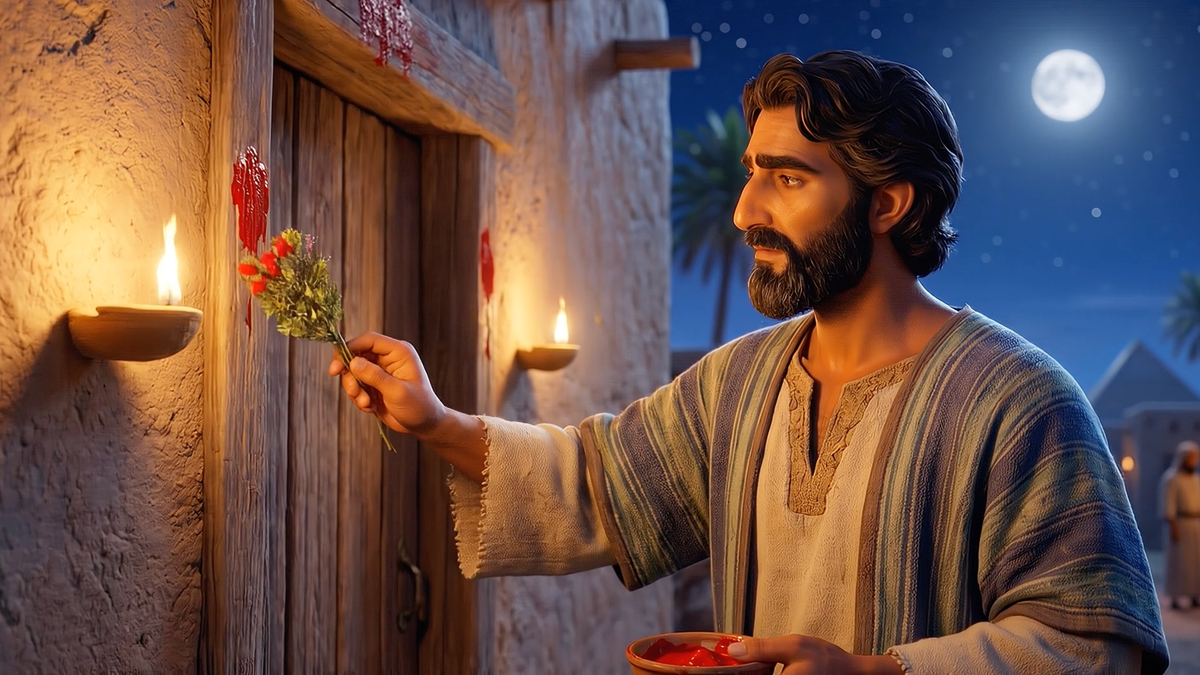
Continue the journey
Shout for Joy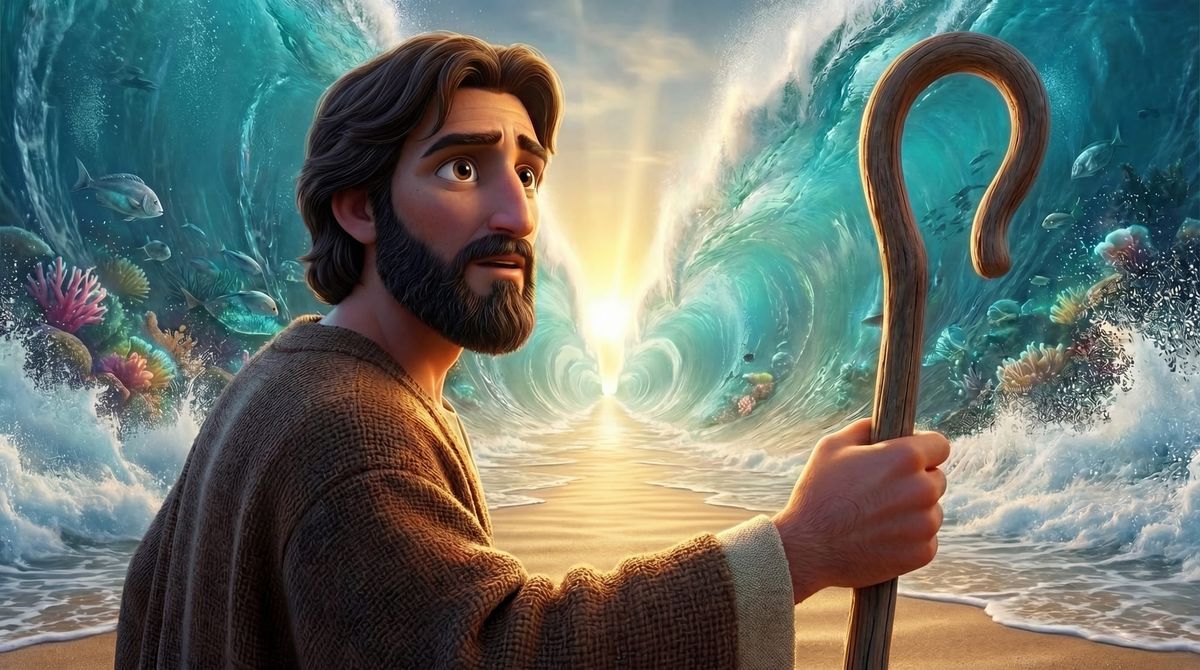
Miss last week?
Every lesson stands on its own — but together, they tell a bigger story.
 Shout for Joy
Don’t Stop the Music
The Joy Tier starts right here. Go deeper into this week’s scripture story and explore the meaning behind the songs.
Inside Joy you’ll find:
- A weekly Fireside Moment overview of the Come, Follow Me lesson
- Expanded Set the Stage teaching guides for every song
- Choose Your Adventure family activities and simple weekly habits
- Lyric–Scripture Blueprints, printable coloring pages, and lyric sheets
- Cinematic reflection videos designed for quiet viewing and discussion
Access Joy below to turn this week’s song into a weeklong experience of scripture, music, and family conversation.