Your Game Plan for This Week
We spend a lot of energy trying to manufacture calm — the right routine, the right app, the right vacation. But the Psalms keep pointing somewhere else. They point to a Shepherd who doesn't just offer peace as a feeling; He offers Himself as the source. 'The Valley and the Still' captures this beautifully: the table is set in the middle of the fight, not after it. The cup runs over not because life got easier, but because the Shepherd is present. That's a different kind of peace than the world sells.
For Latter-day Saint families, this lands with extra weight. We believe in a living, personal God who knows our names — not a distant force or a cosmic principle. The Restoration gave us back the knowledge that He speaks, He leads, He restores. When Psalm 23 says 'He restoreth my soul,' that's not poetry for poetry's sake. That's covenant language. That's the same God who called Joseph Smith out of a grove and said, 'I know you. I see you. Follow me.'
'Clean Hands, Pure Heart' picks up the thread and carries it forward: the invitation to ascend the hill of the Lord isn't a demand for perfection — it's a covenant of grace. Both songs together tell the same story this week. The Shepherd leads us through the valley, and at the top of the hill, He opens the gate. All He asks is that we keep walking toward Him.
15-Minute Family Home Evening
Monday night — your launch for the week.
-
Ask this to open. Take 2–3 responses, then move on.2 minOpening QuestionHas anyone ever been somewhere really dark or scary and felt like someone was right there with you, even if you couldn't quite see them?
-
Read this together:2 minSet the StageBefore David was a king, he was a kid on a hillside with a flock of sheep that couldn't take care of themselves. He knew the sound a lost sheep makes. He knew the weight of a rod in his hand when a predator came close. He knew what it felt like to be the only thing standing between his flock and everything that wanted to destroy it. Most of the Psalms didn't come from a comfortable throne room — they came from caves, from wilderness, from the kind of desperate places where a person either finds God or falls apart. David wrote while being hunted, while grieving, while afraid. And somehow, out of all that, he produced six verses that have never stopped being true.Psalm 23:4Yea, though I walk through the valley of the shadow of death, I will fear no evil: **for thou art with me; thy rod and thy staff they comfort me.**
-
Press play — watch together:3 min
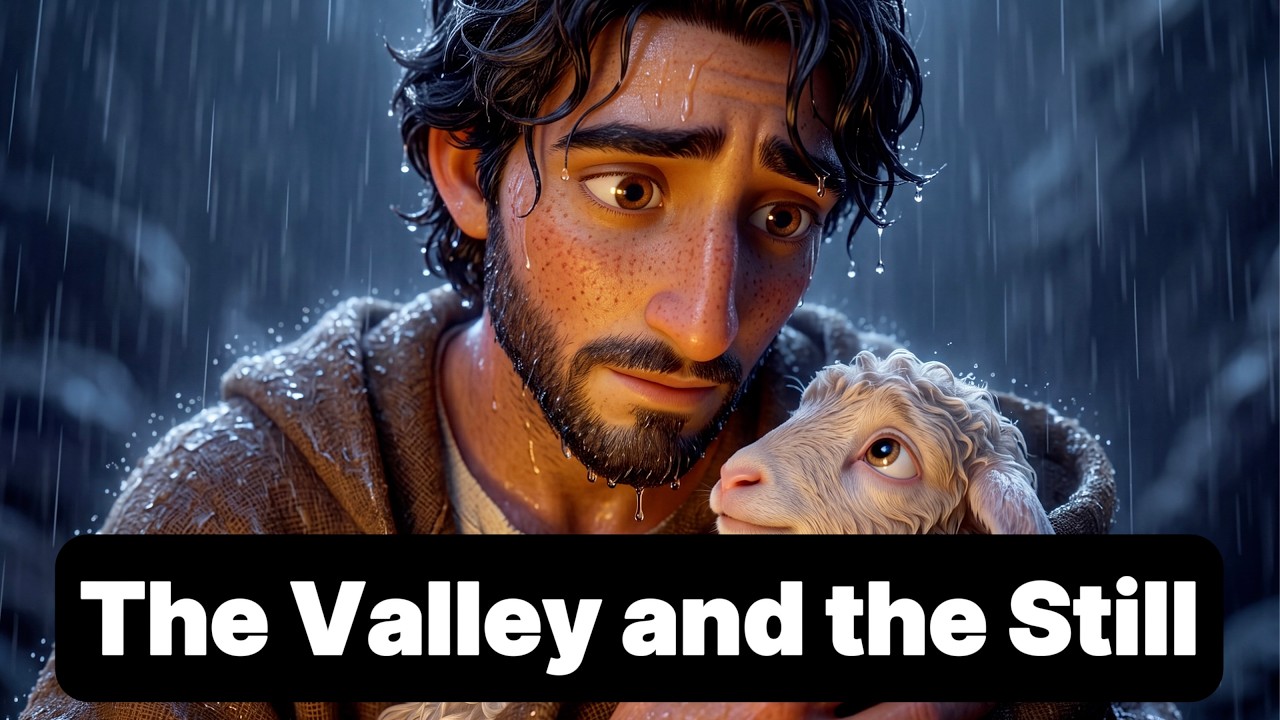
🎵 Be still, and know that He is God! He's holding the staff, He's holding the rod! Goodness and mercy gonna follow my feet, Every single day till the journey is complete!
Dive Deeper: The Valley and the Still -
Read the Big Idea together:2 minBig Idea Peace Is a Person, Not a Playlist
Psalm 23 was not written from a safe distance — it was written by someone who was still in the valley, still afraid, still being hunted. The Shepherd in that psalm is not a reward for getting through the hard part; He is the one who meets us in the middle of it, sets a table right there in the mess, and stays. For your family this week, that means the noise does not have to stop before you can feel peace — it means choosing to be still enough to notice the Shepherd who is already there. -
Ask your family:3 minReflect TogetherIs there a valley your family is walking through right now — something hard or noisy or uncertain — and what would it look like this week to let the Shepherd lead instead of trying to find the way out on your own?
-
Do this activity together:5 min
Shepherd Says (Still Waters Edition)
Try This: Play a round of Simon Says — but rename it 'Shepherd Says.' The caller is the Shepherd, and everyone else is a sheep. Here's the twist: any command that includes the word 'still' must be obeyed even without 'Shepherd Says' in front of it — because when the Shepherd says be still, you be still, no questions asked. Mix in commands like 'Shepherd Says jump like you're scared,' then follow with a sudden 'Be still!' and watch who freezes and who keeps going. Rotate the Shepherd role so everyone gets a turn leading the flock.
Reflect: Why is it sometimes hard to be still when everything around us is loud and moving? What does it feel like when you finally do stop and get quiet?
-
Close together: Say a family prayer. Then enjoy a special treat as a family.2 min
-
Ask this to open. Take 2–3 responses, then move on.2 minOpening QuestionHas anyone ever felt like they weren't quite good enough to show up somewhere — like a party, a tryout, or even church — because you knew you'd made some mistakes lately?
-
Read this together:2 minSet the StageThree thousand years ago, a poet asked one of the most honest questions in all of scripture: Who actually gets to go up? The ancient Israelites understood the Temple Mount as literal holy ground — a place where heaven and earth touched. Ascending that hill wasn't casual. It required preparation, a reckoning with your own heart. Scholars believe Psalm 24 was sung as a processional when the Ark of the Covenant entered Jerusalem — picture two groups of worshippers calling back and forth through the city gates, one group crying out the question, the other answering with the qualifications. Clean hands. A pure heart. A soul not lifted to vanity. The whole city was listening. And the answer they gave might surprise you.Psalm 24:3-4Who shall ascend into the hill of the Lord? or who shall stand in his holy place? **He that hath clean hands, and a pure heart; who hath not lifted up his soul unto vanity, nor sworn deceitfully.**
-
Press play — watch together:3 min
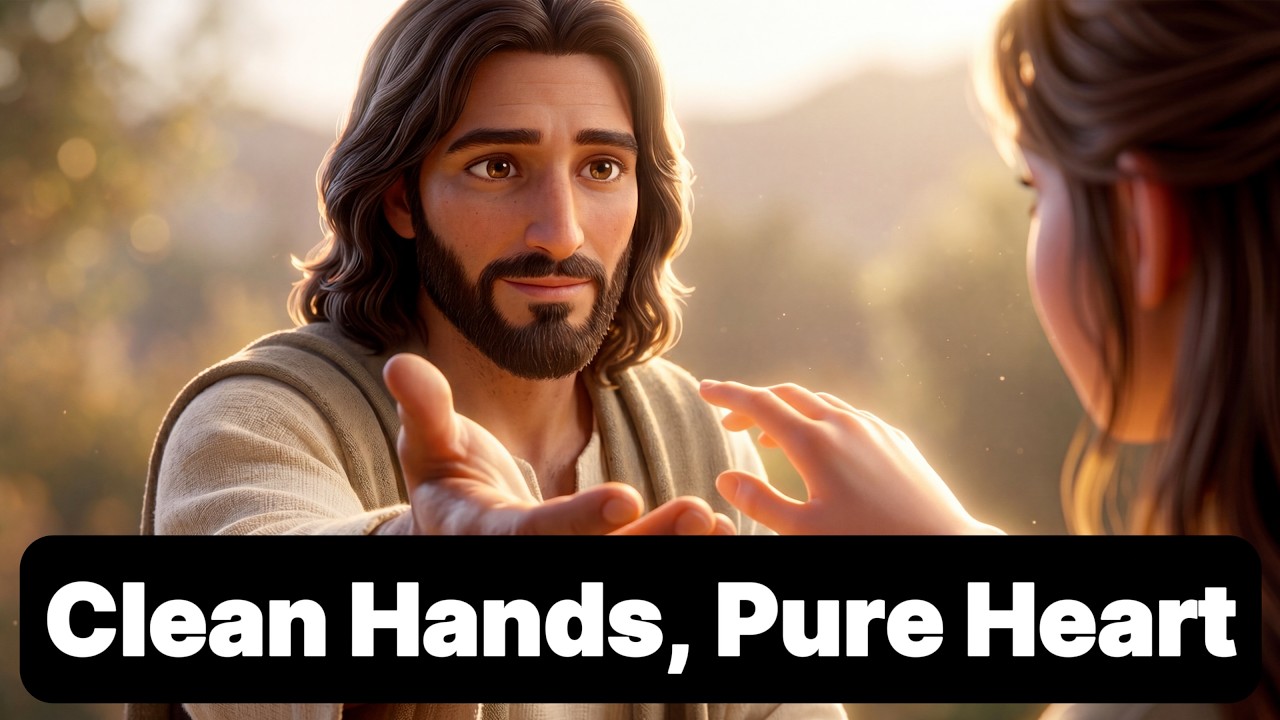
🎵 Clean hands, pure heart! That's where the healing and the mercy gonna start! He gives His holiness to someone like me!
Dive Deeper: Clean Hands, Pure Heart -
Read the Big Idea together:2 minBig Idea Peace Is a Person, Not a Playlist
The ancient question of Psalm 24 — who actually qualifies to stand before God — has a more generous answer than most of us expect. Clean hands and a pure heart were never about being flawless before you showed up; they were about being oriented toward God, covenant by covenant, day by day. That means the temple, the sacrament table, and even family prayer this week are not trophies for the already-perfect — they are the very places God meets us and does the work of making us clean. -
Ask your family:3 minReflect TogetherThink about a time you felt unworthy to pray, take the sacrament, or walk into the temple — what would it change for you to know that God's holiness is something He gives, not something you earn on your own?
-
Do this activity together:5 min
Ascend the Hill Relay
Try This: Clear a hallway or living room path. One end is the 'bottom of the hill,' the other is the 'temple gates.' Take turns calling out something that weighs us down — a bad habit, a worry, a mistake — and every time someone names one, the whole family takes one giant step forward up the hill. If someone can name a way the Savior helps us let that thing go (repentance, prayer, the Holy Ghost, etc.), the whole family takes TWO steps. See how fast you can all reach the gates together. Nobody climbs alone!
Reflect: What made it easier to climb — going one step at a time, or having the whole family move together? How does that feel like what the Savior does for us when we're trying to come closer to Him?
-
Close together: Say a family prayer. Then enjoy a special treat as a family.2 min
20-Minute Primary / Sunday School
Choose which song to anchor your lesson.
-
Ask this to open. Take 2–3 responses, then move on.3 minOpening QuestionHas anyone ever been somewhere really dark or scary and felt like someone was right there with you, even if you couldn't quite see them?
-
Read this together:2 minSet the StageBefore David was a king, he was a kid on a hillside with a flock of sheep that couldn't take care of themselves. He knew the sound a lost sheep makes. He knew the weight of a rod in his hand when a predator came close. He knew what it felt like to be the only thing standing between his flock and everything that wanted to destroy it. Most of the Psalms didn't come from a comfortable throne room — they came from caves, from wilderness, from the kind of desperate places where a person either finds God or falls apart. David wrote while being hunted, while grieving, while afraid. And somehow, out of all that, he produced six verses that have never stopped being true.Psalm 23:4Yea, though I walk through the valley of the shadow of death, I will fear no evil: **for thou art with me; thy rod and thy staff they comfort me.**
-
Press play — watch together:3 min
🎵 Be still, and know that He is God! He's holding the staff, He's holding the rod! Goodness and mercy gonna follow my feet, Every single day till the journey is complete!
Dive Deeper: The Valley and the Still -
Ask this. Give the class a moment to think before taking responses.3 minPivot QuestionWhy do you think David wrote Psalm 23 in a tone of settled confidence instead of desperate fear, even when his life was genuinely in danger?
-
Keep going:4 minFollow-UpIf you were in a really hard situation — something that felt dark or overwhelming — what would it take for you to actually believe the Shepherd was already there with you? What would help you feel that?
-
Liken it unto yourself. Hand each student a slip of paper. Give 2 minutes to write, then 2–3 share with the class.5 minLiken Unto YourselfIf God is already setting a table for you in the middle of your hardest thing right now, what would it look like to actually sit down and trust that — instead of staying on your feet, braced for the next hit?
-
2 minClose With ThisThe Shepherd doesn't wait at the finish line — He is already in the valley, rod in hand, table set, cup overflowing. The moment we stop running long enough to be still is the moment we realize He never left.
-
Optional Activity — use if you have extra time or a younger class:5 min
Shepherd Says (Still Waters Edition)
Try This: Play a round of Simon Says — but rename it 'Shepherd Says.' The caller is the Shepherd, and everyone else is a sheep. Here's the twist: any command that includes the word 'still' must be obeyed even without 'Shepherd Says' in front of it — because when the Shepherd says be still, you be still, no questions asked. Mix in commands like 'Shepherd Says jump like you're scared,' then follow with a sudden 'Be still!' and watch who freezes and who keeps going. Rotate the Shepherd role so everyone gets a turn leading the flock.
Reflect: Why is it sometimes hard to be still when everything around us is loud and moving? What does it feel like when you finally do stop and get quiet?
-
Ask this to open. Take 2–3 responses, then move on.3 minOpening QuestionHas anyone ever felt like they weren't quite good enough to show up somewhere — like a party, a tryout, or even church — because you knew you'd made some mistakes lately?
-
Read this together:2 minSet the StageThree thousand years ago, a poet asked one of the most honest questions in all of scripture: Who actually gets to go up? The ancient Israelites understood the Temple Mount as literal holy ground — a place where heaven and earth touched. Ascending that hill wasn't casual. It required preparation, a reckoning with your own heart. Scholars believe Psalm 24 was sung as a processional when the Ark of the Covenant entered Jerusalem — picture two groups of worshippers calling back and forth through the city gates, one group crying out the question, the other answering with the qualifications. Clean hands. A pure heart. A soul not lifted to vanity. The whole city was listening. And the answer they gave might surprise you.Psalm 24:3-4Who shall ascend into the hill of the Lord? or who shall stand in his holy place? **He that hath clean hands, and a pure heart; who hath not lifted up his soul unto vanity, nor sworn deceitfully.**
-
Press play — watch together:3 min
🎵 Clean hands, pure heart! That's where the healing and the mercy gonna start! He gives His holiness to someone like me!
Dive Deeper: Clean Hands, Pure Heart -
Ask this. Give the class a moment to think before taking responses.3 minPivot QuestionWhy do you think the psalmist answered 'who shall ascend?' with a description of covenant-keeping people rather than a list of perfect, sinless people?
-
Keep going:4 minFollow-UpIf clean hands and a pure heart are about the direction your heart is pointed rather than a flawless record, how does that change the way you think about preparing for something sacred — like the sacrament this Sunday or a future temple visit?
-
Liken it unto yourself. Hand each student a slip of paper. Give 2 minutes to write, then 2–3 share with the class.5 minLiken Unto YourselfIf holiness is something the Savior gives rather than something you earn, what does that change about how you feel walking toward the temple — or toward any sacred moment in your week?
-
2 minClose With ThisThe gates of the Lord have never been reserved for the already-perfect — they have always swung open for the covenant-keeping, the ones who keep showing up and letting God do the work of making them clean.
-
Optional Activity — use if you have extra time or a younger class:5 min
Ascend the Hill Relay
Try This: Clear a hallway or living room path. One end is the 'bottom of the hill,' the other is the 'temple gates.' Take turns calling out something that weighs us down — a bad habit, a worry, a mistake — and every time someone names one, the whole family takes one giant step forward up the hill. If someone can name a way the Savior helps us let that thing go (repentance, prayer, the Holy Ghost, etc.), the whole family takes TWO steps. See how fast you can all reach the gates together. Nobody climbs alone!
Reflect: What made it easier to climb — going one step at a time, or having the whole family move together? How does that feel like what the Savior does for us when we're trying to come closer to Him?
Week Schedule
You don't have to do all seven — pick what fits. Monday launches, Sunday caps. Tap any day to expand or collapse.
This Week's Fireside Moment
The full story behind the songs — in one sitting.

Before You Teach: A Fireside Moment
Before diving into individual lessons, here's a fireside overview of this week's scriptures.
Listen to the Full Fireside Moment
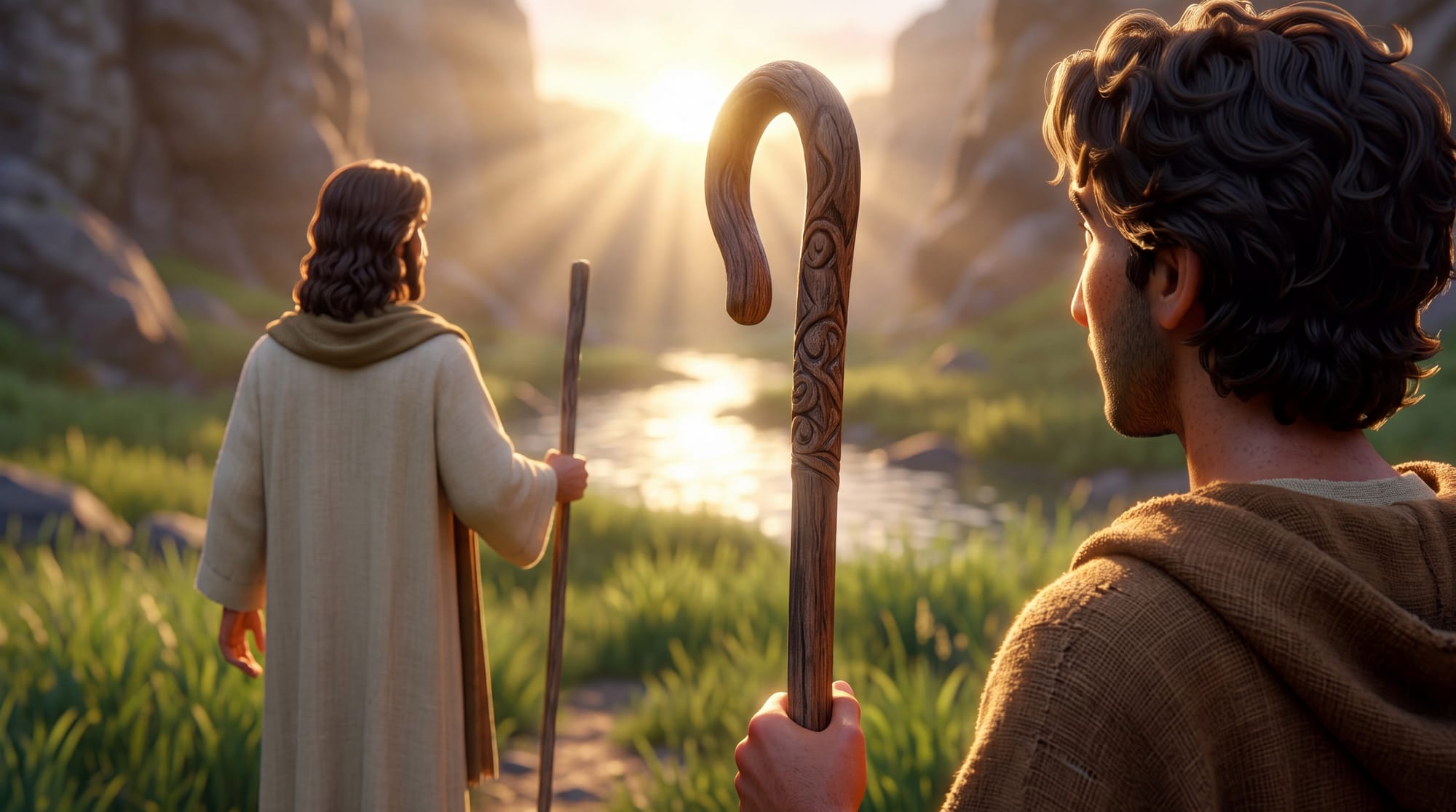
The Valley, the Temple Hill, and the Cup That Won't Stop Overflowing
Psalms 1–2; 8; 19–33; 40; 46
The Psalms Know Your Name
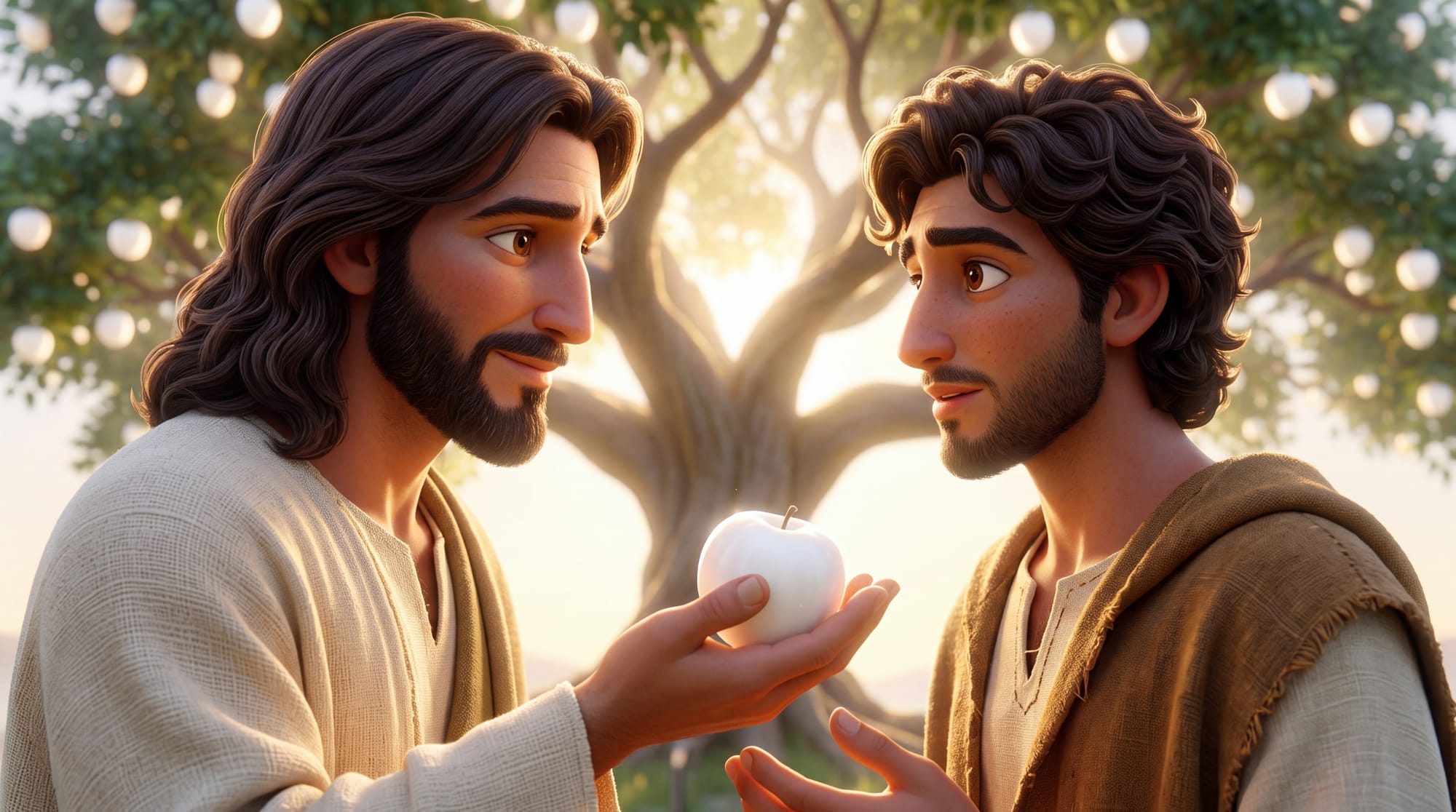
Psalms 22:1; Matthew 27:46; D&C 121:1-3; Mosiah 24:13-14
Nobody knows who wrote most of the Psalms. Some are credited to David, but the majority of the writers are completely anonymous — no byline, no biography, no backstory. And yet, when you read them, something strange happens: you feel like you know them. You feel like they know you. That's not an accident, and it's not just good poetry.
The Come, Follow Me lesson makes a point worth sitting with: the Psalms were the worship music of ancient Israel. The Savior Himself quoted them. They were sung in the temple, chanted in homes, whispered in moments of grief and shouted in moments of triumph. These weren't academic texts — they were the emotional vocabulary of a covenant people trying to figure out how to trust God when life was genuinely hard.
Here's what makes the Psalms unusual in all of scripture: the writers don't pretend. They're afraid. They're anxious. They feel abandoned. Psalm 22 opens with 'My God, my God, why hast thou forsaken me?' — words the Savior would later cry from the cross. These are not the words of people who have it all figured out. They're the words of people who are holding on.
And that's exactly why they still land. President Dallin H. Oaks has said that sacred music has 'a unique capacity to communicate our feelings of love for the Lord' — and the Psalms are the original proof of that. They don't just describe doctrine; they describe the interior life of faith. The fear before the trust. The darkness before the peace. The valley before the still waters.
For your family: This week's invitation isn't to read the Psalms like a textbook. It's to read them like a letter from someone who has been exactly where you are — and found their way through. The ancient writers didn't know your name, but they knew what it's like when life gets hectic. They knew what it feels like when the news is loud and the fear is louder. And they knew where to look.
Dive Deeper: The Valley and the Still
 Bob LeBaron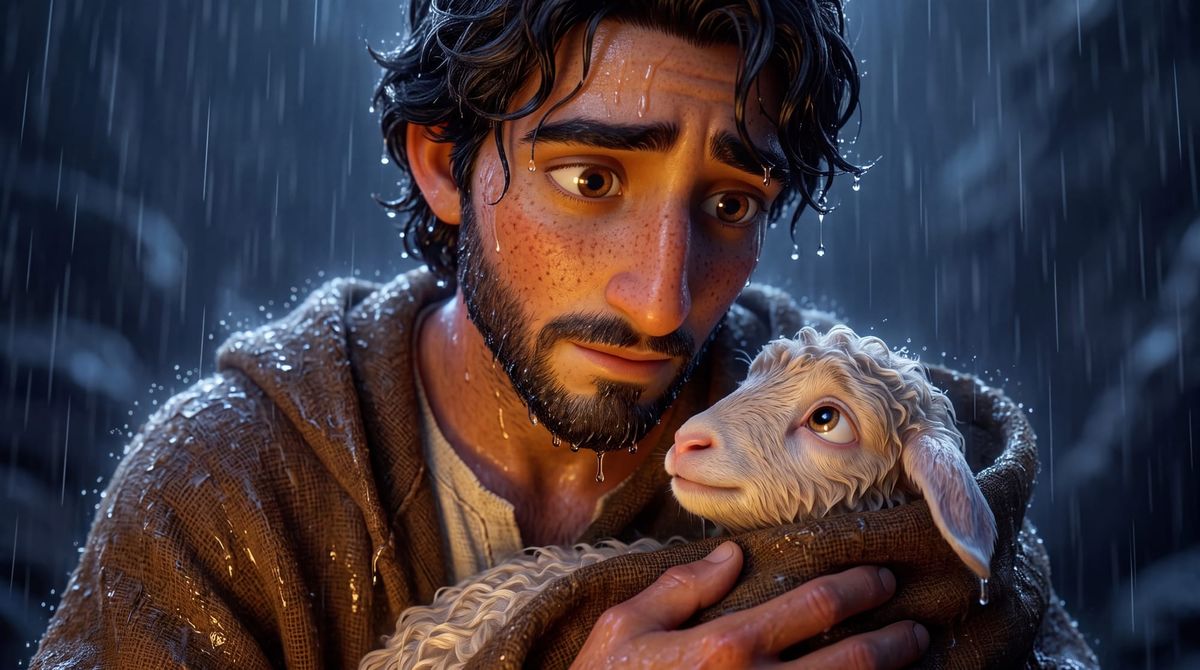
The Shepherd Who Sets a Table in the Middle of the Fight
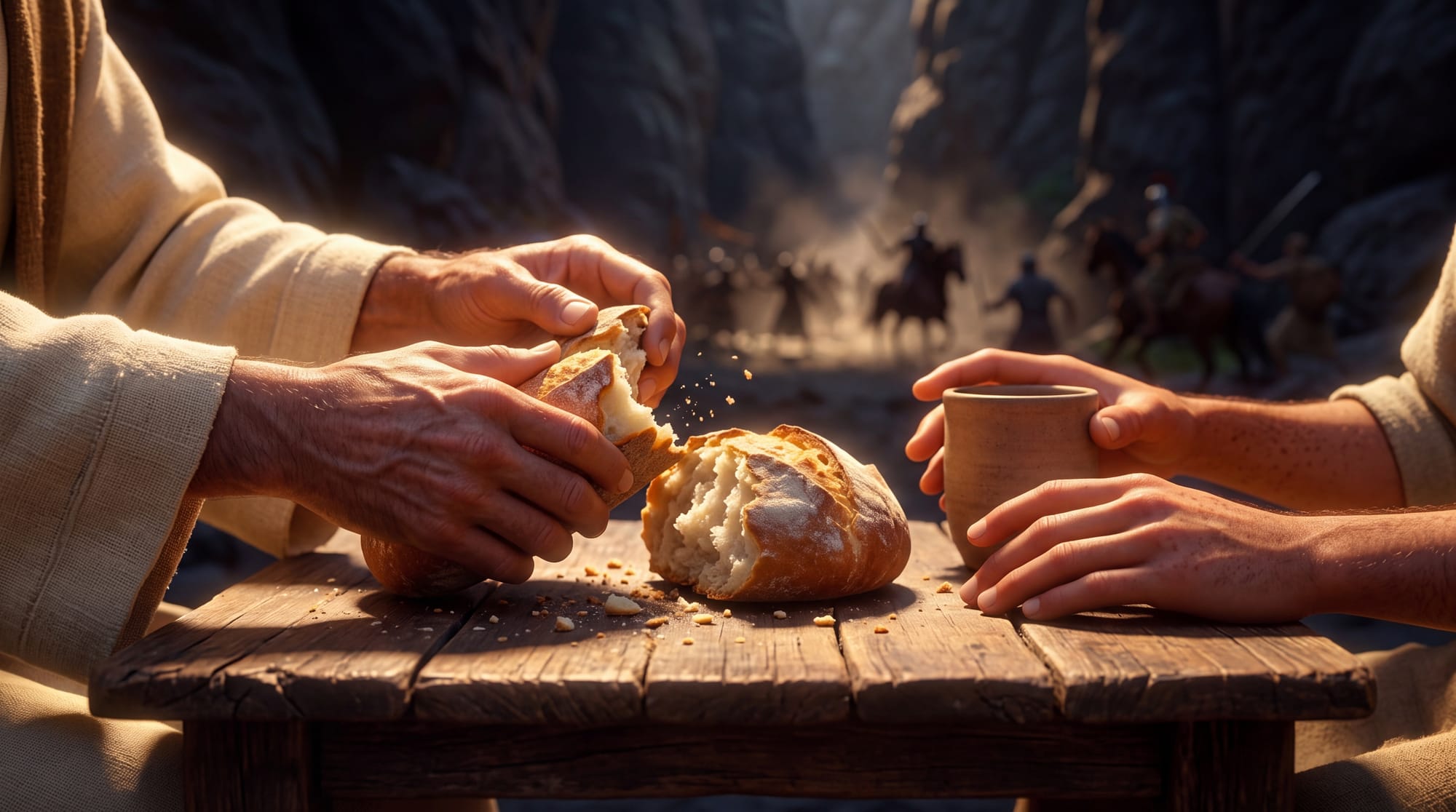
Psalm 23:1-6; Mosiah 24:13-15; Alma 36:3; John 10:11, 14; D&C 84:88
Psalm 23 is six verses long. Most people can quote at least part of it from memory. And yet it is almost impossible to read it slowly without stopping.
The setup is deceptively simple: the Lord is a shepherd, and we are the sheep. But the imagery David builds from that premise is layered in ways that reward a second look. Green pastures and still waters aren't just pretty scenery — they're what a good shepherd actively seeks out for vulnerable animals that can't find safety on their own. The sheep don't navigate. The sheep don't plan the route. The sheep trust the one holding the staff.
Then the psalm does something unexpected. It doesn't skip the valley. 'Yea, though I walk through the valley of the shadow of death' — the Shepherd doesn't promise you'll avoid the dark places. He promises He'll be in them with you. The rod and the staff aren't decorative; they're working tools. The rod was used to fight off predators. The staff was used to guide and rescue sheep that had wandered or fallen. Comfort, in this psalm, is not the absence of danger. It's the presence of the Shepherd.
And then — this is the part that stops you — 'Thou preparest a table before me in the presence of mine enemies.' Not after the enemies are gone. Not once the coast is clear. Right in the middle of the conflict, there is a feast. There is anointing. There is a cup running over. The abundance isn't a reward for surviving the valley. It's available during it.
The Book of Mormon echoes this pattern constantly. Alma and his people in Helam are in literal bondage, and the Lord doesn't immediately remove their chains — He eases their burdens so they 'could not feel them upon their backs' (Mosiah 24:14). The deliverance comes, but first comes the presence. That's the Shepherd's way.
For your family: Ask each other what your 'valley' looks like right now. Then ask what it would mean to believe the table is already set there.
Dive Deeper: The Valley and the Still
 Bob LeBaron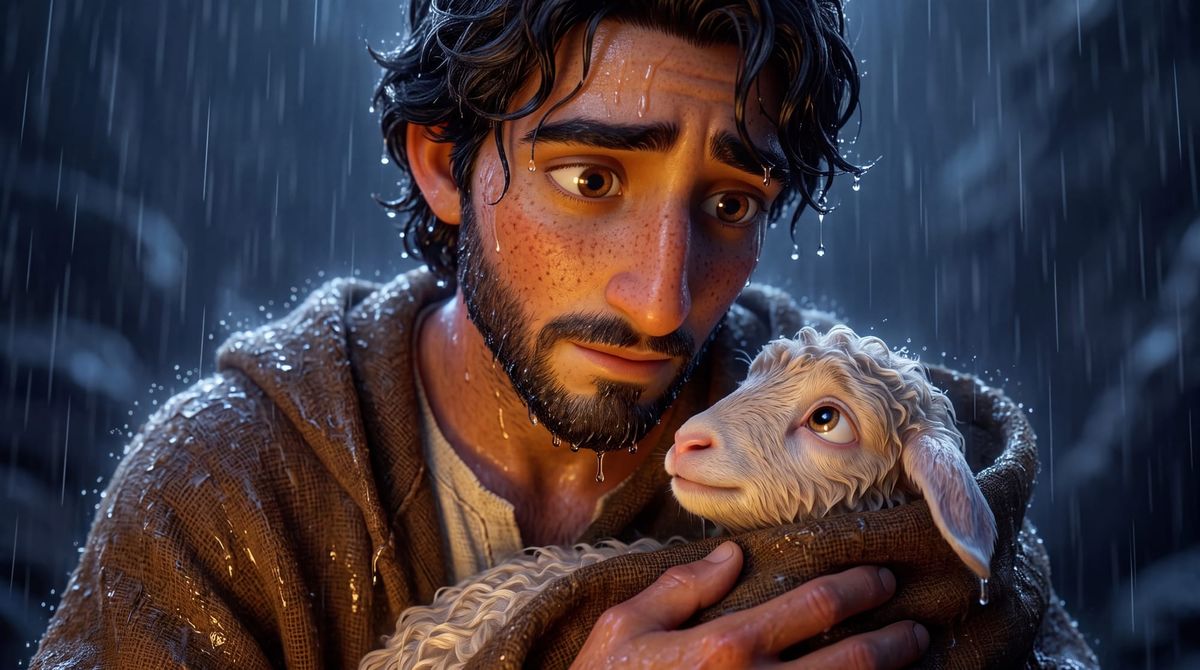
Who Gets to Climb the Hill?

Psalm 24:3-4; Psalm 27:1; 2 Nephi 25:23; D&C 112:10; Ether 12:27; Moroni 10:32-33
Psalm 24 opens with a question that would have stopped every Israelite in their tracks: 'Who shall ascend into the hill of the Lord? Or who shall stand in his holy place?' The temple at Jerusalem was built on a hill. Everyone knew it. So this wasn't a philosophical riddle — it was a real question about a real place. Who actually gets to go up?

The answer in verse 4 is 'he that hath clean hands, and a pure heart.' And here's where a lot of people quietly deflate. Because clean hands and a pure heart sound like a description of someone else. Someone more disciplined, more consistent, more spiritually put-together than the average Tuesday version of yourself.
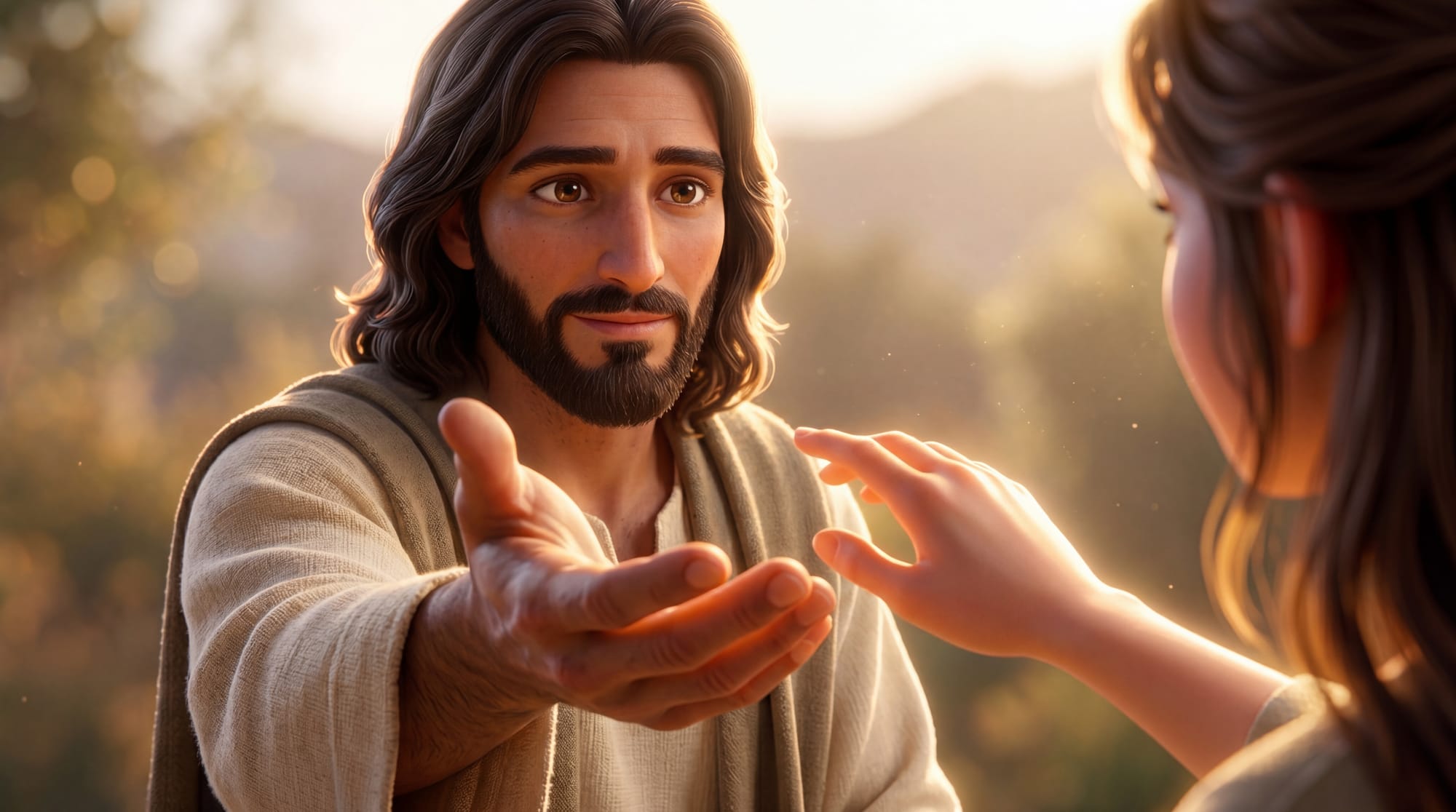
But the Come, Follow Me lesson points to something important here, and it's worth quoting directly: Elder David A. Bednar's message 'Clean Hands and a Pure Heart' and Elder Bradley R. Wilcox's 'Worthiness Is Not Flawlessness' both push back on the idea that this is a standard only the perfect can meet. The requirement isn't sinlessness. It's covenant direction. It's the person who is genuinely turning toward the Savior, who is letting Him do the cleaning.
Psalm 26 and 27 add texture to this. Psalm 27 is one of the most confident declarations of trust in all of scripture — 'The Lord is my light and my salvation; whom shall I fear?' — and it comes from someone who is clearly not living in a world without enemies or threats. The confidence isn't based on personal perfection. It's based on whose house they're running toward.
Restoration theology is direct about this: the Atonement of Jesus Christ is not a reward for the already-clean. It is the mechanism of the cleaning. The temple isn't the finish line for the flawless; it's the covenant path for the willing. Doctrine and Covenants 112:10 puts it plainly — 'be thou humble; and the Lord thy God shall lead thee by the hand.' Clean hands start with open ones.
For your family: Talk about what it means that worthiness is a direction, not a destination.
Dive Deeper: Clean Hands, Pure Heart
 Bob LeBaron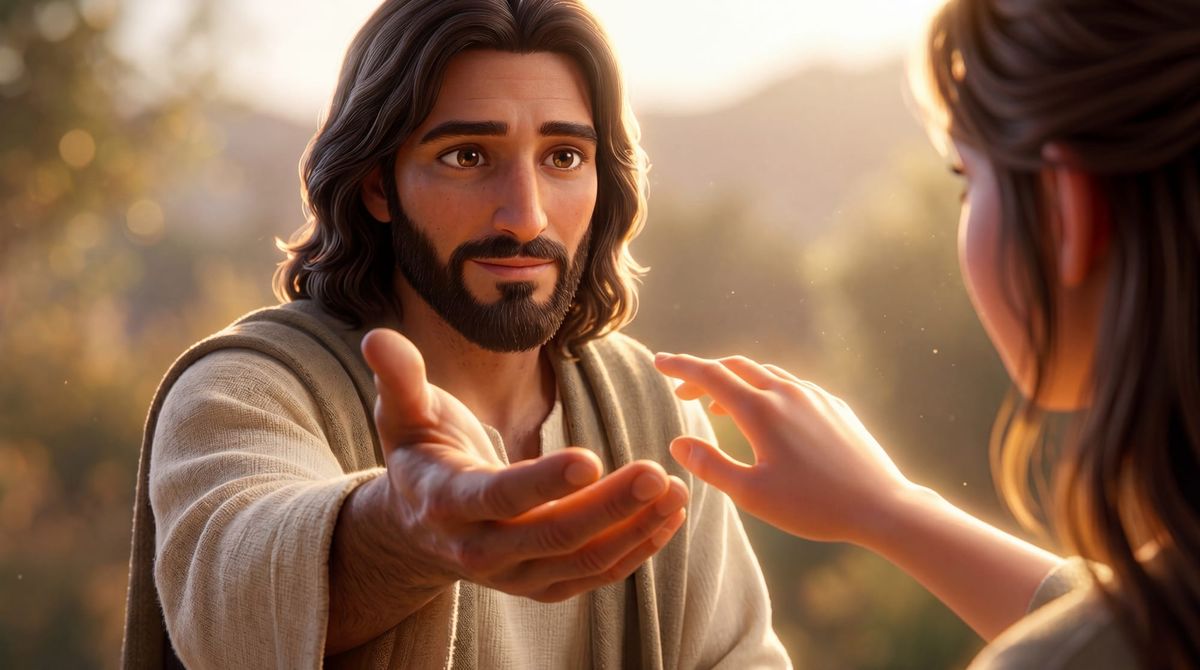
The Psalms Saw the Cross Coming
Psalm 22:1, 7-8, 16, 18; Psalm 2:1-3, 7; Psalm 31:5; Matthew 27:35, 39-46; Luke 23:32-33, 46; Acts 4:24-28; Acts 13:30-33; 2 Nephi 11:4
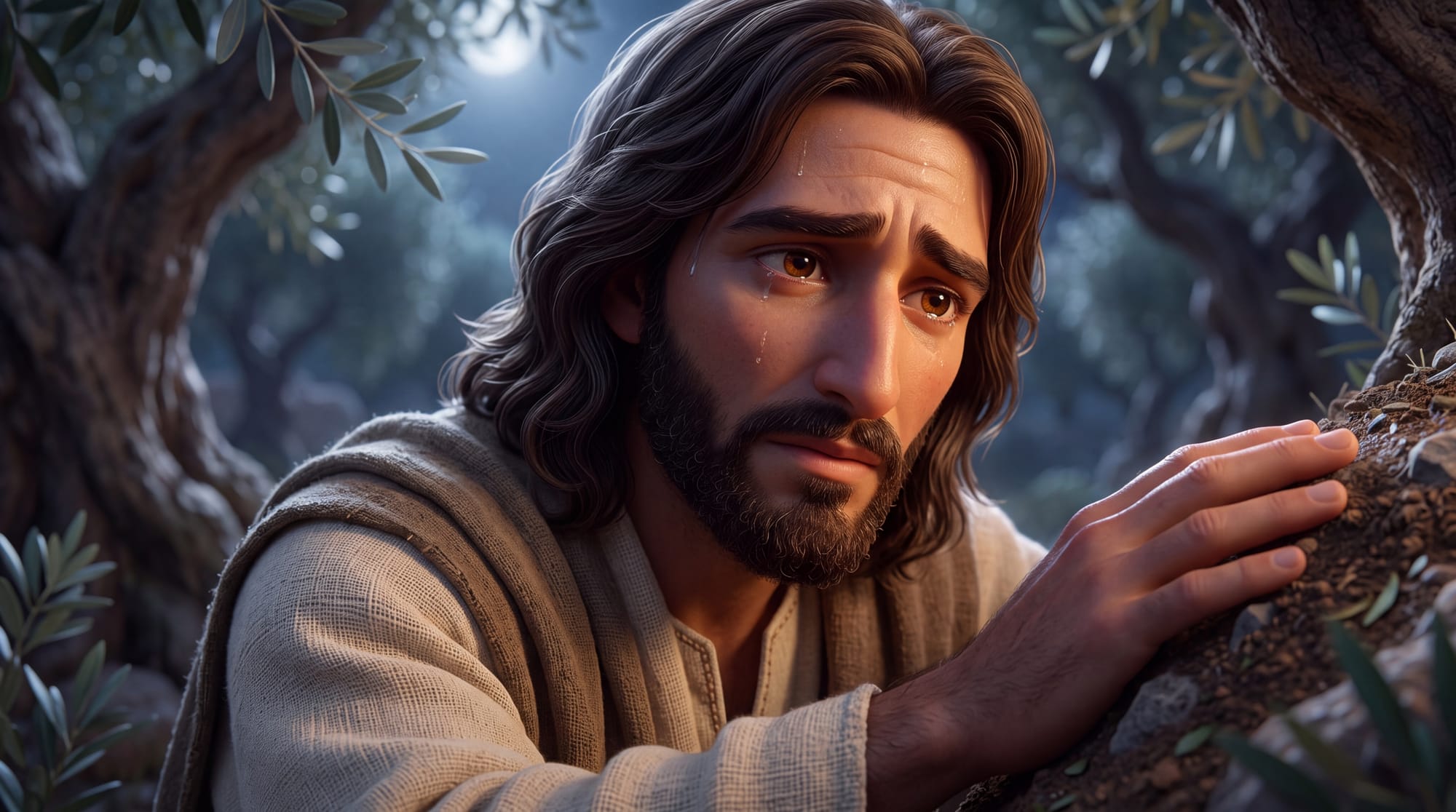
Here's something that should genuinely astonish you: Psalm 22 was written roughly a thousand years before the Crucifixion. And it reads like an eyewitness account.
The Come, Follow Me lesson lays out the connections side by side, and they are not vague or symbolic — they are specific. 'My God, my God, why hast thou forsaken me?' (Psalm 22:1) — Matthew 27:46 records Jesus saying exactly those words from the cross. 'All they that see me laugh me to scorn' and 'He trusted on the Lord that he would deliver him' (Psalm 22:7-8) — Matthew 27:39-43 records the crowd mocking Him in almost identical language. 'They pierced my hands and my feet' (Psalm 22:16) — Luke 23:32-33. 'They part my garments among them, and cast lots upon my vesture' (Psalm 22:18) — Matthew 27:35. Psalm 31:5, 'Into thine hand I commit my spirit' — Luke 23:46, the last words of Jesus before He died.
This is not coincidence. This is prophecy so precise it should recalibrate how you read the Old Testament entirely. The ancient psalmist, writing in anguish, was being moved upon to describe a moment he would never live to see — a moment that would be the hinge of all human history.
Psalm 2 adds another layer. Verses 1-3 describe the nations raging against the Lord's anointed — and Acts 4:24-28 explicitly applies this to the conspiracy against Jesus. Verse 7, 'Thou art my Son; this day have I begotten thee,' is quoted in Acts 13:30-33 in the context of the Resurrection.
The Book of Mormon prophets were anchored in these same prophetic words. Nephi rejoiced in the scriptures because his soul delighted in them, teaching with absolute conviction that "all things which have been given of God from the beginning of the world, unto man, are the typifying of [Christ]" (2 Nephi 11:4). To ancient prophets and modern readers alike, the Psalms aren't just isolated poems; they are a unified roadmap tracing the Savior from the agony of the cross to the triumph of the empty tomb.
That same Messianic thread runs directly through the temple gates of Psalm 24. While Psalm 22 watches the suffering servant whose hands and feet were pierced, Psalm 24 announces His victorious return as the "King of glory, the Lord strong and mighty." The song Clean Hands, Pure Heart captures both sides of that fulfillment — reminding us that the very King of Glory who opens the ancient doors of eternity is the same Savior who was bruised and forsaken so that we could be made pure enough to stand in His holy place.
For your family: Pick one of these Psalm-to-New-Testament pairs and read them back to back. Let the specificity land.
The Heavens Are Talking — Are We Listening?

Psalm 8:3-5; Psalm 19:1-4; Psalm 33:6-9; Moses 2:1; D&C 88:45-47; Alma 30:44; Helaman 8:24
Psalm 19 opens with one of the most quietly radical claims in all of scripture: 'The heavens declare the glory of God; and the firmament sheweth his handywork.' And then it says something even more striking — 'There is no speech nor language, where their voice is not heard.' The creation is preaching. Constantly. In every language. To everyone.
Psalms 8, 19, and 33 form a kind of trilogy of wonder. Psalm 8 asks the question that every honest person has asked while staring at a night sky: 'What is man, that thou art mindful of him?' The universe is incomprehensibly vast. We are incomprehensibly small. And yet — 'thou hast made him a little lower than the angels, and hast crowned him with glory and honour.' The God who made the stars knows your name. That's not a small thing.
Psalm 33 adds the doctrinal backbone: 'By the word of the Lord were the heavens made; and all the host of them by the breath of his mouth.' This is creation theology — and it connects directly to what Latter-day Saints understand about the nature of God and His creative power. Moses 2:1 in the Pearl of Great Price opens with the Lord declaring, 'I am the Beginning and the End, the Almighty God; by mine Only Begotten I created these things.' The Psalms and the Restoration are reading from the same script.
The Come, Follow Me lesson suggests singing 'How Great Thou Art' alongside these psalms — and that's not a throwaway suggestion. President Oaks' point about sacred music is that it does something to the soul that straight reading sometimes can't. The melody carries the doctrine into a different part of you.
Elder Gérald Caussé has spoken about how an encounter with the natural world reminded him of Psalm 8 — the miracle of God's relationship with us, made visible in what He made. That's the invitation here: go outside this week. Look up. Let the creation do what the psalmist said it does — declare something.
For your family: Take five minutes outside after dark this week. Read Psalm 8 out loud. Then just be quiet for a minute.
Be Still — and Actually Mean It

Psalm 46:1-2, 10; D&C 8:2; D&C 6:23; 1 Kings 19:11-12; Mosiah 24:14-15; 3 Nephi 17:3
It's only eight words, but possibly the hardest commandment in the entire Psalms: 'Be still, and know that I am God' (Psalm 46:10).
Psalm 46 is not a gentle poem about a quiet afternoon. It opens with earthquakes, mountains falling into the sea, roaring waters, and shaking hills. This is not a psalm written from a hammock. It's written from the middle of chaos — and right in the middle of that chaos, the instruction is: be still.
The Hebrew word translated 'be still' here is raphah — it means to let go, to release, to stop striving. It's not passive. It's an active choice to stop white-knuckling the situation and let God be God. The verse isn't saying the chaos isn't real. It's saying there is a God who is bigger than the chaos, and your frantic grip on the controls is not what's holding things together.
This is one of the most countercultural things in all of scripture for a modern family. We are not a still culture. We are a notification culture, a news-cycle culture, a 'just one more thing to check' culture. The noise is not accidental — it crowds out exactly the kind of quiet where God tends to speak. Doctrine and Covenants 8:2 describes revelation coming to the mind and heart. That requires some interior space.
The Come, Follow Me lesson suggests helping children memorize just the first line of Psalm 46:10. That's a good instinct. A child who has 'Be still, and know that I am God' stored somewhere in their memory has a tool they can reach for at 2 a.m. when they're scared, or at 14 when the world feels like it's collapsing, or at 40 when it actually might be.
For your family: Practice being still together — even for two minutes. It will feel awkward. Do it anyway. Then talk about what, if anything, you noticed.
The Battles He Won or the Songs He Wrote?
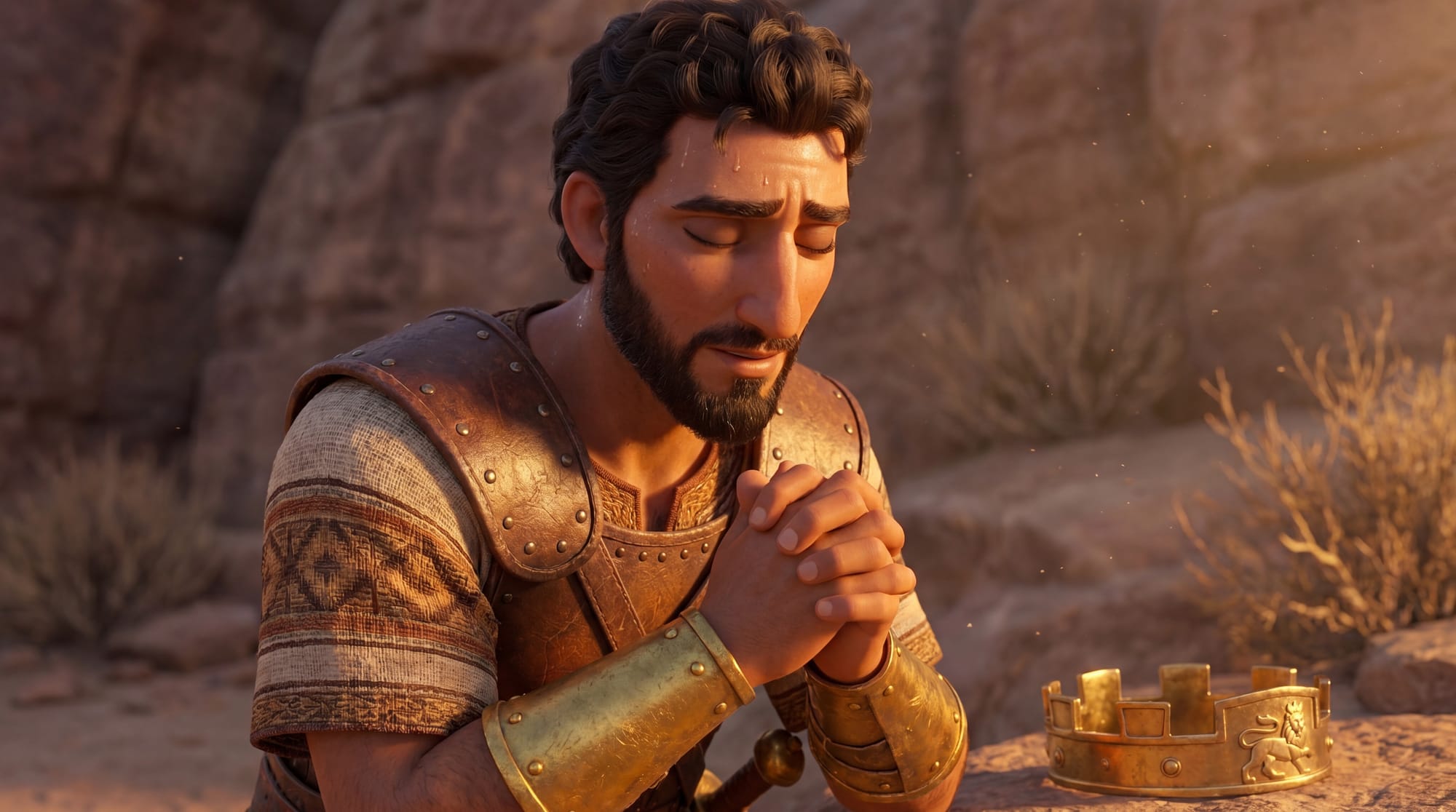
David left behind accomplishments that would fill an ancient history book. He united the divided tribes of Israel into a single nation. He established Jerusalem as the covenant capital. He defeated Goliath, expanded imperial borders, built fortifications, and won military campaign after military campaign. By every metric the ancient world cared about—power, territory, conquest, and political dominance—David was a titan.
And yet, thousands of years later, when believers open the scriptures in their living rooms, nobody is singing about David’s military tactics or memorizing the borders of his kingdom.
We don't remember David for the territory he conquered. We remember him for his heart.
We remember him because when he was terrified in a cave, he prayed. When he walked through dark valleys, he reached for his Shepherd. When his soul was overwhelmed, he poured out his grief, his repentance, his unvarnished fears, and his soaring praise onto the page. He left us words that give voice to our own deepest prayers when we don't know what else to say.
The monuments of stone crumbled and the political borders shifted, but the songs David wrote and the faith he cultivated have outlasted empires.
That poses a question for every parent, every child, and every family: What is the legacy you are actually building?
It is easy to get caught up in the modern equivalent of battles and borders—grades, resumes, trophies, square footage, and social status. Those things feel urgent in the moment. But the Psalms remind us that the only legacy that truly endures across generations is the posture of your heart before God.
The battles you win in this life will eventually fade into the background. But your testimony of the Living Redeemer, the way you love the Lord, the quiet moments you choose to "be still," and the covenants you pass down to your children—those are the songs that will echo for eternity.
For your family: Ask your children: When people remember our family years from now, what do we hope they remember most—our achievements, or the way we loved God and each other?