September 21–27: "A Marvellous Work and a Wonder" (Isaiah 13–14; 22; 24–30; 35)
Isaiah saw us coming — a marvelous work so unexpected it would stun the wisest people on earth. This week your family discovers that the Restoration isn't ancient history; it's the story you're still living.
Your Game Plan for This Week
Here's something worth sitting with at the dinner table this week: Isaiah wrote about us. Not in a vague, poetic, could-mean-anything kind of way — but specifically. The sealed book being opened (Isaiah 29:11–12), the voice speaking out of the dust, the wise men of the world scratching their heads — these are descriptions of events that happened in upstate New York in the 1820s, and they're events your family is still living out every time you open the Book of Mormon.
"A Marvelous Work" captures that sweep beautifully. The song moves from Isaiah's ancient vantage point — looking down a thousand years of wandering — all the way to the bloom of restoration. Line upon line, precept on precept, the Lord didn't abandon His covenant people. He just waited for the right moment to do something that would stun every man. That moment was the Restoration, and the invitation now is to recognize that we're not spectators of that work — we're participants in it.
For families, that's the real takeaway this week. The broken things in your life — the grief, the doubt, the habits that feel too heavy — Isaiah saw those too. And he saw the Lord meeting every single one of them. The desert blooms. The heavy heart learns to sing. That's not wishful thinking. That's covenant promise, and it has your family's name on it.
15-Minute Family Home Evening
Monday night — your launch for the week.
-
Ask this to open. Take 2–3 responses, then move on.2 minOpening QuestionHas anyone ever written something down — a note, a letter, a prediction — that you knew you'd never get to see come true yourself? What made you write it anyway?
-
Read this together:2 minSet the StageIsaiah lived in the eighth century before Christ, surrounded by empires convinced of their own permanence. Babylon was the superpower of the ancient world — wealthy, ruthless, and certain it would last forever. Israel and Judah weren't doing much better spiritually. The covenant people had drifted. Into that mess stepped Isaiah, a man with a vision so far-reaching it made his contemporaries' heads spin. He wasn't just warning about the next decade. He was seeing centuries ahead — a sealed book coming out of the dust, a desert that would bloom, a scattered people finding the covenant again. Not through their own cleverness, but through something God would do that would stun the wise men of the world. He called it a marvellous work and a wonder. And then he wrote it all down, knowing he would never live to see it arrive.Isaiah 29:14Therefore, behold, I will proceed to do a marvellous work among this people, even a marvellous work and a wonder: for the wisdom of their wise men shall perish, and the understanding of their prudent men shall be hid.
-
Press play — watch together:3 min
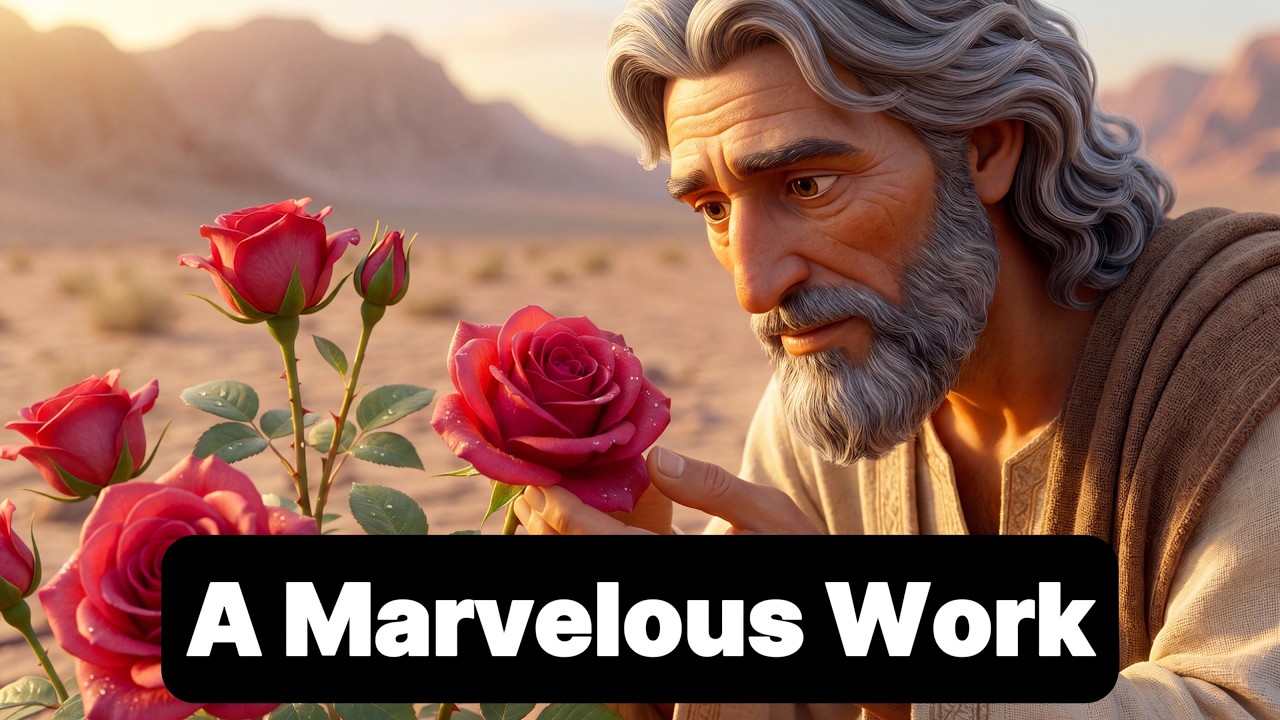
🎵 It's a marvelous work, a wonder to see! The Lord is restoring what was meant to be! The desert's gonna bloom like a rose in the spring, And every heavy heart is gonna learn how to sing!
Dive Deeper: A Marvelous Work -
Read the Big Idea together:2 minBig Idea You Are the Marvelous Work
Isaiah 29:14 is not just a compliment to God — it is a prophecy about your family, right now. The Restoration of the gospel, the coming forth of the Book of Mormon, the return of priesthood authority — these are the events Isaiah was pointing at from a thousand years away. That means when you open your scriptures this week, you are not studying ancient history from the outside; you are living inside the very miracle he described. -
Ask your family:3 minReflect TogetherIsaiah saw our day from a thousand years away and still had hope — so what does it mean for your life right now that God can see the hard things you're going through and already has a plan for them?
-
Do this activity together:5 min
Sealed or Revealed?
Try This: One person is the 'Sealed Book' — they think of a simple truth or fact and keep it completely secret (arms crossed, eyes closed, totally locked up). Everyone else asks yes/no questions to try to crack it open. When someone guesses correctly, shout 'Revealed!' and swap roles. Play several rounds, then pause and talk about how Isaiah's prophecies were like a sealed book for centuries — the words were written, but the world wasn't ready to receive them yet. The Restoration cracked the seal wide open.
Reflect: What's something your family knows now — about the gospel, about God's plan — that people in Isaiah's day were still waiting and hoping for? How does it feel to live on this side of the 'marvelous work'?
-
Close together: Say a family prayer. Then enjoy a special treat as a family.2 min
20-Minute Primary / Sunday School
Lead with Swallow Up Death.
-
Ask this to open. Take 2–3 responses, then move on.3 minOpening QuestionHas anyone ever been in a really dark or scary situation and had someone show up — or say something — that made you feel like everything was actually going to be okay?
-
Read this together:2 minSet the StageIsaiah lived in one of the darkest stretches in Israel's history. The northern kingdom had already been swallowed by Assyria. Judah was surrounded. The covenant people were fracturing under pride and spiritual drift, and grief was everywhere. Into that darkness, Isaiah stood up and said something that must have sounded almost reckless — that death itself was going to lose. Tucked inside a long stretch of warnings and laments, Isaiah chapter 25 suddenly breaks open like a window thrown wide: a feast on the Lord's mountain, a veil of mourning lifted from all nations, and a promise so specific and so physical it stopped readers cold for centuries.Isaiah 25:8He will swallow up death in victory; and the Lord God will wipe away tears from off all faces; and the rebuke of his people shall he take away from off all the earth: for the Lord hath spoken it.
-
Press play — watch together:3 min
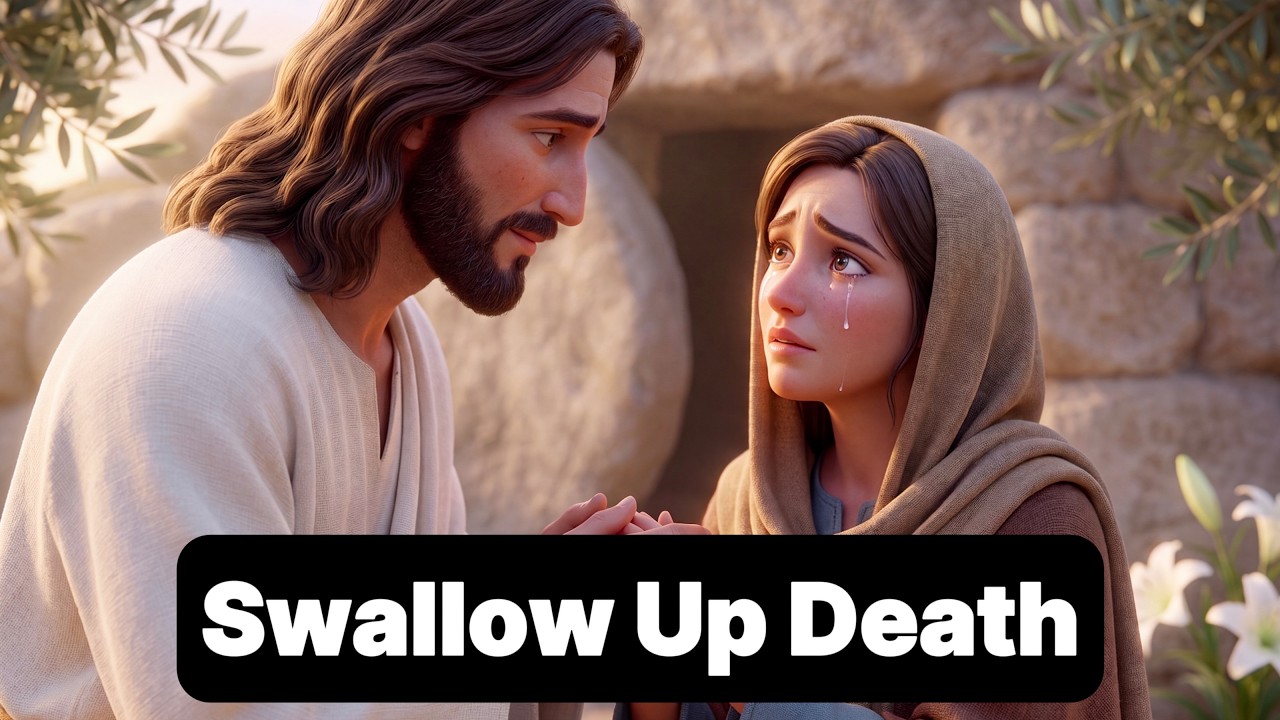
🎵 He will swallow up death in victory! Break every chain and set the prisoners free! The Lord God will wipe every tear from your eyes, Underneath the beauty of the morning skies!
Dive Deeper: Swallow Up Death -
Ask this. Give the class a moment to think before taking responses.3 minPivot QuestionWhy do you think Isaiah described the defeat of death with such confidence, as if he had already watched it happen, even though he lived seven hundred years before the Resurrection?
-
Keep going:4 minFollow-UpIf you were carrying real grief or loss right now, how would it feel to know that a prophet saw your specific morning — the end of that sorrow — and wrote it down thousands of years ago just for you?
-
Liken it unto yourself. Hand each student a slip of paper. Give 2 minutes to write, then 2–3 share with the class.5 minLiken Unto YourselfIs there a grief you've been carrying quietly — a loss, a fear, a 'what if' — that you haven't yet handed to the God who promised to wipe every tear from your face?
-
2 minClose With ThisIsaiah didn't write a wish — he wrote a report. He saw the Atonement of Jesus Christ from the far side of history, and what he saw was the end of death and the wiping away of every tear. That promise is still in force, and it belongs to your family right now.
-
Optional Activity — use if you have extra time or a younger class:5 min
Chain Breakers
Try This: Everyone links arms in a chain across the room. One person is the 'Swallower of Death' — they have to break through the chain by calling out something the Savior has power over (death, sorrow, sin, fear, darkness, etc.). If the answer is solid, the chain breaks apart and everyone cheers. Rotate who gets to be the breaker. Keep going until everyone has had a turn. See how fast your family can name things the Savior conquers!
Reflect: Which one felt the most personal to you — death, sorrow, fear, or something else? Why do you think Isaiah wanted us to know the Savior has power over ALL of those things, not just one?
Week Schedule
You don't have to do all seven — pick what fits. Monday launches, Sunday caps. Tap any day to expand or collapse.
This Week's Fireside Moment
The full story behind the songs — in one sitting.

Watch & Listen
Swallow Up Death
That is the scripture Swallow Up Death is built on — and the song refuses to earn that triumph cheaply. It starts exactly where Isaiah's audience was: standing beside the silence, carrying sorrow, watching the daylight go. Verse one doesn't flinch from the dark because the covenant doesn't flinch from the dark. The promise of resurrection was never meant to skip over grief. It was meant to go all the way down into it and come back up victorious. When the chorus finally breaks open — 'He will swallow up death in victory! Break every chain and set the prisoners free!' — it lands with the weight of everything that came before it.
For Latter-day Saint families, this is home territory. We believe in a literal resurrection. We believe covenants reach across the veil. We believe the 'marvellous work and a wonder' Isaiah also foretold is the Restoration we are living inside right now. This song is for anyone who has stood at a graveside and needed to hear, out loud, that the grave is not the ending of the covenant song.
Want the full story? Read the complete Fireside Moment or explore the Lyric-Scripture Blueprint in our Joy Tier Deep Dive.
A Marvelous Work
That's the emotional core of Isaiah 29, and it's what A Marvelous Work is built on. Isaiah saw a sealed book coming out of the dust — scholars now recognize this as one of the most precise prophetic descriptions of the Book of Mormon in all of scripture. He saw a desert blooming. He saw deaf ears opened and blind eyes seeing. He saw a restoration so complete and so unexpected that the learned men of the world would call it impossible. And then he wrote it all down and waited for a morning he would never personally see.
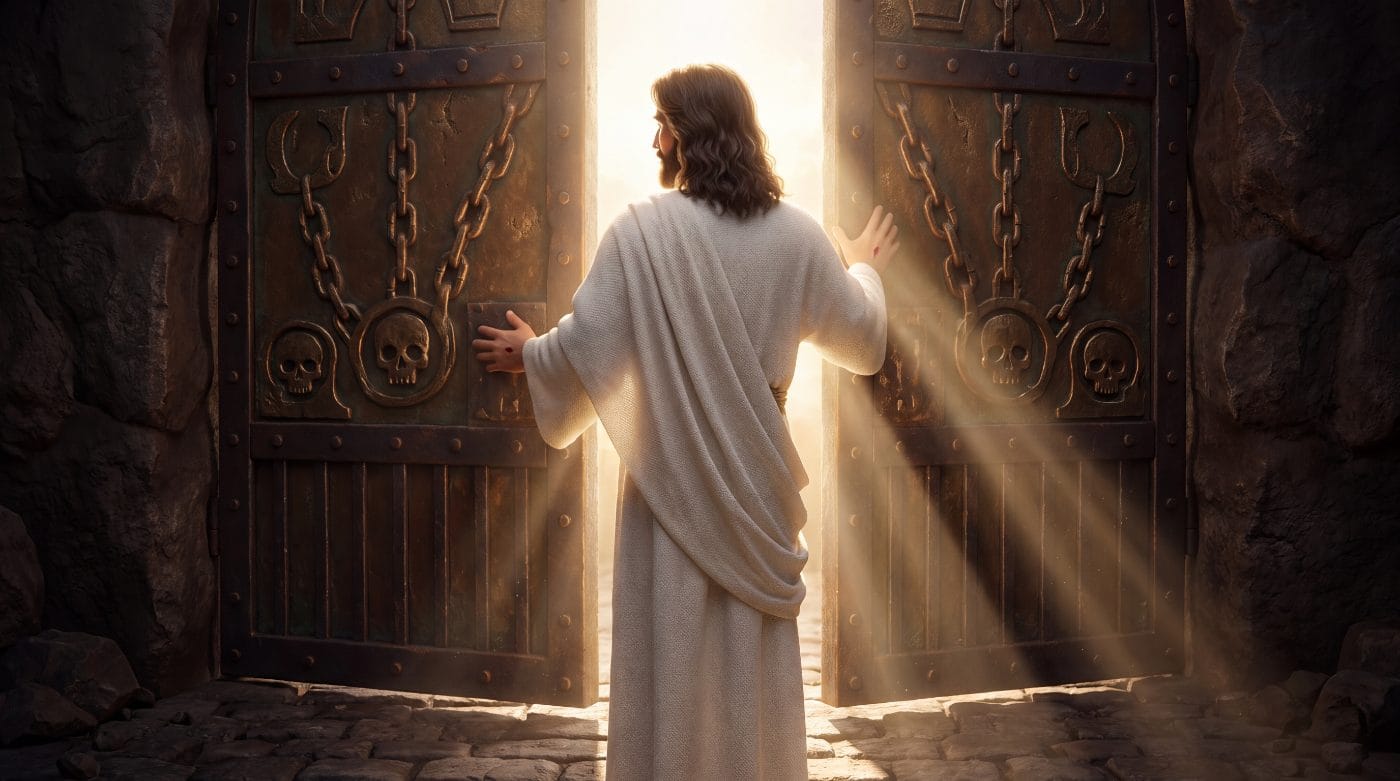
The song captures that long arc — from Isaiah's vision in verse one, through the pre-chorus's 'line upon line' patience, all the way to the bridge where the morning finally arrives: 'The book came from the dust and the covenant survived.' It's a song that moves through time like a river, gathering momentum until it lands squarely in the present tense. The chorus doesn't say the marvelous work happened. It says it's happening — rolling on, desert blooming, temple doors wide open.
For your family this week, that's the invitation. You're not studying ancient history. You're recognizing the world Isaiah described — and realizing you're living inside it.
Want the full story? Read the complete Fireside Moment or explore the Lyric-Scripture Blueprint in our Joy Tier Deep Dive.
Lyric–Scripture Blueprint (Preview)
Did you know these lyrics come straight from the scriptures?
Explore the full Lyric–Scripture Blueprints and deeper activities in the Joy Tier.

Listen Everywhere


Miss last week?
Every lesson stands on its own — but together, they tell one continuous story.
 Bob LeBaron

Don’t Stop the Music
The Joy Tier starts right here. Go deeper into this week’s scripture story and explore the meaning behind the songs.
Inside Joy you’ll find:
- A weekly Fireside Moment overview of the Come, Follow Me lesson
- Expanded Set the Stage teaching guides for every song
- Choose Your Adventure family activities and simple weekly habits
- Lyric–Scripture Blueprints, printable coloring pages, and lyric sheets
- Cinematic reflection videos designed for quiet viewing and discussion
Access Joy below to turn this week’s song into a weeklong experience of scripture, music, and family conversation.