October 5–11: "He Hath Borne Our Griefs, and Carried Our Sorrows" (Isaiah 50–57)
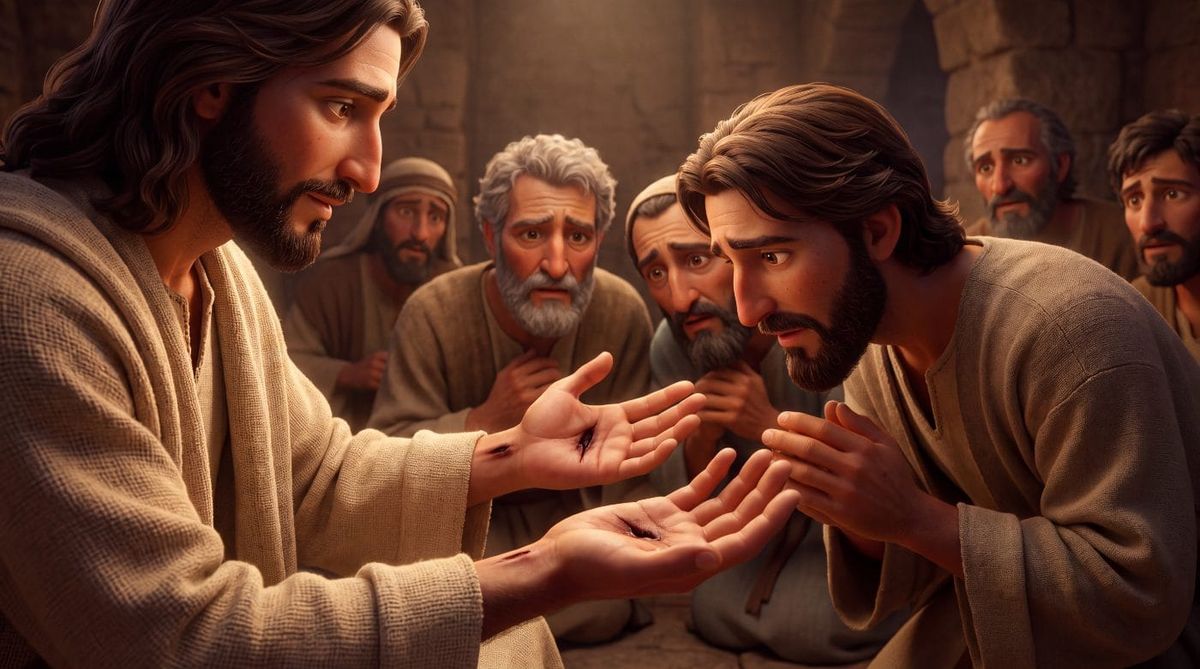
Isaiah 50–57 introduces a Messiah nobody saw coming — not a conqueror with a crown, but a Lamb who stepped inside the darkness and bore our griefs Himself. This week's songs and lessons help families feel the weight of that gift and then stand up in the light of it.
Your Game Plan for This Week
There is a version of rescue that keeps the rescuer clean. You throw a rope from the riverbank, you call the fire department, you send a check. You help without ever getting wet. Isaiah 53 describes something categorically different. The Savior described there does not manage our grief from a comfortable distance — He bears it. He carries it. The Hebrew word translated 'borne' in Isaiah 53:4 carries the image of a porter shouldering a load that belongs to someone else. That is not a metaphor. That is the Atonement.
'With His Stripes' captures this with a lyric that should stop families mid-song: 'He didn't open up the cell and tell us, Run along — He stepped inside the darkness and He took the bitter wrong.' That line is doing real theology. The prophet Alma taught the same truth from the western hemisphere, explaining that Christ took upon Himself the pains and sicknesses of His people so that His mercy could be perfectly informed — not theoretical, but lived (see Alma 7:11–12). He is not sympathetic from afar. He knows.
For families this week, the invitation is to let that land personally. Isaiah 53:4 says He bore our griefs — not grief in general, but ours. The sorrows your family is carrying right now, the ones that feel too heavy or too embarrassing to name out loud, are already known. Already carried. That is the Big Idea: the God of the universe did not send a memo. He showed up.
15-Minute Family Home Evening
Monday night — your launch for the week.
-
Ask this to open. Take 2–3 responses, then move on.2 minOpening QuestionHave you ever been told you were free to go — like a punishment was over or a hard thing had ended — but you kept acting like you were still in trouble anyway?
-
Read this together:2 minSet the StageDecades in Babylon will make captivity start to feel normal. That’s what prolonged exile does—you stop looking at the door, you build routines around your chains, and somewhere along the way you forget what it felt like to stand up straight. The exiles knew their own choices had contributed to the mess, and that shame carried a crushing weight.
But looking across more than a century of time, Isaiah spoke directly into their dark corner with a message that was almost rude in its urgency: the ransom is already paid. The price is already settled in the eternal economy of heaven. The door isn't just cracked—it's swung wide open. The problem isn't the lock anymore. The problem is that the prisoners have been sitting on the floor so long they've started to believe the prison is home.Isaiah 52:1Awake, awake; put on thy strength, O Zion; put on thy beautiful garments, O Jerusalem, the holy city: for henceforth there shall no more come into thee the uncircumcised and the unclean. -
Press play — watch together:3 min

🎵 Awake, awake! Put on thy strength! Walk into the light the full measure of its length! Put on your beautiful garments, shake the dust away, Zion is rising up into a brand new day!
Dive Deeper: Put On Thy Strength -
Read the Big Idea together:2 minBig Idea He Gets All the Way In
God doesn't shout 'awake' at people who are still trapped — He shouts it at people who are already free but haven't stood up yet. The Savior bore our griefs, carried our sorrows, and paid a ransom we could never afford, not so we could stay seated on the floor of an unlocked cell, but so we could rise, shake off the dust, and walk out wearing the strength of our covenant identity. This week, the invitation is personal: what would change in your family if you actually lived like the price has already been paid? -
Ask your family:3 minReflect TogetherIs there something in your life right now — an old mistake, a hard feeling, a habit of thinking small about yourself — that you've been carrying around even though the Savior already paid the price for it?
-
Do this activity together:5 min
Shake the Dust Freeze Dance
Try This: Clear some floor space and play 'Put On Thy Strength' (or any upbeat song you have handy). While the music plays, everyone dances freely — but here's the twist: whenever the music stops, the person who called 'freeze' shouts out one thing the Savior has already done for us (paid the ransom, broken the chains, prepared the way, etc.). If they can name one, everyone does a big dramatic 'shake the dust off' shimmy before the music starts again. Keep going until you've filled the room with reasons to celebrate.
Reflect: Isaiah 52 says 'Awake, awake, put on thy strength' — like someone shaking a sleeping person by the shoulders. Why do you think we sometimes act like we're still locked up when the door is already open? What's one 'chain' you want to shake off this week?
-
Close together: Say a family prayer. Then enjoy a special treat as a family.2 min
20-Minute Primary / Sunday School
Lead with With His Stripes.
-
Ask this to open. Take 2–3 responses, then move on.3 minOpening QuestionHas anyone ever been going through something really hard — sick, scared, or heartbroken — and had someone show up and just sit with you in it instead of trying to fix it from a distance?
-
Read this together:2 minSet the StageFor generations, Israel had been building a picture in their minds of what rescue would look like. Loud. Unmistakable. A conqueror on horseback, chains falling, the enemy fleeing in terror. When you have spent centuries under the boot of empire, your imagination for deliverance runs toward the dramatic. You want a lion. You want an army. You want someone who looks the part. And then Isaiah — writing centuries before Christ — drops one of the most disorienting prophecies in all of scripture. The Deliverer is coming, yes. But He will be despised. Rejected. A man of sorrows. He will not shout in the streets. He will not break the gates from the outside. He will walk through them, into the darkness, and take the prisoner's place Himself.Isaiah 53:4-5Surely he hath borne our griefs, and carried our sorrows: yet we did esteem him stricken, smitten of God, and afflicted. But he was wounded for our transgressions, he was bruised for our iniquities: the chastisement of our peace was upon him; and with his stripes we are healed.
-
Press play — watch together:3 min

🎵 Surely He hath borne our griefs, carried all our pain, Standing in the sorrow like an uncomplaining rain! With His stripes we are healed, by His love we are bought, A Lamb who gave up everything when we had nothing left to give.
Dive Deeper: With His Stripes -
Ask this. Give the class a moment to think before taking responses.3 minPivot QuestionWhy do you think God chose to send a Savior who would suffer alongside us rather than simply rescue us from a safe distance?
-
Keep going:4 minFollow-UpIf you were the one in the prison cell and someone walked in and said 'I've got you — I'll take your place,' how would that change the way you felt about that person? Does knowing Jesus did exactly that change anything about how you turn to Him?
-
Liken it unto yourself. Hand each student a slip of paper. Give 2 minutes to write, then 2–3 share with the class.5 minLiken Unto YourselfWhen you picture someone being rescued, what does the rescuer usually look like — and what does it do to your heart to realize Jesus rescued you not by being powerful from a distance, but by becoming vulnerable up close?
-
2 minClose With ThisThe Savior nobody ordered turned out to be the only One who could actually save — because He didn't stand outside our pain and wave us out of it; He walked in, sat down in the dark, and bore every stripe Himself so that we could be healed.
-
Optional Activity — use if you have extra time or a younger class:5 min
Lamb or Lion?
Try This: Stand in the middle of the room and designate one wall 'Lion' and the other wall 'Lamb.' Read out descriptions of a hero — some are what people EXPECTED the Messiah to be (powerful king, conquering army, golden crown, breaks down gates by force), and some are what Isaiah actually prophesied (silent, rejected, bore our griefs, healed by His stripes, led as a lamb to the slaughter). After each description, everyone sprints to the wall they think matches. When someone lands on the wrong wall, pause and talk about WHY the real answer surprises us. Keep the pace fast — the surprise is the whole point.
Reflect: Why do you think God sent a Lamb instead of a Lion? What does that tell us about how He actually rescues people — including us, right now?
Week Schedule
You don't have to do all seven — pick what fits. Monday launches, Sunday caps. Tap any day to expand or collapse.
This Week's Fireside Moment
The full story behind the songs — in one sitting.

Watch & Listen
With His Stripes
Isaiah 53 was written centuries before the birth of Jesus Christ, and it is almost uncomfortably specific. A man of sorrows. Despised and rejected. Silent before His accusers. Wounded for our transgressions. Bruised for our iniquities. The chastisement of our peace upon Him. With His stripes, we are healed. The ancient Israelites read those words and waited for a warrior king. The ancient prophets in the Americas — Nephi, Jacob, Alma, King Benjamin — read the same prophecies and understood with stunning clarity what was actually at stake: without this particular Lamb, an "awful monster" (Jacob's phrase in 2 Nephi 9) would have swallowed the entire human family permanently. There was no plan B.
"With His Stripes" opens by letting you feel the crowd's expectation — chariots, iron thrones, a crown of gold everyone could see. Then it quietly dismantles it. He came in silence. He was despised. He didn't stand outside the prison and wave people out; He walked in and took the prisoner's place. The chorus lands Isaiah 53 almost word for word, but the pre-chorus is where the song earns it: He stepped inside the darkness and He took the bitter wrong. That is the Atonement in one line.
For your family this week, the question this song keeps asking is simple and enormous: What kind of Savior did God actually send — and does that change how you let Him help you?
Want the full story? Read the complete Fireside Moment or explore the Lyric-Scripture Blueprint in our Joy Tier Deep Dive.
Lyric–Scripture Blueprint (Preview)
Did you know these lyrics come straight from the scriptures?
Explore the full Lyric–Scripture Blueprints and deeper activities in the Joy Tier.

Put On Thy Strength
Looking more than a century into the future, Isaiah foresaw his people sitting in Babylonian exile, building routines around their chains and resigning themselves to captivity. But the prophetic message he sent across time was almost rude in its urgency: the ransom is already paid. The price is settled. Stop counting the years and stand up.
Isaiah 52 is one of the most kinetic chapters in all of scripture. God doesn't send a gentle suggestion — He sends a trumpet call. 'Awake, awake; put on thy strength, O Zion.' The Doctrine and Covenants later clarifies, through Joseph Smith, that the 'strength' being commanded here is covenantal identity — the authority and power that comes from being in relationship with God. You don't put on strength to earn rescue. You put it on because the rescue is already done and it's time to look like someone who knows it.
Put On Thy Strength lives entirely in that moment — not the Atonement itself, but the morning after. The song opens on a woman sitting in a prison yard, staring at the floor, wondering if the rescue train is ever coming. Then the trumpet hits the valley. And the message is almost startling: the door isn't locked. It hasn't been locked. The ransom is paid, the price is settled, and it is time — past time — to trade the burlap for a royal linen gown.
Every family has a version of that prison yard. An old failure that still feels fresh. A grief that hasn't been handed over yet. A habit of smallness that predates the covenant. This song is the trumpet call for all of it.
Want the full story? Read the complete Fireside Moment or explore the Lyric-Scripture Blueprint in our Joy Tier Deep Dive.

Listen Everywhere


Miss last week?
Every lesson stands on its own — but together, they tell one continuous story.
 Bob LeBaron
Don’t Stop the Music
The Joy Tier starts right here. Go deeper into this week’s scripture story and explore the meaning behind the songs.
Inside Joy you’ll find:
- A weekly Fireside Moment overview of the Come, Follow Me lesson
- Expanded Set the Stage teaching guides for every song
- Choose Your Adventure family activities and simple weekly habits
- Lyric–Scripture Blueprints, printable coloring pages, and lyric sheets
- Cinematic reflection videos designed for quiet viewing and discussion
Access Joy below to turn this week’s song into a weeklong experience of scripture, music, and family conversation.