August 24–30: "I Will Declare What He Hath Done for My Soul" (Psalms 49–51; 61–66; 69–72; 77–78; 85–86)
The psalmists wrote from the pit, from the mire, from the middle of the night — and then they declared what God did anyway. This week your family explores what it really means to say 'I will declare what He hath done for my soul.'
Your Game Plan for This Week
Here's what the psalms refuse to let us believe: that faith means you never struggle. David was a man after God's own heart — and he also wrote desperate, anguished prayers from the depths of his own failures. The psalmists felt distant from God, afraid, remorseful, and sometimes furious. They wrote it all down. And then — almost every single time — they turned the corner and declared what God had done anyway. That's not weakness. That's the covenant journey in real time.
'What He's Done' captures exactly this movement. The song doesn't start in triumph — it starts with a locked door, a sinking feeling, a losing sheep. The declaration only comes after the rescue. That sequence matters for your family. You don't have to be on the mountaintop to share your testimony. You just have to be honest about the pit and honest about who pulled you out of it.
This week is an invitation to let your kids see the full picture — that faith isn't a feeling you maintain perfectly, it's a Person you return to consistently. When you declare what He's done for your soul, you're not just encouraging yourself. You're handing the next generation a reason to set their hope in God.
15-Minute Family Home Evening
Monday night — your launch for the week.
-
Ask this to open. Take 2–3 responses, then move on.2 minOpening QuestionHas someone ever helped you out of a tough spot or done something so kind for you that you couldn't wait to tell your friends or family about it?
-
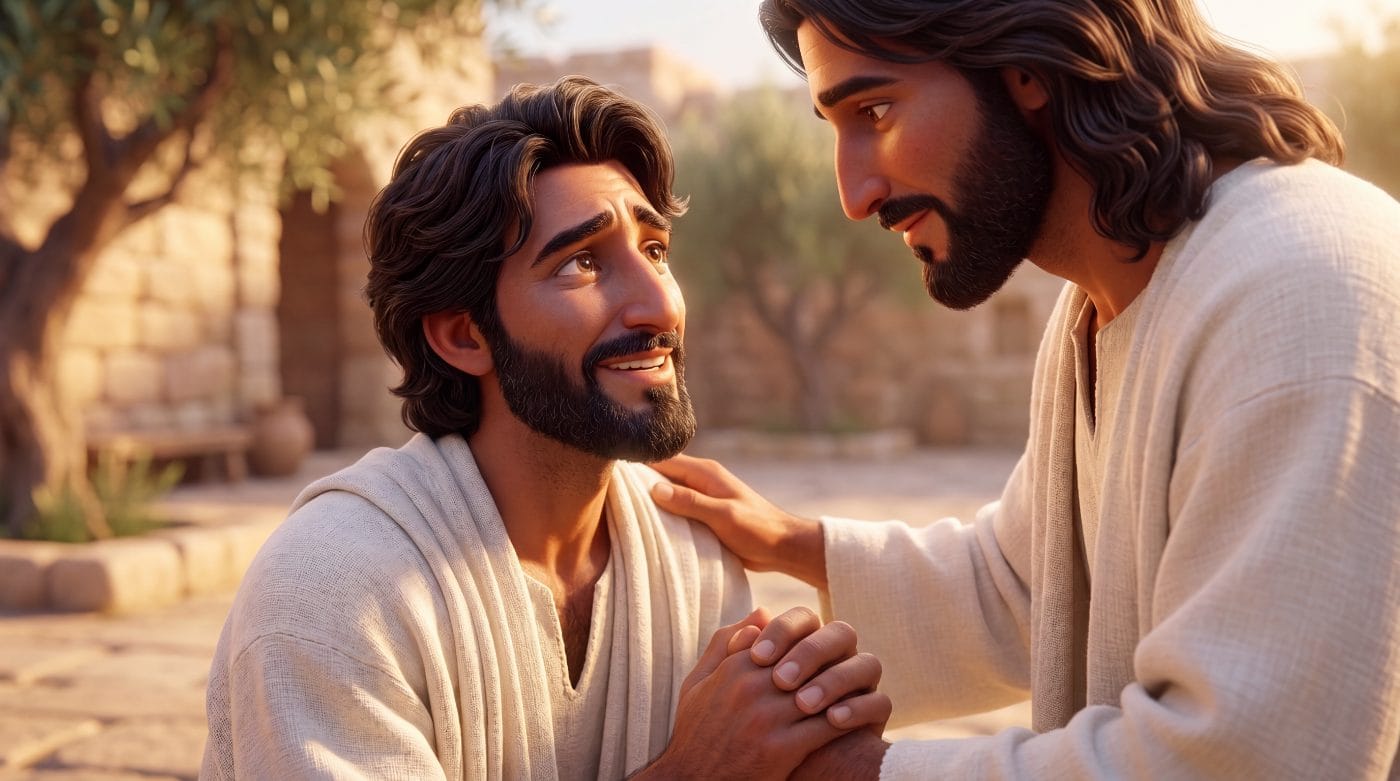
Read this together:2 minSet the StageThe writer of Psalm 66 had just survived a season so intense he described it as passing through fire and water. But when the trial was over, he didn't just breathe a sigh of relief and move on. He stood up, called everyone together, and boldly announced: 'Come and hear, all ye that fear God, and I will declare what he hath done for my soul.'Psalm 66:16[16] Come and hear, all ye that fear God, and I will declare what he hath done for my soul.
-
Press play — watch together:3 min

🎵 *I will declare what He hath done for my soul! / He took the broken pieces and He made me whole! / Out of the pit and into the light, / He gave me a song in the middle of the night!*
Dive Deeper: What He's Done -
Read the Big Idea together:2 minBig Idea You Don't Have to Have It Together to Declare His Name
Faith becomes real when we speak it out loud. When we declare what God has done for our souls, we transform our past struggles into beacons of hope for the people we love. -
Ask your family:3 minReflect TogetherWhen you look back on this past year, what is one specific thing the Lord has done for you or our family that you never want to forget?
-
Do this activity together:5 min
Declare It Loud!
Try This: Stand in a circle as a family. One person starts by finishing this sentence out loud — 'I will declare that God has...' — then sits down fast. Next person jumps up and declares something different. Keep going around, faster and faster, until someone repeats an answer or freezes up. That person becomes the 'caller' who shouts 'Come and hear!' to restart the next round. Challenge yourselves to fill a full minute with declarations before anyone repeats!
Reflect: Psalm 66:16 says 'Come and hear, all ye that fear God, and I will declare what he hath done for my soul.' What made it easy — or hard — to say your declaration out loud? How does saying it out loud feel different from just thinking it?
-
Close together: Say a family prayer. Then enjoy a special treat as a family.2 min
20-Minute Primary / Sunday School
Lead with A Clean Heart.
-
Ask this to open. Take 2–3 responses, then move on.3 minOpening QuestionHas anyone ever made a mistake so big that you knew no amount of apologizing or trying harder was going to be enough to fix it — like what you really needed wasn't a repair, but a total do-over?
-
Read this together:2 minSet the StageDavid was Israel's greatest king — a warrior, a poet, a man the scriptures call a man after God's own heart. And then he made choices he could not undo, could not spin, could not outrun. The prophet Nathan came to him. The mirror was held up. And David, for all his power and all his poetry, had nowhere left to hide. What he did next is what makes Psalm 51 one of the most remarkable documents in all of scripture. He didn't bargain. He didn't offer sacrifices like a transaction to balance the ledger. He went to God with nothing but the truth of what he was — and then he asked, with breathtaking audacity, for something only God could make.Psalm 51:10Create in me a clean heart, O God; and renew a right spirit within me.
-
Press play — watch together:3 min

🎵 Create in me a clean heart, O God, And heal the ground where I have trod. Wash me clean and let me know, A mercy whiter than the snow.
Dive Deeper: A Clean Heart -
Ask this. Give the class a moment to think before taking responses.3 minPivot QuestionWhy do you think David asked God to 'create' a clean heart instead of just asking Him to forgive him and move on?
-
Keep going:4 minFollow-UpIf you were in David's position — knowing you'd done something you couldn't undo — what would be the hardest part about going to God with nothing but honesty? What do you think would happen if you did?
-
Liken it unto yourself. Hand each student a slip of paper. Give 2 minutes to write, then 2–3 share with the class.5 minLiken Unto YourselfIs there something you've been trying to fix on your own that you haven't yet brought to the Savior — and what would it feel like to actually hand it over?
-
2 minClose With ThisRepentance isn't a patch job — it's a miracle. The same God who spoke the heavens and the earth into existence is the One David trusted to make something completely new inside him, and that same creative power is available to every single one of us through the Atonement of Jesus Christ.
-
Optional Activity — use if you have extra time or a younger class:5 min
Wash It White Relay
Try This: Stand in a line or circle. One person is the 'Stain Caller' — they shout out a feeling or situation (like 'I said something unkind!' or 'I felt far from God!'). Everyone else has five seconds to strike a frozen pose showing what that feels like. Then the Stain Caller shouts 'Wash me clean!' and everyone shakes their whole body loose and stands tall with arms wide open. Take turns being the Stain Caller. Keep the energy high and the shaking dramatic — the sillier the better. After a few rounds, pause and ask: what does it actually feel like when a heavy thing gets lifted off you?
Reflect: Psalm 51 says 'wash me, and I shall be whiter than snow.' What's one thing that helps your family remember that repentance isn't just about feeling bad — it's about actually getting clean?
Week Schedule
You don't have to do all seven — pick what fits. Monday launches, Sunday caps. Tap any day to expand or collapse.
This Week's Fireside Moment
The full story behind the songs — in one sitting.

Watch & Listen
What He's Done
But then something beautiful happens near the end of the psalm. The invitation changes: “Come and hear, all ye that fear God, and I will declare what he hath done for my soul.”
The story suddenly becomes personal. That movement—from come and see what God has done to come and hear what God has done for me—is the heartbeat of What He’s Done.
The song pulls in images from across the Psalms: sinking in the mire (Psalm 69:2, 14), being lifted from the pit and having our feet set upon a rock (Psalm 40:1–2), receiving a new song (Psalm 40:3), remembering God’s wonders from days of old (Psalm 77:11–12), and finding a song even in the darkness (Psalm 42:8). But they all lead back to the declaration at the center of Psalm 66: God has heard my prayer, He has not turned away His mercy, and I have a story worth telling (Psalm 66:16, 19–20).
That’s why the song begins with someone keeping their story “locked behind a heavy door.” Sometimes it’s easier to talk about what God did for Moses, David, or the people of Israel than it is to talk about what He has done in our own lives. Scripture gives us thousands of years of reasons to trust Him—but Psalm 66 invites us to add our own witness.
“My God is not a memory fading on a page,
He’s working in my heart right now on this stage.”
The same God who dried up the sea is not confined to an ancient story. He still hears prayers. He still reaches into hard places. He still gives mercy. He still changes hearts.
And when we recognize His hand, Psalm 66 gives us an invitation: don’t keep it behind the heavy door. Rather, "Come and hear. I'll you what He's done for my soul."
Every family has stories of prayers answered, help received, strength that came when it was needed, or moments when God seemed especially near. What He’s Done is an invitation to remember those stories—and maybe to tell them.
Want the full story? Read the complete Fireside Moment or explore the Lyric-Scripture Blueprint in our Joy Tier Deep Dive.
Lyric–Scripture Blueprint (Preview)
Did you know these lyrics come straight from the scriptures?
Explore the full Lyric–Scripture Blueprints and deeper activities in the Joy Tier.

A Clean Heart
That single line is the spine of this song. David used the Hebrew word bara — the same word from Genesis 1, the word reserved for divine creation out of nothing. He wasn't asking for a repair. He was asking for something only God can do: make something genuinely new where the old thing had failed. The rest of Psalm 51 fills in the picture — the plea not to be cast away from God's presence, the desperate hope for restored joy, the promise that a forgiven person becomes someone who can help others find the same mercy.
"A Clean Heart" follows that same emotional arc. It opens in the quiet of a late night, with someone sitting under the weight of their own history — not running from it, but finally facing it. The verses name the specific texture of that experience: the shadow you can't wash off yourself, the roads you wish you hadn't walked, the exhausting failure of trying to fix it alone. And then the chorus arrives — not as a triumphant declaration, but as a prayer. Humble, specific, and completely dependent on grace.
Every family has someone who needs to hear that the Savior's mercy is not just theoretically available — it is plenteous, as Psalm 86 puts it. This song is a way to say that out loud together.
Want the full story? Read the complete Fireside Moment or explore the Lyric-Scripture Blueprint in our Joy Tier Deep Dive.
Listen Everywhere


Miss last week?
Every lesson stands on its own — but together, they tell one continuous story.
 Bob LeBaron
Don’t Stop the Music
The Joy Tier starts right here. Go deeper into this week’s scripture story and explore the meaning behind the songs.
Inside Joy you’ll find:
- A weekly Fireside Moment overview of the Come, Follow Me lesson
- Expanded Set the Stage teaching guides for every song
- Choose Your Adventure family activities and simple weekly habits
- Lyric–Scripture Blueprints, printable coloring pages, and lyric sheets
- Cinematic reflection videos designed for quiet viewing and discussion
Access Joy below to turn this week’s song into a weeklong experience of scripture, music, and family conversation.